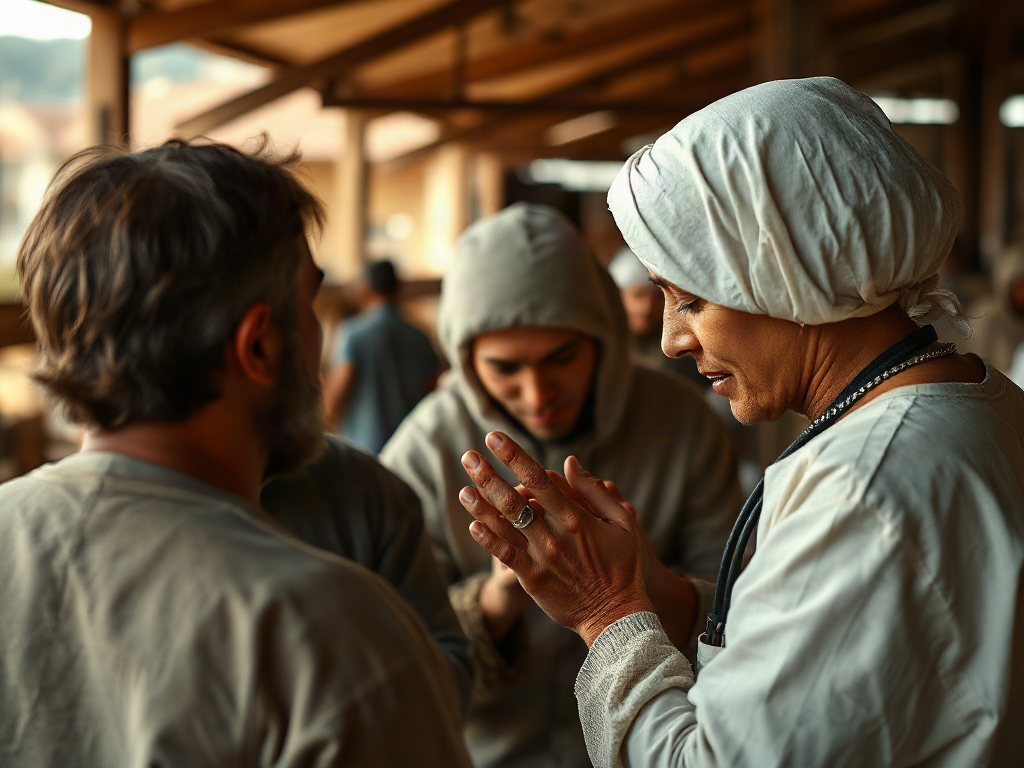
Now Thomas (also known as Didymus), one of the Twelve, was not with the disciples when Jesus came. So the other disciples told him, “We have seen the Lord!” But he said to them, “Unless I see the nail marks in his hands and put my finger where the nails were, and put my hand into his side, I will not believe.” A week later his disciples were in the house again, and Thomas was with them. Though the doors were locked, Jesus came and stood among them and said, “Peace be with you!” Then he said to Thomas, “Put your finger here; see my hands. Reach out your hand and put it into my side. Stop doubting and believe.” Thomas said to him, “My Lord and my God!” Then Jesus told him, “Because you have seen me, you have believed; blessed are those who have not seen and yet have believed.”
In the aftermath of Jesus’ resurrection, Thomas stands apart from the other disciples, grappling with a profound sense of disbelief. His friends, filled with excitement and conviction, proclaim that they have seen the risen Lord. Yet, Thomas is not swept away by their enthusiasm. Instead, he is laden with doubt, feeling isolated in his skepticism. This moment captures a significant biblical pressure: the struggle to reconcile personal experience with the testimonies of others.
Thomas’s emotional reality is palpable. He is not merely questioning; he is wrestling with the weight of his disbelief. The loss of Jesus, whom he had followed so closely, has left him in a state of confusion and longing for tangible proof. It’s a familiar place for many of us, especially when we face our own losses or disappointments. We can imagine the weight of his heart, heavy with the burden of wanting to believe but feeling unable to do so without physical evidence.
At the root of Thomas’s struggle lies a deeper spiritual issue: the difficulty of believing without seeing. This is a common challenge for believers, particularly when past experiences have led to disappointment or pain. Thomas’s insistence that he must see the wounds of Christ is not just a demand for evidence; it is a reflection of his deep desire for assurance in a time of uncertainty.
Yet, in this moment of doubt, we witness a profound invitation from Christ. Jesus does not rebuke Thomas for his skepticism; instead, He meets him in his doubt. This faithful readiness exemplified by Jesus invites us to explore our own uncertainties. It reminds us that doubt does not disqualify us from faith; rather, it can be a pathway to deeper understanding and connection with Christ.
For the modern believer, Thomas’s experience is a powerful reminder that we can bring our doubts to Christ. We need not shy away from our uncertainties or pretend they do not exist. Instead, we can approach Him with honesty, asking for the reassurance we crave. This act of bringing our doubts before God is not a sign of weakness but an expression of sincere faith seeking understanding.
As we reflect on Thomas’s story, let us consider how we can embody the same openness to explore our doubts. Are we willing to approach Jesus with our questions, allowing Him to guide us toward deeper faith? In moments of uncertainty, we can take practical steps to seek God’s presence, whether through prayer, study, or community support. This journey of faith is not always easy, but it is one filled with potential for growth and renewal.
Ultimately, Thomas’s story culminates in a powerful moment of revelation. When Jesus appears to him, He invites Thomas to touch His wounds and believe. This encounter not only reassures Thomas but also transforms his doubt into a profound declaration of faith. As we navigate our own struggles with doubt, let us be open to the ways Christ might meet us, offering reassurance and inviting us into a deeper relationship with Him.
Faith Actions
What doubts do you need to bring before Jesus today?
Set aside time this week for prayer and reflection, specifically inviting Jesus into your doubts and uncertainties.
Lord, I acknowledge my struggles with doubt and uncertainty. Help me to bring my questions to You, seeking understanding and reassurance in my faith. Strengthen my heart to trust in Your presence, even when I cannot see.
Continue Preparing Your Heart