
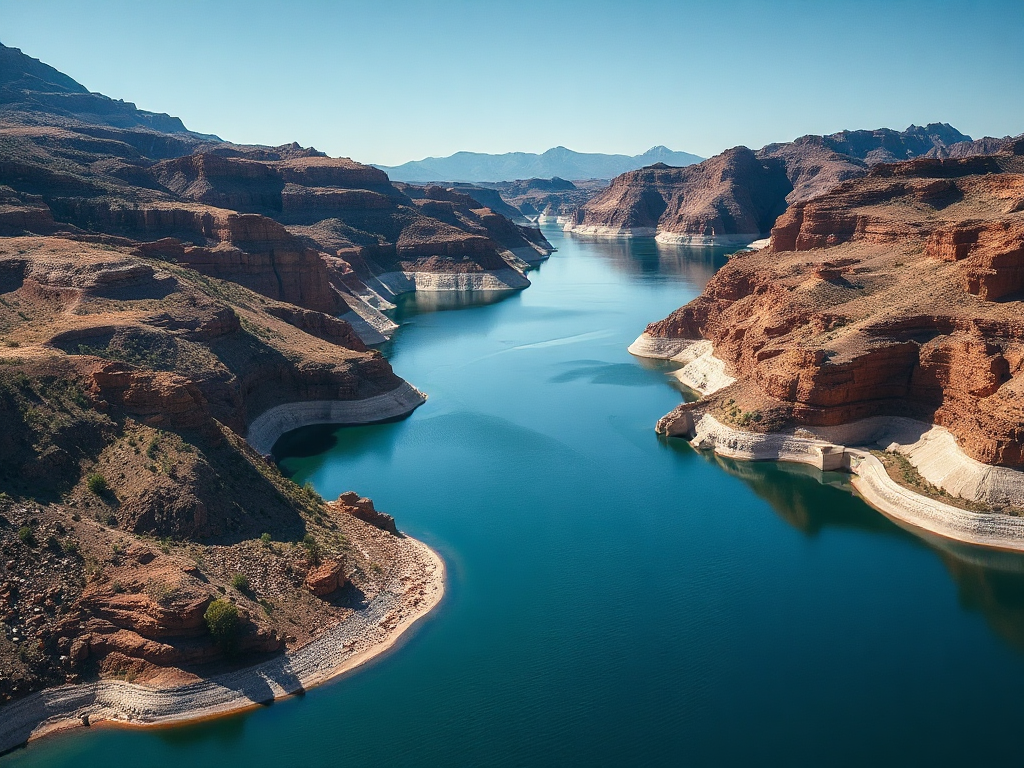
Reports say Lake Mead and Lake Powell have reached record lows. If confirmed, the levels could affect water planning, costs, and conservation decisions, but they do not show an immediate local crisis.
The Watch
Multiple news reports say Lake Mead has reached a record-low water level as concerns grow around the Colorado River. A newer report says Lake Powell has also reached a new record low.
That pairing matters more than a report about one reservoir. If confirmed, low levels at both major reservoirs could show broader pressure across the river system. The reports also link the situation to California water supplies and possible future costs.
The available reporting remains limited. It does not give exact elevations, storage volumes, the rate of decline, causes, or confirmed management actions. Several outlets may also be repeating one original report rather than providing independent verification.
What Changed
Earlier reports from August 10 through 13 focused on Lake Mead reaching a record low. The newest supplied report, published August 16, says Lake Powell has now followed Mead to a new record low.
The report of record lows at two reservoirs changes what needs monitoring. Officials and the public will need to determine whether the levels show a broader Colorado River condition, a timing or measurement issue, or another explanation. Current evidence does not establish the exact readings, how long they have lasted, or any formal response.
Why It Matters
Lake Mead and Lake Powell are important markers of Colorado River conditions. If both reported record lows are confirmed and continue, water managers and affected communities could face more pressure to review allocations, conservation measures, infrastructure operations, and cost assumptions.
The practical effects are not yet clear. The supplied reports do not confirm restrictions, emergency measures, price changes, or specific communities already facing disruption. Still, water planning can affect household budgets, organizational operations, and long-term supply decisions. Verified updates are more useful than dramatic conclusions based on headlines alone.
If This Continues
Scenario — not prediction.
If reservoir levels continue to decline, pressure could grow for changes in water allocations, conservation guidance, infrastructure operations, or related costs. Communities and water users may need to review their planning assumptions.
If levels stabilize or recover, immediate system stress could ease. The record-low reports would still deserve review. If later official information shows that timing or measurement differences shaped the reports, the apparent severity could change.
What to Watch Next
- Official Lake Mead and Lake Powell elevation or storage updates
- Changes to Colorado River allocation, conservation, or operating guidance
- Public notices about water supplies, restrictions, or costs
- Evidence of continued decline, stabilization, or recovery
- Reporting that identifies causes, affected users, or response measures
Preparedness Perspective
This is a reason for informed water planning, not panic. Readers should rely on official water-agency updates for local conditions and applicable conservation guidance.
Practical steps include reviewing household or organizational water-use plans, monitoring notices about possible costs or restrictions, and identifying the official source for local supply information. Communities and organizations can also check whether their continuity plans depend on assumptions about water availability or pricing.
Avoid making major decisions based on a headline alone. The available evidence does not confirm local shortages, emergency measures, or immediate restrictions. Proportionate preparation means staying aware, using water responsibly, and checking for verified changes that apply to your area.
Bottom Line
Reports of record lows at both Lake Mead and Lake Powell deserve close verification because they may signal wider pressure on Colorado River planning. The next useful evidence is official reservoir data and clear agency guidance. Until then, informed water use and attention to local notices are wiser than panic.
Sources
- snowbrains.com — Lake Mead Hits New Record Low as Colorado River Crisis Deepens – SnowBrains (August 17, 2026)
- NPR Utah | KUER — Lake Powell follows Mead to a new record low, an alarming Colorado River milestone – NPR Utah | KUER (August 16, 2026)
- ABC7 Los Angeles — Lake Mead reaches record low levels, raising concerns about California water supplies and future costs – ABC7 Los Angeles (August 13, 2026)
- KRTV — Lake Mead hits record low water level as Colorado River concerns grow – KRTV (August 11, 2026)
- Scripps News — Lake Mead hits record low water level as Colorado River concerns grow – Scripps News (August 10, 2026)
- WXYZ 7 News Detroit — Lake Mead hits record low water level as Colorado River concerns grow – WXYZ 7 News Detroit (August 10, 2026)