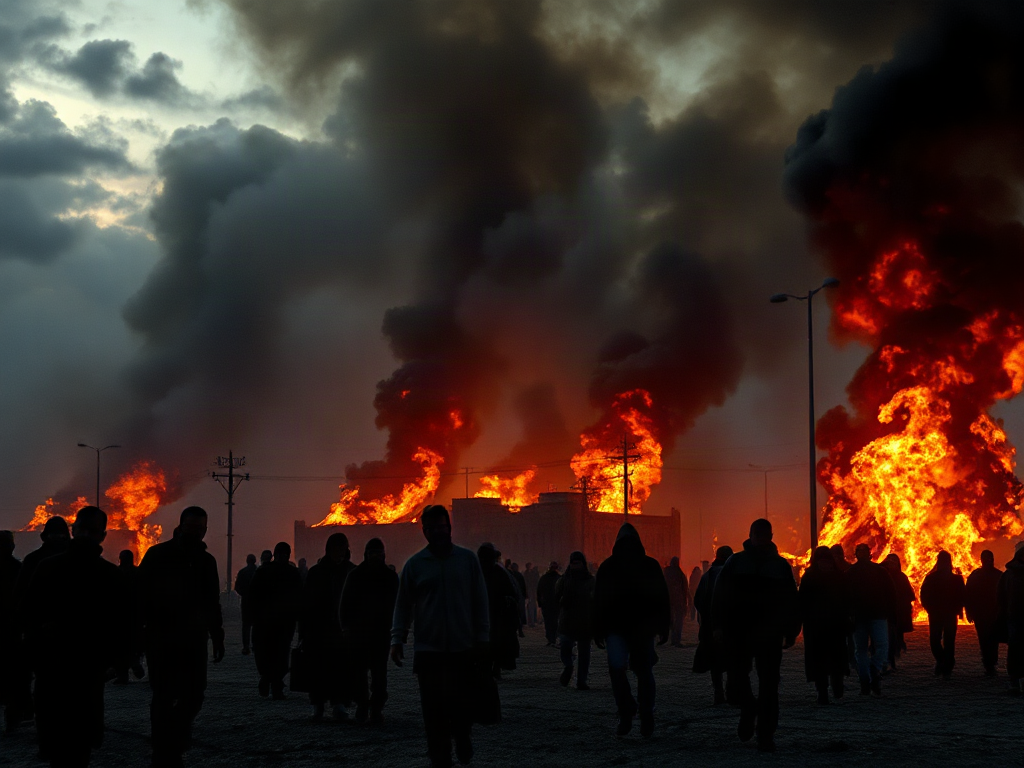

End-time events in biblical sequence are commonly arranged as escalating deception and turmoil, the gathering of believers, a concentrated tribulation, Christ’s visible return, resurrection and judgment, the millennial reign, the final defeat of evil, and the new creation. That order is not accepted uniformly because interpreters connect Matthew 24, Daniel, 1 Thessalonians, and Revelation in different ways. Premillennial readings place Christ’s return before the millennium, while amillennial and postmillennial readings understand the thousand years differently. Readers should distinguish events plainly affirmed across these passages from disputed timing claims, especially the timing of the rapture and whether Revelation’s visions are strictly chronological.
The Biblical Framework Before the Final Crisis
Biblical prophecy presents the end of the age through several complementary passages rather than one uninterrupted timeline. Daniel supplies visions of kingdoms, opposition to God, and final deliverance. Jesus describes deception, conflict, persecution, worldwide gospel witness, and his coming in Matthew 24. Paul addresses resurrection, the gathering of believers, apostasy, and the “man of lawlessness.” Revelation portrays the conflict through seals, trumpets, symbolic figures, bowls, Christ’s victory, judgment, and renewal.
The first interpretive task is therefore to compare texts without assuming that every vision begins where the previous one ends. Revelation may contain chronological movement, but it also revisits the struggle from different vantage points. The seals, trumpets, and bowls intensify toward judgment, yet scenes of worship, persecution, and cosmic conflict interrupt the progression. Treating every chapter as a consecutive calendar can create a precision the book itself does not explicitly provide.
Jesus’ teaching begins with conditions that characterize the period leading toward the end: false messiahs, wars, famines, earthquakes, persecution, betrayal, lawlessness, and proclamation of the gospel among the nations. He calls some of these developments the beginning of birth pains, not proof that the final day has already arrived. The practical distinction matters. A war or earthquake may resemble a named sign without allowing readers to identify a date or declare that one isolated headline fulfills the entire prophecy.
A responsible sequence starts with what the passages clearly establish:
- The present age continues amid witness and opposition. The gospel advances while deception, suffering, and resistance remain active.
- A climactic rebellion and persecution emerge. Daniel, Jesus, Paul, and Revelation describe concentrated opposition to God, although interpretations differ over its duration and historical form.
- God intervenes through Christ. The New Testament directs expectation toward the personal return of Jesus, resurrection, accountability, and restoration.
A common mistake is matching every symbol immediately to a modern leader, nation, technology, or crisis. Such identifications often change with the news cycle and can displace the textual emphasis on allegiance, endurance, holiness, and hope. Readers building a study outline for End-time events in biblical sequence should record the passage, its original setting, and the event it actually names before proposing a modern fulfillment.
Tribulation, the Gathering of Believers, and Christ’s Return
The most disputed part of the sequence concerns how the tribulation, the rapture, and Christ’s visible return relate to one another. Jesus describes a severe period of distress followed by cosmic signs, the appearance of the Son of Man, and the gathering of his elect. First Thessalonians 4 describes deceased believers rising and living believers being caught up to meet the Lord. Second Thessalonians 2 associates the day of the Lord with rebellion and the revelation of the lawless one.
Pretribulationism places the gathering of the church before a future tribulation, often distinguishing that gathering from Christ’s later public descent in judgment. Midtribulation and pre-wrath approaches place the gathering during the final crisis, although they identify its turning point differently. Posttribulationism treats the gathering and visible return as closely connected events occurring after the tribulation. Each position attempts to harmonize passages that emphasize deliverance, suffering, imminence, and identifiable developments before the day of the Lord.
The disagreement cannot be settled merely by placing Revelation 4 after the letters to the churches or by assuming that the word “church” must appear in every scene involving believers. Likewise, the presence of faithful people during tribulation does not by itself establish when they came to faith or whether the church has been removed. Arguments need to account for the actual descriptions in Matthew 24, 1 Corinthians 15, 1 and 2 Thessalonians, and Revelation rather than relying on one silence or one ambiguous symbol.
A useful comparison asks three focused questions. Does the passage describe Christ coming toward earth, believers gathering toward him, or both? Does it explicitly place the event before or after the stated distress? Does the text distinguish multiple future comings, or is that distinction supplied by a broader theological system? Writing the answers beside each passage exposes where the Bible is explicit and where an interpretation connects the evidence.
The practical result should not be indifference about doctrine, but humility about disputed timing. Jesus repeatedly joins end-time teaching to watchfulness, faithful service, resistance to deception, and endurance under pressure. A chronology is failing its biblical purpose when it produces date-setting, panic purchasing, contempt for other Christians, or reckless claims about current people. It is working when readers can explain their view from context, acknowledge its pressure points, and retain the New Testament’s emphasis on steadfast allegiance to Christ.
Resurrection, Judgment, and the Millennium
Christ’s triumph leads into resurrection and judgment, but Christian traditions differ over how those realities relate to the millennium of Revelation 20. The chapter depicts Satan bound, faithful witnesses reigning with Christ for a thousand years, Satan’s later release, a final revolt, and judgment before the great white throne. Whether the thousand years describes a future earthly kingdom or the present reign of Christ profoundly affects the proposed order.
Historic and dispensational premillennialism place Christ’s return before a future millennium. Both expect a real reign following his return, although they may differ over Israel, the church, the temple, and the organization of events within the kingdom. In a simplified premillennial sequence, Christ returns, defeats opposing powers, raises his people, reigns, permits a final rebellion after Satan’s release, and then brings the final judgment and eternal state.
Amillennialism generally understands the thousand years symbolically as the present period of Christ’s heavenly reign between his first and second comings. Satan’s binding is limited in purpose rather than an assertion that all evil has ceased. On this reading, Christ’s return brings the general resurrection, final judgment, and new creation, without a separate earthly millennium following the return. Postmillennialism also expects Christ to return after the millennium, but it commonly anticipates an extended historical flourishing of gospel influence before the final crisis and return.
Readers should avoid assuming that “literal” and “symbolic” are simple measures of faithfulness. Revelation openly uses symbols, while symbolic images can refer to real persons, powers, judgments, and outcomes. The sounder question is how the literary context uses the number and images, how Revelation 20 relates to Revelation 19, and how both chapters fit passages such as John 5 and 1 Corinthians 15.
A compact evaluation checklist can keep the comparison disciplined:
- Identify whether the view places Christ’s return before or after the millennium.
- Check whether it expects one general resurrection or distinguishable stages.
- Compare its reading of Revelation 20 with clearer New Testament teaching on resurrection and judgment.
- Note what the position asserts directly from a passage and what it infers by harmonization.
The common failure here is forcing every passage into a preferred chart before interpreting that passage on its own terms. A better method begins with the text, then tests the resulting model against the full canon. That approach does not remove disagreement, but it makes the disputed assumptions visible and keeps the central claims—Christ reigns, the dead are raised, evil is judged, and God’s people are vindicated—from being buried beneath technical debate.
The Final Rebellion and New Creation
The biblical sequence reaches its endpoint not with catastrophe but with the irreversible defeat of evil and the renewal of creation. Revelation 20 describes Satan’s release, the gathering of hostile nations, their defeat, and the great white throne judgment. Revelation 21–22 then presents a new heaven and new earth, the New Jerusalem, God dwelling with his people, the removal of death and mourning, and restored access to the tree of life.
Premillennial readers usually place the final rebellion after Christ’s thousand-year earthly reign. The episode demonstrates that even ideal external government does not transform every unrenewed heart; once Satan is released, nations again gather against God’s people. Amillennial and postmillennial readers associate this revolt with a concentrated outbreak of opposition near the close of the present age or millennial era, immediately before Christ’s return and judgment. The placement differs, but all three readings regard the rebellion as brief, doomed, and terminated by divine action.
The great white throne scene centers on judgment according to deeds and the book of life. Christian interpretation should hold this alongside New Testament teaching that salvation is grounded in God’s grace and received through faith, while deeds reveal allegiance and become proper subjects of judgment. Speculation about the identity of every group in the scene should not eclipse its stated warning: history ends in moral accountability, and death itself will not remain.
The new creation is more substantial than an image of disembodied souls escaping earth. Biblical hope includes resurrection, embodied life, healed nations, meaningful service, worship, and God’s presence within a renewed order. The city’s jewels, dimensions, river, and tree carry rich symbolic force, but the promised outcome is concrete: the curse is removed, no rival power threatens God’s people, and communion with God is secure.
For practical study, mark this destination as the controlling horizon for every earlier stage. Fear-driven readings often devote extensive attention to the beast, disasters, and geopolitical theories while treating Revelation 21–22 as an epilogue. That reverses the book’s emphasis. The warnings call for present faithfulness precisely because judgment and restoration are certain. A sound account of End-time events in biblical sequence should therefore end where Scripture ends—with God’s presence, justice, life, and the restoration of all things—not with an endlessly expanding crisis chart.
Frequently Asked Questions
Does the Bible provide one complete end-times timeline?
No single passage supplies every event in a fully dated timeline. A proposed sequence comes from comparing Daniel, the Olivet Discourse, Paul’s letters, and Revelation while recognizing that some visions may overlap.
Does the rapture occur before the tribulation?
Pretribulationism says yes, while midtribulation, pre-wrath, and posttribulation views place it later. The disagreement turns on how interpreters connect the gathering passages with tribulation and Christ’s public return.
What event should be placed first in the sequence?
Begin with the continuing present age of gospel witness, deception, suffering, and watchfulness. Claims about a final countdown require more than an isolated war, disaster, or political development.
Is the millennium a literal thousand-year kingdom?
Premillennialism generally expects a future thousand-year reign after Christ returns. Amillennial and many postmillennial interpreters read the number symbolically and place Christ’s return after the millennial period.
How can readers avoid misleading prophecy claims?
Read every claim in its literary and historical context, separate explicit statements from inferred connections, compare parallel passages, and reject date-setting or identifications built mainly from current headlines.
Conclusion
A careful chronology should distinguish settled destinations from debated transitions. Scripture consistently directs history toward Christ’s return, resurrection, judgment, evil’s defeat, and creation’s renewal. The exact relationship among the rapture, tribulation, and millennium remains contested because faithful interpreters organize the relevant passages differently.
The next step is to read Matthew 24, 1 Corinthians 15, 1 and 2 Thessalonians, and Revelation 19–22 side by side. Record what each text states, note its audience and literary form, and label every inferred connection honestly. That process produces a more durable understanding than matching symbols to daily news. The strongest sequence is not the most elaborate chart; it is the account that respects context, acknowledges uncertainty, preserves the Bible’s central claims, and leads to alert, patient, and faithful living.