
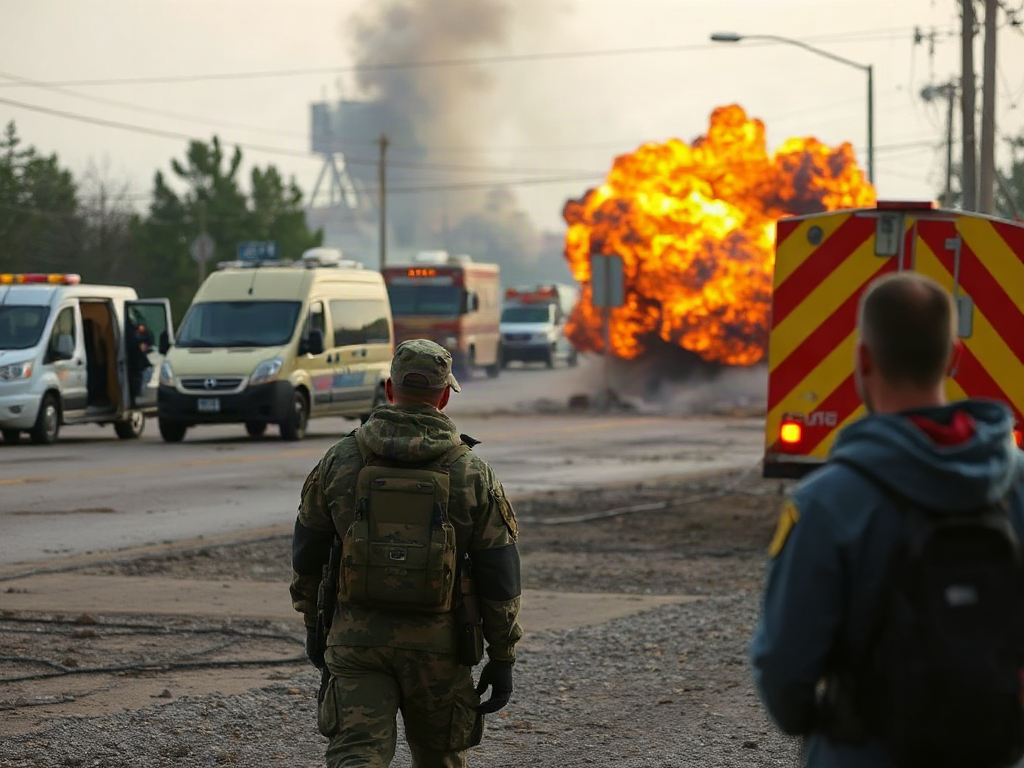
Later reports place the death toll at 38 after a Russian strike triggered explosions near Kyiv, highlighting local evacuation and emergency-response risks without indicating immediate danger to U.S. households.
The Watch
The newest supplied reports place the death toll at 38, one higher than the initial total reported after the August 29 strike near Kyiv. Multiple outlets describe the target as a weapons-related depot, warehouse, ammunition facility, or arms depot, but the exact characterization remains unresolved.
Reports also describe explosions, and one account says evacuations followed the strike. Ukraine reportedly launched an investigation. The available information does not establish the final casualty count, the number injured, the full property damage, or whether all those killed were civilians or military personnel.
The central watch point is the combination of a weapons-related site and nearby homes. An incident of this kind can create dangers beyond the initial strike, including blasts, restricted areas, evacuations, and added demands on emergency services.
What Changed
The reported toll moved from 37 in initial August 29 coverage to 38 in reports published August 30 and August 31. That is a material update, although the supplied reports do not explain when or how the additional death was confirmed.
The event remains tied to one reported strike near Kyiv. The available evidence does not show that the incident represents a broader escalation trend, nor does it establish claims that it was among the deadliest attacks of the year or war. Investigation, casualty verification, and damage assessment remain important next steps.
Why It Matters
A strike near a populated area can affect more people than those at the immediate impact site. If a weapons-related facility is damaged, explosions or fires may complicate rescue work and force residents to leave nearby areas. Damaged buildings and restricted zones can also disrupt ordinary movement and local services.
For the affected communities, the practical concern is reliable official information: where evacuations apply, which areas remain unsafe, and when services can resume. For U.S. readers, this is a local and regional security development rather than an immediate household emergency. Its wider importance lies in the emergency burden created when military targets and civilian neighborhoods are close together.
If This Continues
Scenario — not prediction.
If additional strikes affect weapons-related facilities near populated areas, authorities could face repeated evacuations, infrastructure disruption, and greater pressure on medical and emergency-response capacity. Residents could also face continued displacement while damaged or restricted areas are assessed.
If this incident remains isolated and recovery proceeds, the main effects may stay local and regional. Any broader military or geopolitical consequence remains uncertain from the available evidence.
What to Watch Next
- Updated casualty and injury totals from authoritative Ukrainian or emergency sources
- Official confirmation of evacuation zones, fires, secondary explosions, and structural damage
- Findings from the reported Ukrainian investigation
- Evidence of additional strikes near Kyiv or other weapons-related facilities
- Signs that local services are being restored or residents remain displaced
Preparedness Perspective
The evidence supports local and regional preparedness attention near Kyiv, not panic or extraordinary action by U.S. households. People in affected communities should follow official alerts, obey evacuation instructions, avoid damaged or restricted areas, and maintain reliable access to local emergency information.
Readers elsewhere can use the event as a reminder to keep basic continuity plans current. Know which official channel provides emergency notices, keep important contacts accessible, and pay attention to verified local service guidance during any major incident. Do not treat this report as a reason for panic buying or as evidence of immediate domestic danger.
Bottom Line
The reported toll has risen to 38, but important details remain unsettled. Watch authoritative updates on casualties, evacuations, the investigation, follow-on strikes, and service restoration. The clearest preparedness lesson is local: reliable alerts and careful attention to restricted areas matter most near the affected site.
Sources
- Democracy Now! — Russian Attack on Ukrainian Weapons Depot Kills 38 People – Democracy Now! (August 31, 2026)
- Al Jazeera — Death toll from Russian strike on Ukrainian arms depot rises to 38 – Al Jazeera (August 30, 2026)
- Reuters — Russian strike on Kyiv-area ammunition depot triggers blast, killing 37 – Reuters (August 29, 2026)
- npr.org — Russian strike near Kyiv kills 37, in one of the year’s deadliest attacks – NPR (August 29, 2026)
- PBS — Russian strike on a Ukrainian warehouse kills 37 in the war’s deadliest attack this year – PBS (August 29, 2026)
- dw.com — Russian strike on ammunition depot near Kyiv kills dozens – dw.com (August 29, 2026)