
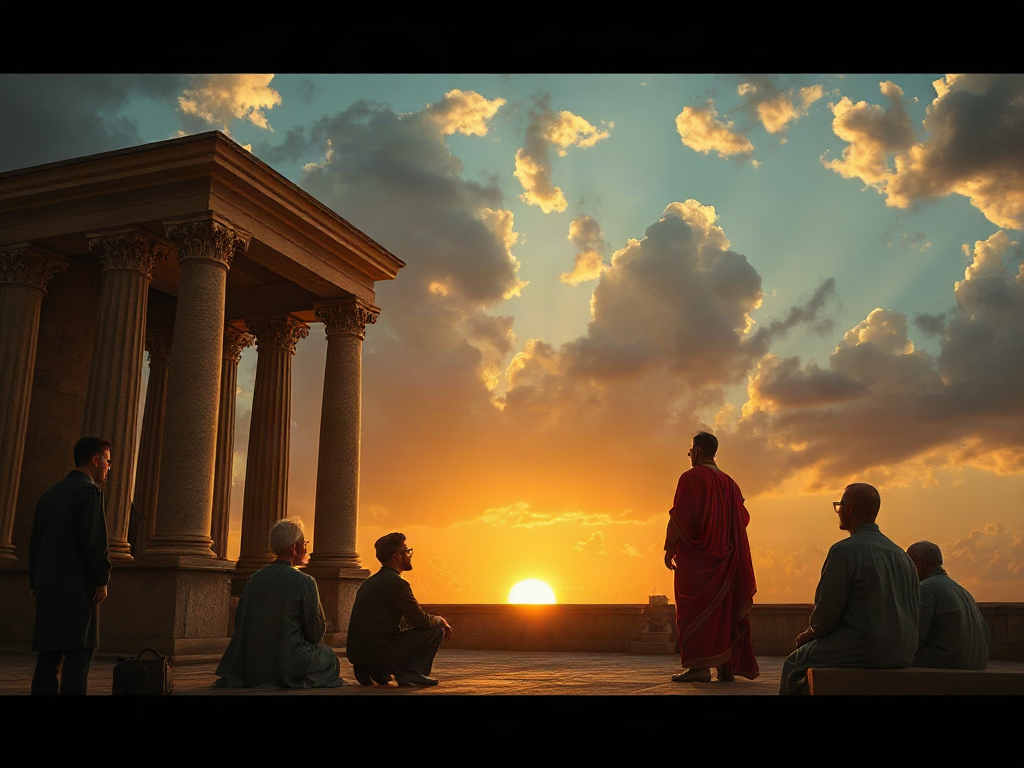
Christianity teaches that the world’s final judgment will follow the resurrection of the dead, when Jesus Christ judges every person with perfect justice and discloses the truth about human faith, conduct, and allegiance. The judgment confirms God’s victory over sin and death, separates the redeemed from those who reject God, and leads to eternal life or final condemnation. Christians disagree about the timing of end-times events and the nature of some prophetic imagery, but historic traditions broadly affirm Christ’s return, bodily resurrection, accountable judgment, and everlasting destiny. The practical response is faithful discipleship rather than date-setting, panic, or speculation.
What Christians Mean by Final Judgment
Final judgment refers to God’s decisive and public judgment of humanity at the completion of history. It is not merely a private assessment at death or a symbol for the consequences people experience during earthly life. Passages such as Matthew 25:31–46, John 5:28–29, Acts 17:31, and Revelation 20:11–15 present a future reckoning associated with Christ, resurrection, moral accountability, and an irreversible outcome.
Historic Christianity places Jesus Christ at the center of this judgment. The New Testament does not portray him only as a teacher who explains divine standards; it portrays him as the appointed judge who knows people truthfully and exercises the Father’s authority. That claim gives the doctrine its distinctive Christian shape. Judgment is neither an impersonal moral balance nor a contest in which human beings compare themselves with one another. It is an encounter with the crucified and risen Christ.
The judgment is described as universal. Social standing, religious reputation, political power, and hidden motives cannot shield anyone from it. The imagery of opened books in Revelation communicates complete disclosure and accurate judgment, while the Book of Life communicates belonging to God. Readers should be cautious about forcing every image into a literal courtroom schedule. Apocalyptic language reveals theological realities through symbols, and its central point is clearer than every disputed detail: no injustice remains concealed, and no verdict issued by God is mistaken.
Final judgment also concerns the renewal of creation. Christian hope is not limited to individual souls leaving the world. Romans 8:18–25 anticipates creation’s liberation, while Revelation 21–22 depicts a new heaven and new earth where death, mourning, and evil no longer govern human existence. Judgment removes what corrupts God’s creation and establishes the setting for enduring communion with God.
A common mistake is to reduce the doctrine either to fear-based preaching or to a vague claim that everything will eventually work out without judgment. The first approach may manipulate anxiety while neglecting mercy; the second empties moral choices and grievous injustice of lasting significance. A sound reading holds together God’s holiness, knowledge, patience, mercy, and opposition to evil. For related treatment of the doctrine’s wider scriptural setting, see Christianity’s Teaching on the World’s Final Judgment.
Resurrection, Christ’s Return, and the Order of Events
The New Testament connects final judgment with Christ’s return and the resurrection of the dead. John 5 speaks of those in the tombs hearing Christ’s voice, and 1 Corinthians 15 explains resurrection as God’s victory over death. The Apostles’ Creed and Nicene Creed preserve this basic sequence without supplying a detailed prophetic timetable: Christ will come again, the dead will rise, and judgment will occur.
Resurrection matters because Christian judgment concerns the whole person, not a disposable body temporarily inhabited by a soul. The resurrection of Jesus is the pattern and guarantee of Christian hope. Paul therefore treats denial of resurrection as a denial of something structurally central to the gospel. The promised future is embodied life transformed by God, not merely survival as a memory, influence, or disembodied consciousness.
Christians differ over how several end-times passages fit together. Premillennial interpretations expect Christ’s return before a millennial reign described in Revelation 20. Amillennial readings usually understand the millennium as a symbolic description of Christ’s present reign and expect his return to bring resurrection and final judgment. Postmillennial views anticipate an extensive historical advance of the gospel before Christ returns. Traditions also disagree about a rapture distinct from the public return of Christ, the identity of figures in apocalyptic prophecy, and the relationship between present events and particular prophetic texts.
Those disagreements should be ranked rather than treated as if every detail carried equal doctrinal weight. A church may have a settled position on the millennium while recognizing other readings as Christian. By contrast, denying Christ’s return, resurrection, or accountable judgment moves beyond a secondary timetable debate and challenges affirmations embedded in the ancient creeds. Readers comparing views should first ask what a teaching says about Christ, resurrection, judgment, and new creation before examining its proposed chronology.
For example, a war or natural disaster may resemble the upheavals described in prophetic texts, but resemblance does not establish that a particular event fulfills a particular prediction. Jesus warned against deception and premature claims while instructing disciples to remain watchful. A failed approach continually resets dates after predictions collapse. A responsible approach tests interpretations against the full context of Scripture, distinguishes explicit teaching from inference, and refuses to make current headlines more authoritative than the text.
The practical priority is certainty about the promised outcome without unwarranted certainty about every intermediate step. Christianity’s central confession is not that believers can decode a calendar. It is that history is moving toward Christ’s visible authority, the defeat of death, the exposure of evil, and the restoration God has promised.
What Is Judged and Why Grace Still Matters
Christian Scripture presents judgment as an evaluation of persons that includes deeds, words, motives, and response to God’s revelation. Jesus warns that careless words matter, Matthew 25 depicts acts of mercy as evidence with eternal significance, and Romans 2 describes judgment according to works. These texts prevent faith from being reduced to an empty label that leaves conduct untouched.
At the same time, the New Testament teaches that sinners are reconciled to God by grace rather than by achieving a flawless moral record. Ephesians 2:8–10 places salvation by grace through faith beside the good works for which believers are created. The two claims serve different purposes: works do not purchase God’s mercy, but a life’s direction can disclose whether professed faith is living, obedient, and sincere. James makes the same point by rejecting a faith that produces no practical response to another person’s need.
This relationship between grace and works is expressed differently across Christian traditions. Protestant theology commonly emphasizes justification by faith alone while insisting that genuine faith bears fruit. Catholic teaching speaks of grace-enabled faith, love, and cooperation with God rather than human merit independent of grace. Orthodox theology often stresses healing, transformation, and participation in divine life. The vocabulary and theological models vary, but none of these historic traditions treats final judgment as permission to rely on outward affiliation while deliberately refusing repentance.
A concrete contrast clarifies the issue. One person performs visible religious acts to gain status while exploiting vulnerable people in private. Another confesses sin, seeks reconciliation, practices mercy, and depends on Christ rather than claiming moral superiority. Human observers may be impressed by the first person’s reputation, but final judgment includes motives and concealed conduct. That is why Jesus repeatedly challenges hypocrisy: religious appearance cannot substitute for truth before God.
Readers should avoid two opposite errors. Legalism treats salvation as wages earned through enough approved behavior, often producing pride or despair. Presumption claims grace while dismissing obedience, restitution, forgiveness, and concern for others. A more faithful self-examination asks whether trust in Christ is producing repentance, love of neighbor, integrity, and perseverance. Temporary failure does not by itself prove the absence of faith; stubborn refusal to repent should not be disguised as assurance.
The doctrine also addresses victims of wrongdoing. Earthly courts can fail, perpetrators can avoid consequences, and some losses cannot be repaired within history. Final judgment affirms that God neither forgets suffering nor confuses victim and offender. That promise does not authorize personal revenge or neglect of lawful justice now. It gives Christians a reason to pursue truth and protection without pretending that human institutions can deliver the final verdict.
How Christians Should Respond to the Coming Judgment
The appropriate response to final judgment is sustained faithfulness, not prophetic obsession. New Testament warnings about readiness regularly lead toward repentance, sober conduct, worship, service, and endurance. A teaching has gone wrong when it produces constant date calculations, neglect of ordinary responsibilities, contempt for outsiders, or unquestioning loyalty to a leader claiming secret prophetic knowledge.
Christian readiness begins with honest trust in Christ and a willingness to turn from known sin. It then becomes visible in ordinary decisions: keeping promises, making restitution where possible, forgiving without denying the seriousness of harm, caring for people in need, and refusing practices that depend on deception or exploitation. These actions do not manipulate a favorable verdict. They are fitting responses to God’s grace and evidence that the future judgment is shaping present allegiance.
A compact discernment check can help readers evaluate end-times teaching:
- Check the passage in context. Read the surrounding argument and note whether the language is prophetic, apocalyptic, parabolic, or instructional.
- Separate core confession from disputed chronology. Give greatest weight to Christ’s return, resurrection, judgment, and renewed creation.
- Examine the fruit. Sound teaching should deepen repentance, courage, mercy, and perseverance rather than panic or superiority.
- Reject unsupported dates and private certainty. A confident prediction is not made reliable by charts, current events, or repeated revisions.
- Remain accountable. Compare claims with Scripture, historic Christian teaching, and mature pastoral counsel rather than an isolated online voice.
Consider a congregation told that an identifiable political crisis proves judgment will occur within months. The claim may generate urgency, but urgency is not evidence. The responsible next step is to inspect the cited passages, identify assumptions inserted between the text and the prediction, and ask how the interpretation relates to Jesus’ warnings about unknown timing. If the teacher discourages questions or converts failed predictions into new dates, those are signs the approach is failing.
Pastoral sensitivity also matters. People troubled by judgment may need more than a chronology lesson. Some fear may arise from unresolved guilt, scrupulosity, spiritual abuse, or a distorted picture of God. Christian counsel should not erase scriptural warnings, but neither should it weaponize them. The gospel directs repentant people toward Christ’s mercy while calling complacent people to wakefulness. Readers seeking a broader doctrinal framework can consult Christianity’s Teaching on the World’s Final Judgment alongside the biblical passages discussed here.
Signs of a healthy response include greater honesty, patient endurance, concern for justice, and steadier hope amid uncertainty. Signs of failure include fixation on hidden codes, withdrawal from work or family duties, financial decisions based on predictions, and indifference to present suffering. Christian watchfulness prepares people to meet Christ by following him now.
Frequently Asked Questions
Who will conduct the final judgment according to Christianity?
The New Testament identifies Jesus Christ as the appointed judge, acting with divine authority and complete knowledge of every person.
Will every person be resurrected for judgment?
Historic Christian teaching affirms a general resurrection involving both the righteous and the unrighteous, though traditions differ about the precise sequence of end-times events.
Are Christians judged by faith or by works?
Christians are saved by God’s grace, while deeds reveal the reality and direction of faith. Traditions explain that relationship differently but reject both self-salvation and empty profession.
Can anyone know when final judgment will happen?
No reliable Christian basis exists for setting a date. Jesus’ teaching emphasizes watchfulness and faithful service rather than calculating a hidden timetable.
Is final judgment the same as going to heaven immediately after death?
Not exactly. Many traditions teach an immediate post-death state while also affirming a future bodily resurrection, public judgment, and the completion of God’s renewed creation.
Further Reading
Authoritative Sources
- Catechism of the Catholic Church: The Last Judgment
vatican.vaExplains Catholic teaching on Christ’s return, resurrection, judgment, conduct, and the disclosure of each person’s relationship with God
- The Apostles’ Creed
churchofengland.orgPresents the ancient Christian confession that Christ will judge the living and the dead and that believers await bodily resurrection
- The Orthodox Faith: Judgment
oca.orgOffers an Eastern Orthodox account of divine judgment, human response, resurrection, and eternal communion with God
- Matthew 25:31–46 and Revelation 20:11–15
biblegateway.comProvides two central New Testament passages for comparing Jesus’ judgment teaching with Revelation’s throne and books imagery
Conclusion
Final judgment should be approached through Christianity’s central claims rather than through speculative calendars. Christ returns, the dead are raised, hidden realities are disclosed, evil is answered, and human destiny is confirmed under God’s just authority. Disagreements about the millennium or the sequence of prophetic events deserve careful study, but they should not displace those shared convictions.
The clearest next step is to read the principal passages in context and examine what a chosen church tradition teaches about grace, works, resurrection, and judgment. Test interpretations by their fidelity to Scripture and by the life they produce. Teaching that encourages repentance, mercy, integrity, endurance, and hope reflects the New Testament’s practical emphasis. Teaching driven by dates, fear, or claims of exclusive secret knowledge deserves firm scrutiny.