
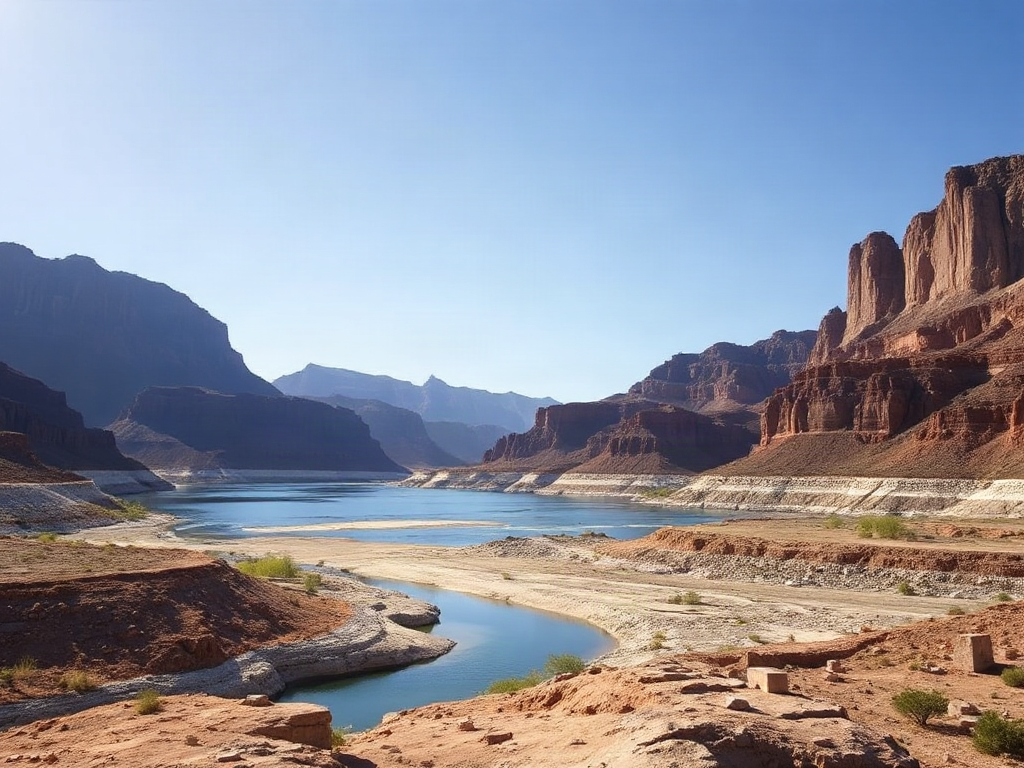
The reservoir reached 3,517.24 feet on September 10, 2026, adding pressure to a river system that supports water, farms, and electricity across the Southwest.
The Watch
Lake Powell has reached a reported record-low elevation after an already historic decline. Its water surface stood at 3,517.24 feet on September 10, 2026, below the previous reported record of 3,519.92 feet set on April 13, 2023.
The available evidence links the drop to weak 2025–2026 mountain snowpack, unusually warm conditions, and sharply reduced Colorado River inflows. Lake Mead was also reported at a record low in August.
This is a significant regional water-system warning, not proof of an immediate nationwide household emergency. The important question now is whether the decline continues, stabilizes, or begins to reverse.
What Changed
The newest report places Lake Powell below the record it had previously set, showing a further decline from the approximately 3,519.8-foot level reported in August. Levels were still falling into early September, but the available evidence does not establish whether that decline has stopped.
The change matters because it reflects more than a single low reading. It points to continued pressure on inflows after weak snowpack and warm conditions reduced the water reaching the reservoir. Lake Mead’s reported record low adds another warning from the same Colorado River system.
The available material does not confirm current storage percentages, operational restrictions, or changes to future allocation decisions.
Why It Matters
The Colorado River system supports residents, farms, and electricity needs across multiple Southwestern states. Lower reservoir levels can reduce flexibility for managing water supplies and hydropower, while increasing pressure on agriculture and ecosystem management.
Those consequences are not automatic, and the available evidence does not quantify likely household or statewide impacts. It also does not confirm service disruptions or enacted restrictions. Still, a second major reservoir reaching a reported record low makes the system’s condition harder to dismiss as an isolated fluctuation.
For people outside the basin, the relevance is strategic rather than immediate. Water-management decisions in a heavily used regional system can affect communities, farms, utilities, and local economies if low inflows persist.
If This Continues
Scenario — not prediction.
If weak snowpack, warm conditions, and reduced inflows continue, Lake Powell and other parts of the Colorado River system could fall further. That could increase pressure on allocation decisions, conservation measures, hydropower flexibility, agriculture, and ecosystems.
If inflows improve or water managers stabilize the system, the rate of decline could slow. The available evidence does not establish which outcome will occur, how long the low conditions will last, or whether restrictions will be announced.
What to Watch Next
- Official Bureau of Reclamation updates on Lake Powell and Lake Mead elevations, storage, and operations
- Reported Colorado River inflows, snowpack, snowmelt, precipitation, and temperatures
- Any announced water-allocation, conservation, hydropower, or infrastructure measures
- Evidence that reservoir declines are stabilizing or setting new records
- Changes in projected Lake Mead levels
- Reported effects on agriculture, municipal water, ecosystems, or electricity systems
Preparedness Perspective
This is a strategic regional monitor, not a reason for nationwide alarm. Readers in the Colorado River Basin should follow official local water advisories, conservation requirements, and utility updates rather than relying on headlines alone.
Communities, farms, and organizations that depend on the basin can review continuity plans for possible water-management changes if the decline persists. Households can keep track of local guidance, understand any conservation rules that apply to them, and maintain ordinary plans for service or utility changes.
A record-low reservoir does not automatically mean immediate household disruption. The practical response is to monitor authoritative updates, follow local requirements, and avoid assuming that future restrictions or impacts are already settled.
Bottom Line
Lake Powell’s new reported record low confirms worsening stress in a major Southwestern water system. The immediate concern is regional and operational, not a nationwide household emergency. Watch reservoir levels, inflows, official management decisions, and local utility guidance. The key question is whether the decline continues or begins to stabilize.
Sources
- sciencedaily.com — One of America’s largest reservoirs just hit a record low (September 23, 2026)
- the-independent.com — America’s second largest reservoir is at a record low (August 17, 2026)