
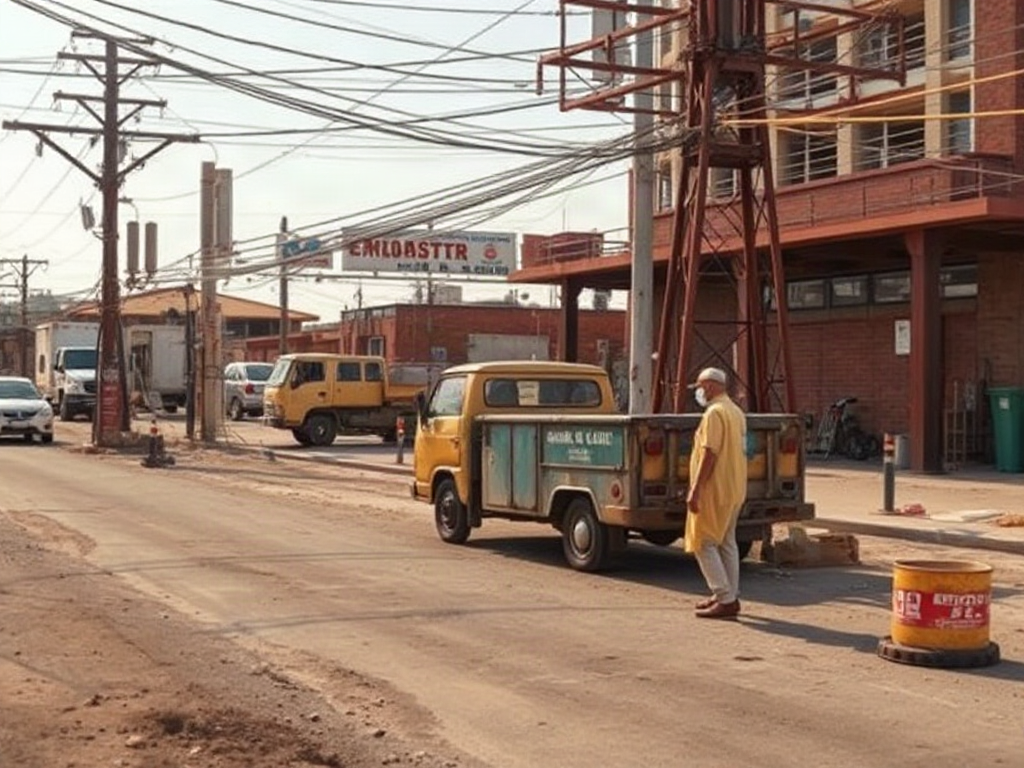
The newest report continues to describe a federal emergency involving 13 states, including New Jersey, but does not confirm widespread outages or explain the order’s duration.
The Watch
A power-grid emergency is being reported across 13 states, including New Jersey. The newest same-event report, published October 15, continues to describe the emergency rather than confirming that it has ended or changed scope.
Earlier reports described an Energy Department emergency order directing PJM to take steps intended to maintain grid reliability. PJM is the regional organization responsible for coordinating the electric grid across a large portion of the eastern United States.
That distinction matters. The available reporting supports a confirmed reliability action, not proof of a broad blackout. It does not establish whether customers lost power, faced rolling interruptions, received conservation requests, or experienced other service disruptions.
What Changed
The latest supplied report keeps the 13-state emergency in the news, including New Jersey. Earlier reports from October 13 and 14 described the development as an emergency declaration or reliability measure.
What has not changed in the available evidence is just as important: the number of states remains 13, but the excerpts do not identify all of them or provide a new operational status. They also do not explain the specific power shortfall, give the order’s duration, or confirm customer impacts.
The reporting therefore shows persistence, not a verified worsening or improvement. The next meaningful change would be an official update about whether the order remains active, expands, or is withdrawn.
Why It Matters
Electricity supports ordinary household routines and community services. It powers communications, helps businesses operate, and affects how people manage essential needs at home. A regional reliability action therefore deserves attention even when widespread outages have not been established.
For households, the practical issue is continuity. A short interruption can create extra difficulty for people with caregiving responsibilities, limited mobility, or few alternatives for communication and power. The evidence does not show that such disruption occurred here, but it identifies an essential dependency that is easy to overlook until service is interrupted.
This is best understood as an elevated regional reliability concern, not an immediate household emergency. The useful lesson is to make one realistic continuity decision before official guidance becomes urgent.
If This Continues
Scenario — not prediction.
If reliability conditions worsened, utilities or authorities could take additional steps to protect the grid. Communities might then receive conservation requests or experience controlled interruptions, outages, or restoration activity.
If conditions stabilized, the emergency action could remain a preventive measure without widespread customer outages. Either outcome would depend on official operational updates, which the available reports do not yet provide. These are possible paths, not findings about what has occurred.
What to Watch Next
- An official update saying whether the emergency order remains active, expands, or is withdrawn
- PJM or utility notices about conservation requests, controlled interruptions, outages, or restoration
- Verified identification of the 13 affected states and the reliability condition involved
- Confirmation of whether customers experienced any service disruption
- Later confirmation that grid conditions returned to normal or that emergency actions were repeated
Preparedness Perspective
This report does not call for panic buying or major changes to daily life. It does support a modest continuity check, especially for households that depend heavily on electricity or have limited alternatives.
First, identify the official utility, PJM, and government channels used in your area. That helps separate operational guidance from incomplete or alarming online claims. Second, discuss one backup communication and power-continuity arrangement with the people who rely on the household. The right option will depend on mobility, caregiving needs, and budget; the goal is a workable plan, not an expensive setup.
Keep the plan current and make sure everyone knows what to do if service is interrupted. These steps are useful because they preserve choices while the emergency’s actual customer impact remains uncertain.
Bottom Line
The confirmed development is a reported regional grid-reliability action involving 13 states, including New Jersey—not a verified widespread blackout. Watch for official updates on the order, utility impacts, and any conservation or outage notices. In the meantime, make one practical household continuity plan suited to your circumstances.
Sources
- AOL.com — The Trump administration has declared a power grid emergency in 13 states — what that means for you – AOL.com (October 15, 2026)
- fox5ny.com — Power grid emergency declared for 13 states, including NJ – FOX 5 New York (October 15, 2026)
- EIN Presswire — Federal Grid Emergency Declared in 13 States and D.C. Underscores the Value of Standby Power, Says Buckeye Power Systems – EIN Presswire (October 14, 2026)
- Patch — Power Grid Emergency Declared In PA: What It Means – Patch (October 14, 2026)
- News12 | New Jersey — Power grid emergency declared for NJ. What does it mean? – News12 | New Jersey (October 14, 2026)
- Daily Mail — Power grid emergency declared across 13 US states in urgent bid to prevent blackouts – Daily Mail (October 13, 2026)