
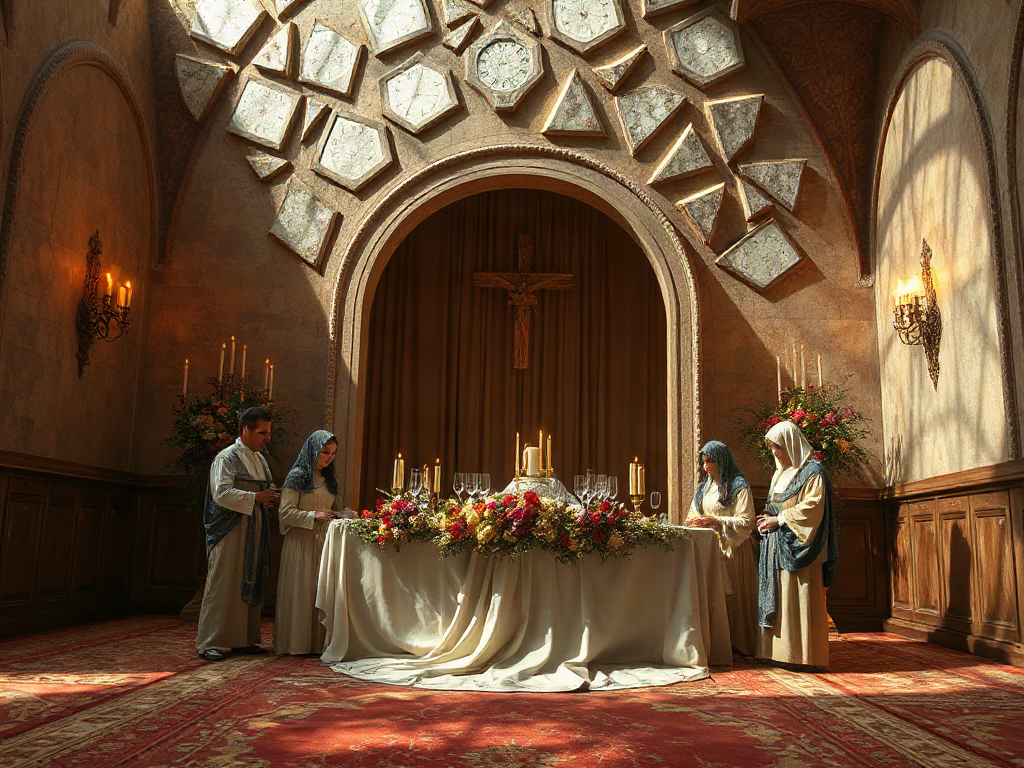
Bride of Christ imagery in end-times Scripture presents God’s people as a covenant community awaiting union with Christ, not as a timetable code or a portrait of one individual. Betrothal language explains present faithfulness, readiness scenes emphasize persevering allegiance, and wedding-supper passages portray public celebration after evil is judged. Revelation connects the bride’s fine linen with the righteous deeds of the saints while still grounding salvation in the Lamb’s work. Readers should interpret each symbol in its immediate setting and distinguish the bride, invited guests, wedding attendants, and holy city rather than forcing every marriage image into an identical sequence.
The Covenant Background Behind the Bride
Biblical bridal language begins with covenant relationship rather than end-times chronology. Israel’s prophets portrayed the Lord as a husband and his covenant people as a wife, making marriage a picture of exclusive loyalty, estrangement through idolatry, judgment, forgiveness, and restoration. Isaiah 54 and 62 anticipate renewed joy and divine delight, while Jeremiah 2 and Ezekiel 16 use broken-marriage language to expose covenant unfaithfulness. Hosea adds the prospect of restoration after betrayal. These passages establish the vocabulary later used for Christ and his people.
The New Testament applies this covenant pattern to Jesus without treating the church as a replacement character detached from Israel’s Scriptures. John the Baptist calls Jesus the bridegroom and identifies himself as the bridegroom’s friend in John 3:29. Jesus describes his presence with the disciples through the same image in Mark 2:19–20. Paul tells the Corinthian congregation that he has betrothed them to one husband, Christ, and worries that deception could draw them away from sincere devotion. In Ephesians 5, the relationship between Christ and the church is described through sacrificial love, cleansing, holiness, and presentation.
This background changes how readers approach Bride of Christ imagery in end-times Scripture. The controlling question is not initially, “At what prophetic date does the wedding occur?” It is, “What kind of relationship does this marriage language describe?” The answer includes belonging, fidelity, costly redemption, moral formation, and an anticipated public union. End-time fulfillment completes a relationship already established; it does not introduce an unrelated group at the last moment.
A common mistake is to build an exact prophetic schedule from cultural reconstructions of ancient weddings. Historical customs may illuminate a detail, but Scripture does not present one standardized wedding ritual as a hidden chronological template. Jewish marriage practices varied by period and location, and modern summaries sometimes combine evidence from different centuries. The safer method is to trace explicit textual links: identify who the bridegroom is, determine whom the passage addresses, note whether the scene concerns waiting or celebration, and compare it with the prophetic covenant background.
Readers should therefore prioritize canonical connections over imaginative reconstruction. Isaiah helps explain Revelation’s rejoicing; Hosea clarifies why fidelity matters; and Paul shows that bridal identity carries present ethical demands. If an interpretation generates elaborate timing claims but says little about covenant loyalty to Christ, it has likely shifted attention away from the image’s primary function.
Readiness, Garments, and Faithful Waiting
Readiness passages use wedding settings to demand durable faithfulness while the bridegroom appears delayed. Matthew 25:1–13 depicts ten virgins waiting for a bridegroom, five prepared and five unprepared. The parable’s force lies in the irreversible disclosure produced by his arrival: prior profession and participation in the waiting group do not substitute for actual preparedness. Jesus ends with a command to keep watch because the day and hour are unknown.
The attendants in that parable should not automatically be equated with the bride. Their role within the story serves the warning Jesus gives his disciples. The oil has also attracted many proposed meanings, including the Holy Spirit, good works, faith, or accumulated spiritual merit. Because Jesus does not decode the oil as a separate doctrinal symbol, certainty about one identification exceeds the text. The secure point is that preparedness cannot be borrowed at the decisive moment. The wise attendants possess what their task requires before the announcement comes.
Revelation 19:7–8 develops another aspect of readiness by saying that the bride has made herself ready and has been granted clean, bright linen. The wording holds divine provision and human response together: the clothing is given, yet it represents the righteous deeds of the saints. That combination guards against two opposite errors. Readiness is not self-salvation through moral achievement, but neither is grace presented as indifference to obedience. Allegiance to the Lamb becomes visible in persevering worship and conduct.
A practical reading checklist keeps these scenes anchored to their stated purposes:
- Identify the characters. Do not assume that bride, attendants, and invited guests are interchangeable.
- Locate the warning or promise. Watchfulness, fidelity, exclusion, and celebration perform different functions.
- Separate explicit meaning from inference. Give the text’s own explanation greater weight than reconstructed customs.
- Test the ethical result. A sound reading should reinforce perseverance in Christ rather than encourage date-setting.
Applied personally and corporately, readiness means sustained fidelity during apparent delay. It includes resisting deceptive worship, refusing accommodation to evil, practicing the obedience Revelation associates with the saints, and keeping hope directed toward Christ. Signs that an interpretation is working include clearer attention to discipleship and the passage’s original warning. Signs that it is failing include speculative calculations, fear driven by every news cycle, or claims that one modern event definitively identifies the bridegroom’s arrival.
The Marriage Supper and the Return of Christ
Revelation places the marriage supper at a decisive transition from Babylon’s downfall to the victorious appearance of Christ. Revelation 19:1–10 celebrates God’s true judgments, announces the Lamb’s marriage, describes the bride’s readiness, and pronounces blessing on those invited to the supper. The vision then turns to the rider on the white horse, who judges and makes war in righteousness. Celebration and judgment are therefore adjacent parts of the same dramatic movement: corrupt power falls, the Lamb’s covenant people are vindicated, and Christ’s rule is publicly displayed.
The passage does not answer every sequencing question later interpreters bring to it. Some theological systems locate the supper in heaven before Christ’s descent; others understand the imagery as a broad portrayal of final salvation surrounding his return. Revelation’s visions may advance chronologically in some places and recapitulate events from different angles in others. A responsible conclusion should be no narrower than the text permits. Revelation 19 securely associates the wedding celebration with the completion of God’s judgment and the manifestation of Christ’s victory, but it does not provide a detailed banquet itinerary.
The identities of the bride and invited guests raise a related question. If the bride represents the saints, who are the guests? Symbolic visions can depict the same redeemed reality under complementary roles without requiring entirely separate populations. The saints may be viewed corporately as the bride and individually as blessed participants. Alternatively, some interpreters distinguish Israel, the church, angelic witnesses, or other redeemed groups. Any proposed distinction should be tested against the passage rather than assumed from the social mechanics of a literal wedding.
Jesus’ banquet sayings provide additional context. Matthew 8:11 anticipates people coming from east and west to recline with Abraham, Isaac, and Jacob in the kingdom. Matthew 22:1–14 portrays a royal wedding feast that combines generous invitation with accountability, while Luke 14:15–24 warns that presumed insiders may refuse the invitation. These texts use feasting to communicate kingdom inclusion, joy, reversal, and judgment. They support the theological meaning of Revelation’s supper without necessarily supplying its precise chronology.
When assessing a claim about the marriage supper, check whether it respects the sequence actually visible in Revelation 19, acknowledges symbolic flexibility, and preserves the chapter’s central contrast between Babylon and the bride. The former is adorned through exploitation and becomes desolate; the latter is clothed through God’s grant and enters celebration. That moral contrast is more explicit than many proposed charts. The wedding supper promises communion and vindication, but it also asks readers where their allegiance lies before the feast begins.
The Bride and New Jerusalem in Revelation
Revelation’s fullest bridal portrait is a city filled with people and divine presence. In Revelation 21:2, John sees New Jerusalem descending from heaven, prepared as a bride adorned for her husband. An angel then promises to show him “the bride, the wife of the Lamb,” but displays the holy city coming down from God. The identification prevents readers from reducing the bride to romantic metaphor alone. The bride is the redeemed community in its final, God-given dwelling, portrayed through the architecture of a perfected city.
The city’s details explain what completed union entails. God dwells with humanity; death, mourning, crying, and pain pass away; the city bears the names of Israel’s twelve tribes and the Lamb’s twelve apostles; uncleanness is excluded; and the glory of God supplies its light. Revelation 22 adds the river of life, the tree of life, service before God’s throne, and the removal of the curse. The image is communal, embodied, holy, and creation-renewing. It is not chiefly an escape from material existence.
The bride-city connection also cautions against an overly narrow definition of bridal identity. The tribal and apostolic inscriptions present continuity across the biblical story, while the nations walk by the city’s light and bring their glory into it. Christians differ over how Israel and the church relate within that fulfillment, and the vision should not be made to settle questions it does not address in systematic detail. It does clearly locate salvation within the Lamb’s unified work and the fulfillment of God’s covenant purposes.
Revelation closes with another important use of the image: “The Spirit and the bride say, ‘Come.’” The bride is not passive ornamentation. She joins the Spirit’s invitation and longs for Christ’s coming. This gives Bride of Christ imagery in end-times Scripture a present missional dimension. The community awaiting the bridegroom bears witness, calls the thirsty to receive the water of life, and orders its worship around the Lamb rather than the seductions of Babylon.
A weak reading concentrates on gemstones, dimensions, or wedding customs while overlooking presence and holiness. Those details matter, but they serve the vision’s theological center: God makes his home with a cleansed people through the Lamb. Readers comparing interpretations should ask which account best integrates the city, the covenant community, the nations, renewed creation, and God’s direct presence. An approach that explains only one feature is incomplete, even if its prophetic timeline appears precise.
Frequently Asked Questions
Who is the Bride of Christ?
The New Testament portrays the bride corporately as the people joined to Christ. Paul applies marriage language to the church, while Revelation depicts the bride as the saints and as New Jerusalem, the perfected covenant community.
Is the Bride of Christ the same as New Jerusalem?
Revelation 21 explicitly calls New Jerusalem “the bride, the wife of the Lamb.” The city symbolizes the redeemed community in its final dwelling with God, so it should not be treated as merely a collection of buildings.
When does the marriage supper of the Lamb occur?
Revelation 19 associates it with Babylon’s judgment, the bride’s readiness, and Christ’s victorious appearance. The passage establishes that theological setting but does not state every chronological detail proposed in later prophetic systems.
Does the oil in the parable of the ten virgins represent the Holy Spirit?
That is a common interpretation, but Matthew 25 does not explicitly identify the oil. The firm point is that genuine readiness cannot be acquired from someone else after the bridegroom arrives.
Does bridal readiness mean salvation by good works?
No. Revelation says the bride’s linen was granted to her while associating it with the saints’ righteous deeds. The image presents obedient perseverance as the fruit and visible expression of belonging to the Lamb, not payment for redemption.
Further Reading
Authoritative Sources
- Revelation 19:1–10
biblegateway.comThe central marriage-supper passage connects the bride’s preparation with worship, judgment, and the Lamb’s victory
- Revelation 21:1–22:5
biblegateway.comThis vision identifies the Lamb’s bride with New Jerusalem and describes God’s final dwelling with redeemed humanity
- Ephesians 5:21–33
biblegateway.comPaul’s comparison of Christ and the church supplies essential context for sacrificial love, cleansing, and presentation
- Matthew 25:1–13
biblegateway.comThe parable of the ten virgins clarifies how wedding imagery functions as a warning about watchfulness and preparedness
Conclusion
Bridal imagery should be read as a connected biblical storyline before it is placed on a prophetic timeline. The prophets supply the covenant themes of fidelity, judgment, restoration, and joy. Jesus uses wedding scenes to demand watchfulness, Paul relates marriage to Christ’s cleansing love, and Revelation brings the symbols together in the prepared bride, the Lamb’s supper, and New Jerusalem.
The most reliable next step is to read Isaiah 54 and 62, Matthew 25, Ephesians 5, and Revelation 19–22 side by side. Mark what each passage explicitly says about identity, preparation, judgment, invitation, and divine presence. Hold disputed sequencing claims with appropriate modesty, especially when they depend on reconstructed wedding customs. The image’s clearest demands are already substantial: remain loyal to Christ, resist corrupt worship, practice faithful obedience, invite the thirsty, and hope for God’s dwelling with his people.