
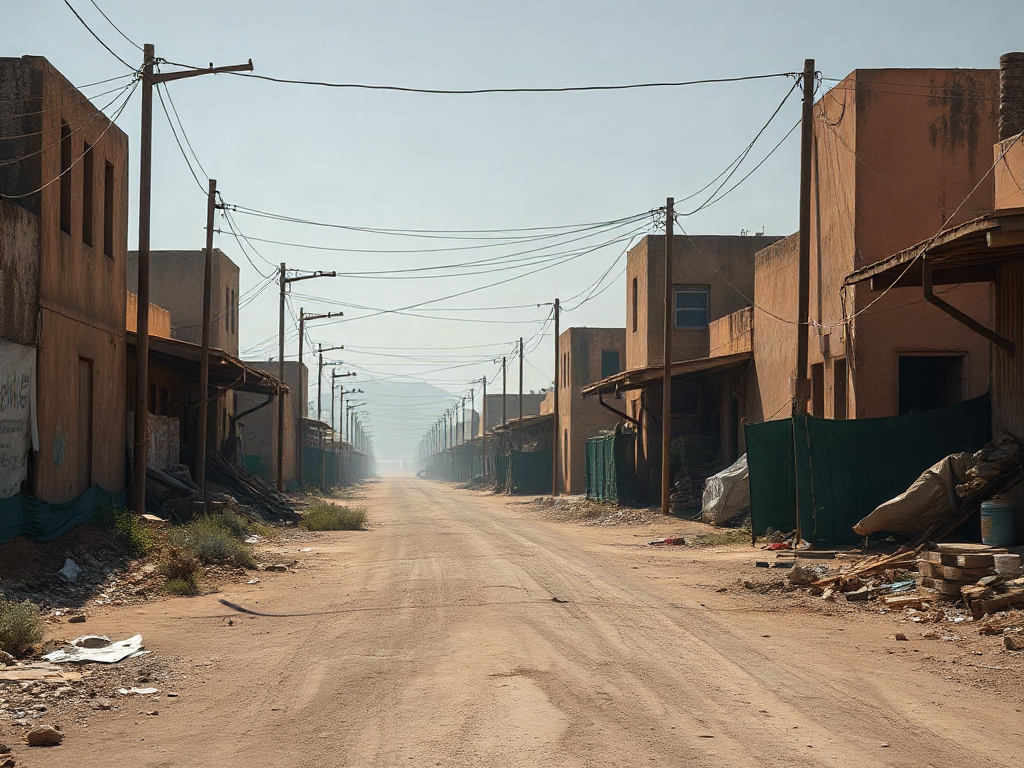
Multiple reports describe a drone strike on a market in disputed Abyei, with officials blaming Sudan’s military; the confirmed local impact is severe, but wider spillover is not established.
The Watch
At least 153 people were reportedly killed when a drone struck a market in Abyei, a disputed region along the Sudan-South Sudan border. The lead report described the site as a fuel market, where civilian activity and essential access may be concentrated.
Officials and multiple reports attributed the strike to Sudan’s military or Sudanese Armed Forces. That attribution remains reported rather than independently established in the available evidence. The casualty count also remains unsettled. Other same-event reports cited totals ranging from at least 73 to at least 226.
This combination makes the event important beyond its immediate human cost. It involves alleged military action at a civilian market in contested territory, while leaving basic questions about responsibility, injuries, and the strike’s wider effects unanswered.
What Changed
The newest same-event reporting places the minimum death toll at 153. Earlier reports gave substantially different figures, including at least 73 and at least 226. The clearest documented change is therefore a later convergence around a 153-death minimum, not a settled final count.
The available reporting does not establish the exact strike time, the weapon used, the intended target, the identities of those killed, or the number injured or displaced. It also does not show whether the incident has caused wider fighting, retaliation, or a confirmed interruption in fuel availability.
Why It Matters
A market is more than a place to buy goods. It can be a central access point for food, fuel, transport, and other daily needs. If the reported site was materially damaged or became unsafe, nearby residents could face harder access to essential supplies.
That remains a local and regional concern, not evidence of an immediate U.S. household threat. The broader lesson is practical: when essential goods are concentrated in one public location, violence can disrupt ordinary routines quickly. The available evidence does not establish shortages in Abyei or wider regional supply disruption, so those consequences should not be treated as confirmed.
If This Continues
Scenario — not prediction.
If responsibility is confirmed and additional strikes or retaliation follow, civilians in the immediate area could face reduced market access, movement restrictions, or greater difficulty obtaining essential goods. If authorities secure the site and later reports stabilize or lower the casualty count, the event may remain a contained but severe local incident.
If the market’s fuel function was disrupted, nearby communities could experience added access problems. That effect is possible, not confirmed by the available reporting.
What to Watch Next
- Independent casualty updates, including whether 153 is a minimum, revised total, or disputed estimate
- Hospital or local-authority reporting on deaths, injuries, and civilian movement
- Statements, denials, admissions, or competing claims about responsibility
- Reports of additional strikes, retaliation, market closures, or security restrictions in Abyei
- Evidence that fuel distribution and market access are impaired or recovering
Preparedness Perspective
The available evidence supports a local and regional readiness lesson, not a direct U.S. danger warning. Communities exposed to conflict can become vulnerable when essential goods depend on one market or access point.
For households and community groups, a modest first step is to identify an alternative way to obtain essential goods if a primary market becomes inaccessible. Organizations that support vulnerable residents can also review how they would communicate changes in access or service locations. These are general planning measures, not evidence that shortages are occurring in Abyei.
Readers should rely on verified local or official updates rather than any single early casualty figure. Keeping a basic continuity plan current preserves options without assuming that wider disruption will follow.
Bottom Line
The reported strike is a severe but currently local conflict development. The death toll has reached at least 153 in later reporting, yet the final number and operational responsibility remain unsettled. Watch for verified casualty updates, attribution, retaliation, movement restrictions, and changes in market or fuel access. Awareness should support calm planning, not panic.
Sources
- Latin Times — 153 Dead After Sudan Drone Strike Hits Border Market in Abyei – Latin Times (October 21, 2026)
- Facebook — The New York Times. . A drone strike on a market in Abyei, a disputed region between Sudan and South Sudan, killed at least 150 people on Monday, a local official said. Officials blamed Sudan’s military for the attack. #Sudan Correction: An earlier version of t – Facebook (October 21, 2026)
- The National — Drone attack by SAF kills at least 153 in disputed border region – The National (October 21, 2026)
- Ynetnews — At least 226 reported killed in Sudan drone strike on crowded market – Ynetnews (October 21, 2026)
- aljazeera.com — Drone attack in disputed Sudan-South Sudan border region kills at least 153 – Al Jazeera (October 21, 2026)
- South China Morning Post — Drone strike on market in disputed Sudan border region kills at least 153 – South China Morning Post (October 21, 2026)