A review of 8 published Strategic Watch developments from November 9–15, 2026, with practical preparedness context and no added outside reporting.
Reporting window: November 9–15, 2026
This Week at a Glance
Highest alert: ORANGE · 0 RED · 1 ORANGE · 8 reports reviewed · 6 primary developments · 8 regions represented
Strategic Pattern of the Week
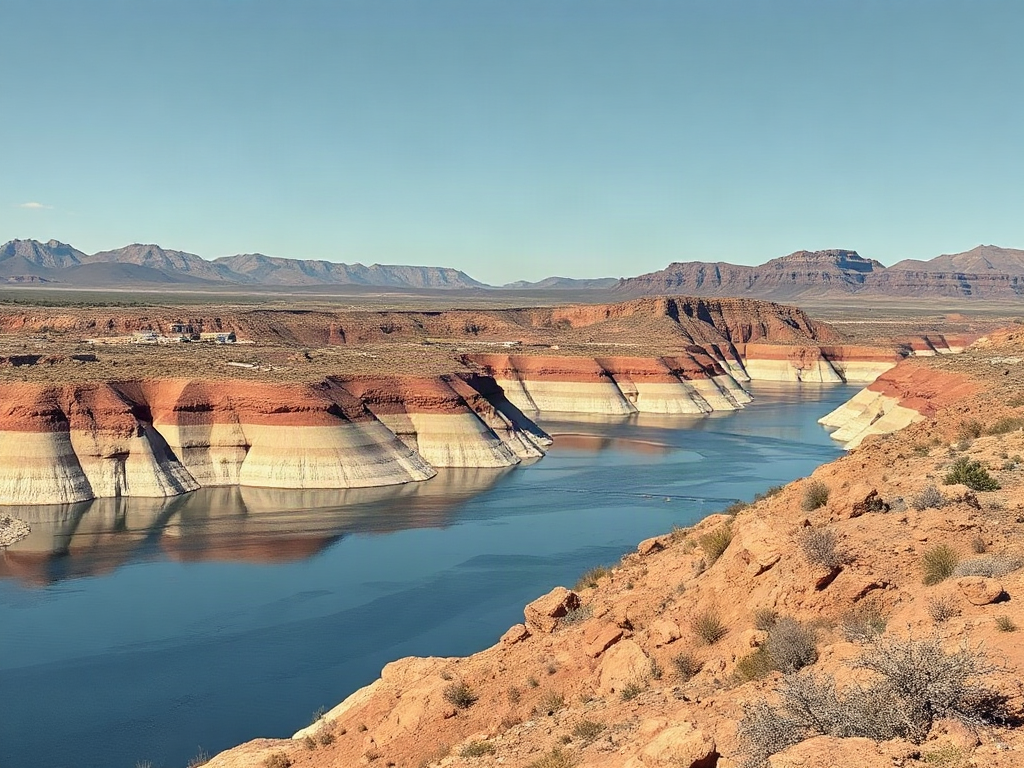
The highest-priority published development this week was “Southwest Hydropower Hits Record Low as Colorado River Reservoirs Shrink.” The Southwest’s hydropower system is operating under its weakest recorded conditions for the April-through-August period, according to the U.S. Energy Information Administration. Generation was 19% below the same period in 2025 and 28% below the 10-year average. EIA attributes the decline to prolonged drought in the Colorado River Basin. The affected electricity region includes Arizona, New Mexico, and small parts of Nevada and California. Lake Powell and Lake Mead also reached record-low elevations. This is a Strategic Monitor issue, not evidence of an immediate household electricity emergency. The concern is the connection: the same river system supports power generation and other water-supply needs for seven states. When reservoirs fall, water managers must balance those competing needs more carefully. Other published developments in the reporting window included Haiyan’s Death Toll Returns to Focus—With Precision Still Unclear, Mexico Measles Death Claim Needs Confirmation Before It Drives Alarm, U.S. Measles Outbreak Raises Concern Over Possible Loss of Elimination Status, and Heat Wave Pushes U.S. Grid Into Emergency, ABC News Reports. Each item remains distinct, but together they show why preparedness decisions should be based on verified changes rather than headlines alone.
The Interconnection Lens
The practical connection across this week’s reports is continuity. The published developments touch water production and supply, natural hazards, public health and biosecurity, and power and critical infrastructure. Pressure in one essential system can increase pressure in another through supply, transportation, public-health, utility, or security pathways. The linked reports provide the case-specific boundaries; this draft does not assume an immediate local effect where none was reported.
The Developments That Matter
Southwest Hydropower Hits Record Low as Colorado River Reservoirs Shrink
The Southwest’s hydropower system is operating under its weakest recorded conditions for the April-through-August period, according to the U.S. Energy Information Administration. Generation was 19% below the same period in 2025 and 28% below the 10-year average. EIA attributes the decline to prolonged drought in the Colorado River Basin. The affected electricity region includes Arizona, New Mexico, and small parts of Nevada and California. Lake Powell and Lake Mead also reached record-low elevations. This is a Strategic Monitor issue, not evidence of an immediate household electricity emergency. The concern is the connection: the same river system supports power generation and other water-supply needs for seven…
Why it matters: This case shows how one prolonged drought can strain two essential systems at once. Lower reservoir levels can reduce hydropower generation, while the same Colorado River remains important for other water-supply needs across Arizona, California, Colorado, Nevada, New Mexico, Utah, and Wyoming. That does not mean customers are facing an established power failure. The evidence supports a deteriorating water-and-generation condition,…
The wider connection: The appropriate response is proportionate monitoring, not panic. Households, businesses, and community groups in the affected states can identify the official sources they would use for local electricity, water, and reservoir updates. This matters because verified information helps people adjust plans before a service problem becomes urgent. People with caregiving, mobility, or limited-resource constraints can…
ORANGE · Improving · United States Southwest, including Arizona, New Mexico, and parts of Nevada and California · Source confidence: Very High · Published November 15, 2026
Haiyan’s Death Toll Returns to Focus—With Precision Still Unclear
The Weather Network is revisiting the human toll of Super Typhoon Haiyan, also known as Yolanda, in the Philippines. Its report says more than 6,000 people died when the storm struck. A separate Facebook anniversary item, published November 7, 2026, says about 6,300 people were reported dead. Both accounts describe the same historical disaster and present a toll above 6,000. What makes this worth watching is not evidence of a new storm or rising danger. It is the difference between a broad figure and a more precise-looking estimate. The supplied material does not identify the official record, counting method, or whether 6,300 is confirmed, estimated,…
Why it matters: Large disaster casualty figures shape how people understand risk, response needs, and the scale of loss. But a number that appears exact can still be an estimate or a rounded historical measure. That distinction matters for officials, researchers, journalists, and readers comparing disasters or evaluating preparedness. It also matters for ordinary households: anniversary coverage about a past event is not…
The wider connection: This is a local and regional preparedness lesson, not an immediate U.S. household threat. The available evidence concerns a historical disaster in the Philippines and does not establish a current hazard. A practical first step is to separate historical reporting from live alerts. When a disaster story includes a casualty figure, check whether it is…
YELLOW · Worsening · Philippines · Source confidence: High · Published November 11, 2026
Mexico Measles Death Claim Needs Confirmation Before It Drives Alarm
A November 8 report from Outbreak News Today says a measles outbreak in Mexico resulted in 50 deaths. That is a serious claim, but it remains a single-source report rather than an established public-health count. The material reviewed does not identify the affected location or locations, the number of cases, the time period, or the authority behind the figure. It also does not show whether the deaths were laboratory-confirmed or otherwise linked to measles. That makes this a strategic monitor, not a confirmed cross-border emergency. The key issue now is verification. A Mexico-specific health authority or independent report could either substantiate the claim or significantly…
Why it matters: A confirmed outbreak involving substantial mortality would matter because it could place added pressure on healthcare services and require a clearer public-health response. But the current report does not provide enough detail to measure that burden. The immediate preparedness lesson is about information quality. Treating an unverified casualty figure as settled could lead households, organizations, or communities to make decisions…
The wider connection: This is a strategic-monitor situation. The available report does not establish an immediate threat to U.S. households or a confirmed cross-border event, so the reported figure alone should not trigger major changes to household plans. Readers can take two modest steps. First, identify the official public-health source they would use for Mexico-specific or local updates.…
YELLOW · Worsening · Mexico · Source confidence: Moderate · Published November 9, 2026
U.S. Measles Outbreak Raises Concern Over Possible Loss of Elimination Status
The newest supplied reporting says the United States could lose its measles-elimination status. That is a warning about a possible change, not confirmation that the status has already been lost. Earlier reporting described the U.S. measles outbreak as worsening amid vaccine-policy uncertainty or limbo. The reports connect the outbreak to uncertainty around vaccination policy, but the available material does not independently prove that policy uncertainty caused or materially worsened transmission. This case stands out because it joins two concerns: disease-control performance and public confidence in guidance. Yet the evidence remains headline-level. It does not provide case counts, affected locations, clinical outcomes, official assessments, or the…
Why it matters: Vaccination policy and public confidence are central dependencies in controlling a contagious disease. If the reported deterioration is confirmed, uncertainty could make it harder for communities and public-health authorities to maintain consistent disease-control efforts. That does not mean every U.S. community faces the same immediate danger. The available evidence gives no location data, hospitalization or death figures, or official assessment…
The wider connection: This is a strategic-monitor issue, not evidence of an immediate household emergency. The most useful step is to identify the public-health authority that provides current guidance in your area, then check it when official updates change. If vaccination decisions are relevant to your household, discuss them with an appropriate clinician or local health authority rather…
YELLOW · Worsening · Global, with primary relevance to the United States · Source confidence: High · Published November 12, 2026
Heat Wave Pushes U.S. Grid Into Emergency, ABC News Reports
ABC News reported on November 8, 2026, that a heat wave prompted a U.S. electrical-grid emergency. Its headline described the grid as “stretched to the limit.” That is a meaningful warning because electricity supports ordinary household and community operations during extreme heat. But this is a single-source report with headline-level evidence. It does not identify the affected state, grid operator, emergency procedure, or duration. The report also does not confirm outages, conservation requests, rolling interruptions, or the number of customers or facilities affected. The immediate issue is therefore not a confirmed nationwide outage. It is whether reported grid stress develops into a documented service disruption…
Why it matters: Electricity is a basic dependency during a heat wave. Households and communities rely on power for ordinary operations, so a confirmed interruption could create practical difficulties, especially for people with caregiving responsibilities, limited mobility, or fewer resources. That consequence remains conditional here. ABC News reported the emergency, but the available evidence does not establish that customers lost service or that…
The wider connection: This is a strategic monitor, not a confirmed nationwide outage. The most useful first step is to identify how the local utility and relevant public agencies deliver power alerts. That helps distinguish an official service notice from general reporting. Households can also discuss how essential needs would be handled during a temporary interruption. Keep that…
YELLOW · Worsening · United States · Source confidence: Moderate · Published November 9, 2026
Displacement and Reported Cholera Deaths Raise a Regional Warning
Narinjara News reported on November 10 that around 600,000 displaced people in Myanmar’s Rakhine region face severe livelihood challenges. The same report says cholera deaths have occurred. This stands out because livelihood disruption and a possible health emergency can reinforce each other. People who struggle to obtain food, income, safe water, or medical care may have fewer options when illness is reported. The available account is limited. It does not identify the affected townships, the number of deaths, the dates involved, or the source of the health information. No independent corroboration is supplied, so this should be treated as a serious regional report awaiting verification—not…
Why it matters: If accurate, the report describes a large displaced population already facing difficulty sustaining livelihoods while deaths from a serious water- or sanitation-associated disease are being reported. That combination could increase pressure on households and local response capacity. The immediate concern is regional, not a confirmed threat to U.S. households. The practical lesson is broader: when people depend on disrupted services,…
The wider connection: This is a local and regional preparedness concern, not an established immediate U.S. household threat. Readers should avoid treating a single headline as a confirmed wider emergency. A useful first step is to identify the trusted official or humanitarian source that would confirm a developing health emergency in the affected area. When new reports appear,…
WATCH · Worsening · Rakhine, Myanmar · Source confidence: Moderate · Published November 10, 2026
Signals We’re Watching
- Hedley’s Reported Boil-Water Notice Keeps a Local Water Dependency in Question: The confirmed point is limited but important: KVII reported that Hedley remained under a boil-water notice on November 9. Watch for an official explanation, testing update, changed instructions, or additional restrictions. Until then, focus on verified local guidance and a simple plan for receiving it.
- Port Angeles Water Restrictions End, but the Reason Remains Unclear: The current reported status is that Port Angeles has lifted all water-use restrictions. The unresolved question is why, and whether the underlying pressure has fully passed. Watch for a city explanation, renewed conservation rules, or repeated shortage declarations. A modest first step is to identify who will monitor official local…
Preparedness Bottom Line
The appropriate response is proportionate monitoring, not panic. Households, businesses, and community groups in the affected states can identify the official sources they would use for local electricity, water, and reservoir updates. This matters because verified information helps people adjust plans before a service problem… This is a local and regional preparedness lesson, not an immediate U.S. household threat. The available evidence concerns a historical disaster in the Philippines and does not establish a current hazard. A practical first step is to separate historical reporting from live alerts. When a… This is a strategic-monitor situation. The available report does not establish an immediate threat to U.S. households or a confirmed cross-border event, so the reported figure alone should not trigger major changes to household plans. Readers can take two modest steps. First, identify the official… The goal is not panic buying or speculation. It is calm review while there is still time to correct ordinary gaps.
Joseph’s Perspective
I do not want us reacting to every alarming headline as though it proves a crisis at our door. I also do not want us ignoring verified changes simply because they happened somewhere else. This week’s published reports deserve attention because preparedness is strongest before pressure becomes personal. Read the linked reporting, notice what actually changed, and separate confirmed facts from possibilities. Then take the reasonable steps that fit your household, church, business, or community. We do not prepare because fear controls us. We prepare so fear does not have to control us when a real disruption arrives.
Psalm 46:1 (KJV): "God is our refuge and strength, a very present help in trouble."
That gives us a steady place to stand when the news is difficult. We can trust God while taking wise, practical steps to care for our families and neighbors. Preparation is an act of care, not a promise that life will be free of hardship. Take the next reasonable step with hope; we do not have to face uncertainty without faith or without one another.