
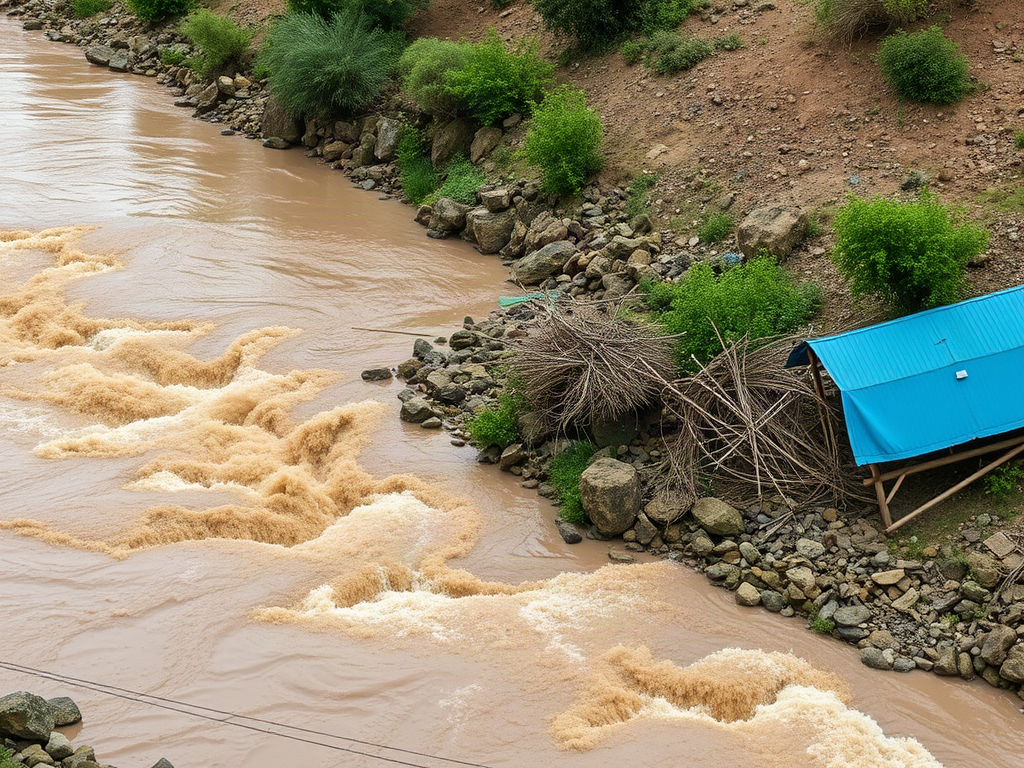
A fresh August 28 warning follows reports of rising flow in the Bhote Koshi River, but the alert’s exact area, severity, and current effects remain unconfirmed.
The Watch
Nepal is facing a renewed flood-warning situation after reports on August 28 linked a fresh alert to rising flow in the Bhote Koshi River. The Global Disaster Alert and Coordination System listed an orange flood alert for Nepal, while same-day reporting also described rising water at a site associated with a deadly flash flood.
The warning stands out because it follows earlier reports of flash floods and high alerts across several Nepal districts. That establishes a continuing flood concern, but not a clear direction of travel. The available evidence does not show whether conditions are worsening, stabilizing, or beginning to improve.
Reports also mention flood concern involving Nepal and Tibet. Possible downstream or cross-border connections require confirmation because the available accounts do not prove that every reference concerns the same event or river system.
What Changed
The material change is the new warning reported on August 28, tied specifically to rising Bhote Koshi River flow and renewed concern near a previously flood-affected location. This is more current than the earlier reports describing Nepal’s broader flood emergency.
However, important operational details remain unavailable. The supplied reports do not establish the issuing authority, affected communities, river measurements, forecast timing, evacuation orders, damage, or casualty totals. References to a dam breach or barrier lake also cannot yet be confirmed as part of this immediate warning.
Why It Matters
Rising water can reduce the time available for local authorities and residents to respond. Depending on location and conditions, flooding may disrupt roads, bridges, communications, electricity, medical access, and routine travel. It can also create pressure for short-notice warnings or evacuation.
Those consequences remain possible rather than confirmed at the reported scale. No reliable information supplied here verifies current damage, displacement, casualties, or service outages. The strongest conclusion is narrower: Nepal remains in a flood-warning environment that deserves close local monitoring.
For U.S. readers, this is a local and regional concern, not an immediate household emergency. The wider relevance is understanding how quickly river conditions can affect access and community continuity.
If This Continues
Scenario — not prediction.
If river levels continue rising, downstream communities could receive expanded warnings and face access disruption or evacuation pressure. If an upstream release or breach-related concern is confirmed, officials may need to reassess hazards farther downstream.
If water levels stabilize, attention could shift toward damage assessment, reopening transport links, and recovery. These are possible paths, not forecasts. The available evidence does not establish which one is developing now.
What to Watch Next
- Official confirmation of the orange alert area and issuing authority
- Updated Bhote Koshi River readings and forecast timing
- Evacuation, shelter, or downstream community instructions
- Reports of road, bridge, communications, power, or medical-access disruption
- Confirmation or rejection of dam-breach or barrier-lake references
- Signs of receding water, reopened routes, or continued flood warnings
Preparedness Perspective
People in affected parts of Nepal should rely on official alerts and avoid flooded routes, river corridors, and other areas authorities identify as dangerous. Because conditions may change quickly, households can keep essential communications, medicines, documents, and transport options ready for possible short-notice movement.
Residents should verify instructions through trusted local channels rather than relying on headlines or unconfirmed claims about dams, lakes, or casualty figures. Communities outside the reported areas do not need to treat this as an immediate U.S. emergency. The proportionate response is awareness: know the official warning source, keep basic continuity plans current, and monitor changes during the next 24 to 72 hours.
Bottom Line
A fresh Nepal warning tied to rising Bhote Koshi River flow confirms that flood concerns remain active, but it does not yet establish the scale or direction of the emergency. Watch for official alert boundaries, river readings, evacuation guidance, and service disruptions. Local vigilance is warranted; speculation is not.
Sources
- China Daily — Nepal issues fresh flood alert as flow rises in Bhote Koshi River – China Daily (August 28, 2026)
- The Hindu — Nepal issues fresh flood warning as water level rises at site of deadly flash flood – The Hindu (August 28, 2026)
- GDACS — Global Events (24h) — Orange flood alert in Nepal (August 28, 2026)
- eNCA — Fresh flood warnings for disaster-hit Nepal and Tibet, 1,400 still missing – eNCA (August 28, 2026)