
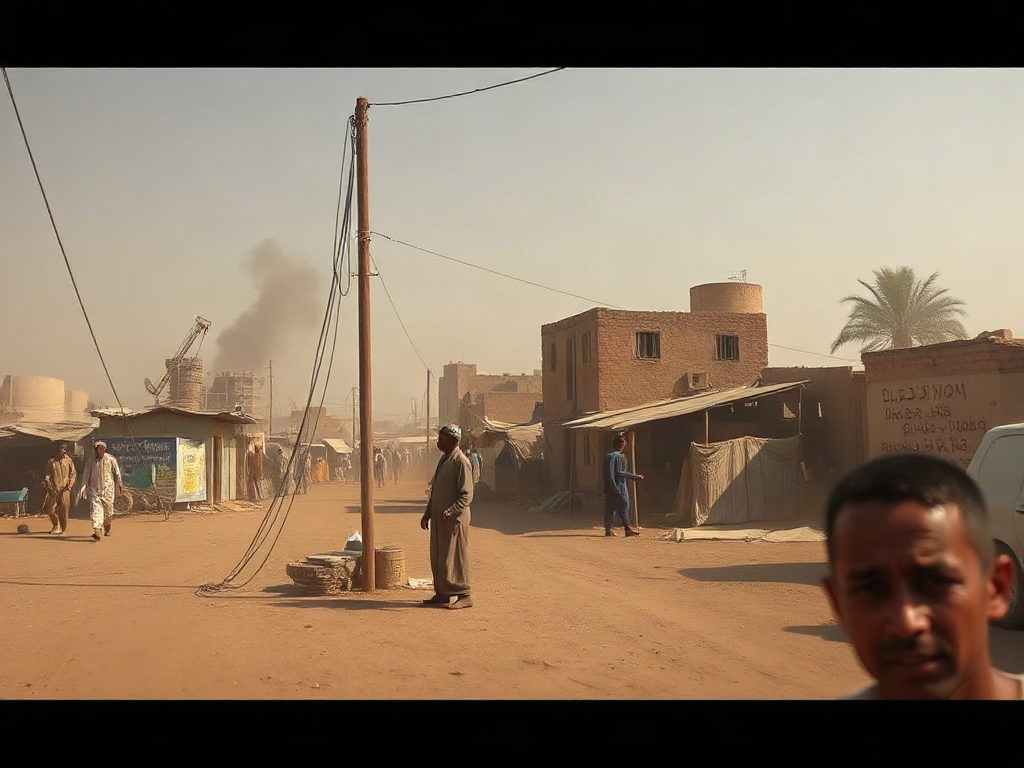
Rights-group reporting puts the toll above 100, but conflicting accounts remain; the confirmed concern is a severe civilian casualty event affecting a food market in an active conflict zone.
The Watch
Reports published through October 29 describe a drone strike on a market in Darfur, Sudan, that reportedly killed more than 100 people. One later account put the toll at 102, while other reports said at least 113 people were injured.
The event stands out because the reported strike hit a civilian market, where people were selling food. That makes the incident more than a battlefield exchange: it may disrupt a place where residents obtain essential goods and where local response efforts can begin.
The casualty picture is not settled. Supplied reports range from at least 36 deaths to more than 100, and the evidence does not independently establish the final toll, exact location, responsible party, or intended target.
What Changed
The newest supplied same-event report says more than 100 people were killed. Earlier reports described the toll as scores, at least 36, at least 102, or more than 100.
That movement shows that casualty reporting was still developing, not that the highest figure has been independently confirmed. Several accounts attribute the larger toll to a Sudanese rights group or related reporting. Some reports identify Nyala or South Darfur, but the available evidence does not resolve the exact location.
The material also does not establish whether further strikes occurred or whether market activity was interrupted beyond the reported incident.
Why It Matters
A market is part of a community’s daily support system. When violence reaches a place where food is sold, people may lose access to essential goods, sellers may stop operating, and emergency assistance can become harder to organize.
That consequence remains conditional here. The evidence confirms reports of a large civilian casualty event, but it does not show a broader pattern of increasing attacks or a regional supply disruption. This is therefore a local and regional conflict concern, not an immediate U.S. household threat.
The preparedness lesson is practical: community resilience depends on having more than one way to reach food and assistance when a central gathering place becomes unsafe or unavailable.
If This Continues
Scenario — not prediction.
If additional strikes or access restrictions follow, civilians could face greater difficulty reaching markets, obtaining food, or receiving emergency assistance. Repeated attacks near markets or other civilian sites would point toward a worsening local security and civilian-protection environment.
If authorities, rights monitors, or credible local reporting confirm the higher toll and document continuing disruption, concern would rise. If the figures are revised downward or market access and humanitarian activity resume, the immediate assessment could stabilize without proving broader recovery.
What to Watch Next
- Independent confirmation or revision of the death and injury figures within the next 24 to 72 hours
- Reporting on further strikes near markets, food sellers, or other civilian sites
- Credible clarification of the market’s location, responsible actor, and intended target
- Evidence over the following weeks of repeated disruption to market access, food commerce, or civilian movement
- Documented recovery of market activity or humanitarian access
Preparedness Perspective
This incident is best understood as a local and regional conflict development. The available evidence does not establish an immediate U.S. danger or a U.S. supply disruption.
For households, the useful lesson is narrower. Identify one alternate way to obtain essential food or assistance if a usual option becomes unavailable. Then discuss that plan with anyone facing mobility, caregiving, or financial constraints. The goal is not to stockpile in response to this event, but to preserve choices during an ordinary interruption.
Readers can also rely on official local guidance during emergencies and keep basic continuity plans current. Those modest steps address the same vulnerability exposed by the strike: when a central market is disrupted, people with no alternative may face the greatest difficulty.
Bottom Line
The reported toll is serious, but the final number and several key details remain unsettled. Watch for independent casualty verification, evidence of repeated attacks, and signs that market or humanitarian access is failing. For U.S. readers, this is a lesson in local resilience—not evidence of an American emergency.
Sources
- The New Arab — Over 100 dead after drone strike on market in Sudan’s Darfur – The New Arab (October 29, 2026)
- aljazeera.com — Strikes on Darfur market in Sudan killed more than 100, rights group says – Al Jazeera (October 29, 2026)
- アラブニュース — More than 100 people killed in Sudanese army drone attack on market says Sudanese rights group – アラブニュース (October 29, 2026)
- The Killeen Daily Herald — Strike on Darfur market killed civilians selling food to fighters, witnesses say – The Killeen Daily Herald (October 28, 2026)
- U.S. News & World Report — Strike on Darfur Market Killed Civilians Selling Food to Fighters, Witnesses Say – U.S. News & World Report (October 28, 2026)
- Dhaka Tribune — Death toll from drone strike in Sudan’s Darfur rises to 102 – Dhaka Tribune (October 28, 2026)