
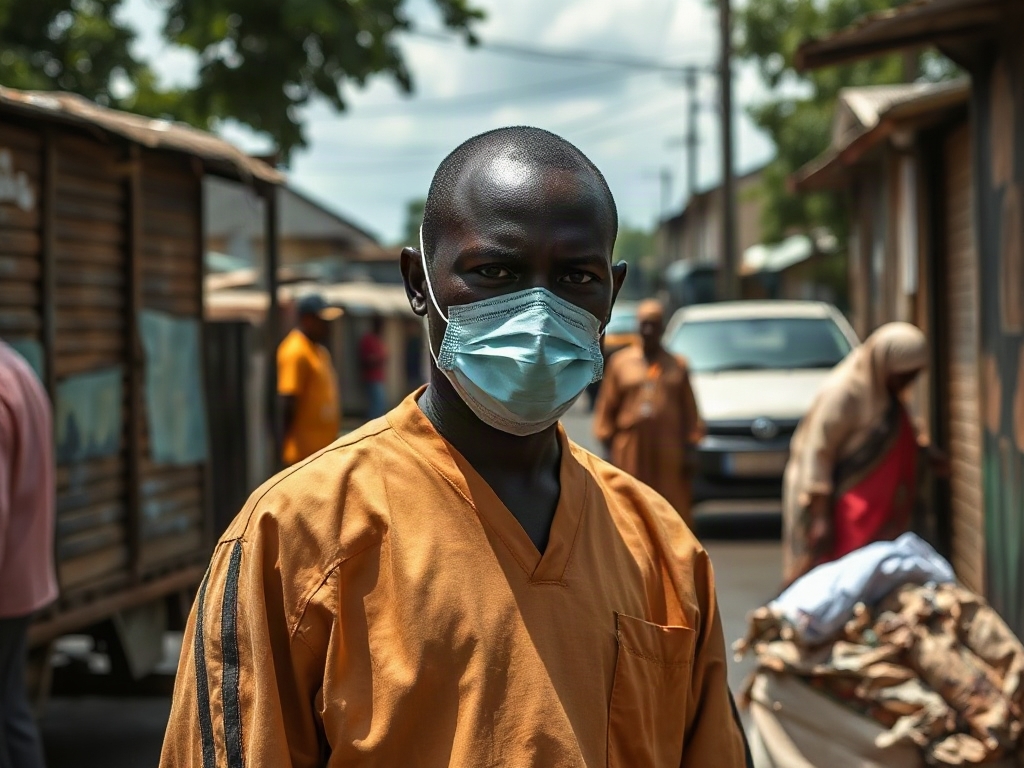
Reports now put the death toll above 2,500 and describe the outbreak as the fastest-growing on record, making response capacity the key issue to monitor.
The Watch
An Ebola outbreak in the Democratic Republic of Congo has passed a reported death toll of 2,500. The latest reports describe an exceptionally fast pace of growth and warn that the outbreak could become the worst in history.
A particularly deadly week has added urgency. Earlier reports placed the toll above 2,300, while newer coverage describes both a higher cumulative count and worsening weekly mortality. That sequence suggests a deteriorating reported trajectory.
The available evidence does not provide a complete case count, a confirmed-versus-suspected breakdown, or a precise map of affected areas. It also does not establish current transmission in the United States. The immediate concern is the outbreak’s effect on response systems in DR Congo and whether verified signs of wider spread emerge.
What Changed
The newest reported change is the combination of record pace and rising deaths. On August 26, coverage characterized the outbreak as the fastest-growing on record and warned it could become the worst in history. A day earlier, reports described the deadliest week of the outbreak.
That follows August 24 reporting of more than 2,500 deaths, up from more than 2,300 reported on August 17. The sequence supports concern about worsening scale and speed, although the available evidence does not provide a complete, independently verified time series or explain how the growth comparisons were calculated.
Why It Matters
A fast-growing outbreak with high weekly mortality can place sustained pressure on local systems responsible for detecting cases, isolating patients, tracing contacts, staffing facilities, and protecting health workers. If those systems become strained, controlling transmission may become more difficult.
For the United States, the relevance is indirect and should be described carefully. The available evidence does not establish current U.S. cases, exposure, travel-related transmission, or an immediate household emergency. The strategic concern is whether the outbreak expands geographically, whether response capacity shows signs of stress, and whether verified authorities issue new cross-border or travel guidance.
This is therefore a strategic monitor, not a reason for extraordinary household action.
If This Continues
Scenario — not prediction.
If rapid growth and high weekly mortality continue, local health and response systems could face greater strain. International health authorities may then intensify monitoring and support.
If transmission slows, the immediate trajectory could stabilize, but the available evidence does not show that a recovery is underway. Any broader cross-border or U.S. consequence would depend on verified evidence of spread beyond the affected area, which has not been supplied.
What to Watch Next
- Updated official case and death totals, including whether weekly deaths continue rising
- Verified reports of new affected areas or additional transmission chains
- Signs of strain involving treatment, isolation, contact tracing, staffing, or protective equipment
- Official statements on containment measures, travel guidance, or cross-border spread
- Changes over the coming weeks in incidence, treatment demand, mortality, and geographic reach
Preparedness Perspective
For most people in the United States, this remains a strategic monitor rather than an immediate emergency. The available evidence does not support panic, extraordinary household measures, or treating overseas headlines as proof of domestic exposure.
Readers can take proportionate steps: follow verified public-health sources, check official travel and health notices when travel is relevant, and keep ordinary household health and continuity plans current. Communities with healthcare or supply-chain ties to the affected region may have a more direct reason to monitor developments.
The useful preparedness habit is disciplined information checking. Look for confirmed updates on transmission, deaths, geographic spread, and response capacity rather than relying on dramatic claims whose methods or underlying totals are not provided.
Joseph’s Perspective
This is becoming increasingly serious. Events on other Continents often get pushed down and ignored because of the distance. With the growth of international travel, we are much closely connected that in years past. We must monitor these events – and begin to consider our family preparedness. There is no-one claiming that we will be under a health threat, however, as we have experienced – we are not immune to a global health crisis.
Bottom Line
The reported outbreak is growing quickly, and its recent death toll signals serious pressure on the response effort in DR Congo. Watch the next verified updates for continued weekly mortality, geographic expansion, and system strain. For Americans, the evidence supports awareness and ordinary preparedness—not panic or assumptions of imminent local danger.
Sources
- washingtonpost.com — Fastest-growing Ebola outbreak on record threatens to become worst in history – The Washington Post (August 26, 2026)
- cidrap.umn.edu — DR Congo suffers deadliest week in its Ebola outbreak – CIDRAP (August 25, 2026)
- ABC News – Breaking News, Latest News and Videos — Congo’s Ebola outbreak records one of its highest weekly death tolls yet – ABC News – Breaking News, Latest News and Videos (August 24, 2026)
- nytimes.com — Over 2,500 Killed in the Ebola Outbreak: What to Know – The New York Times (August 24, 2026)
- France 24 — Ebola epidemic in DR Congo is spreading 18 times faster than deadliest outbreak on record – France 24 (August 22, 2026)
- The Straits Times — Ebola spreading exponentially in Congo as death toll tops 2,500, UN says – The Straits Times (August 21, 2026)