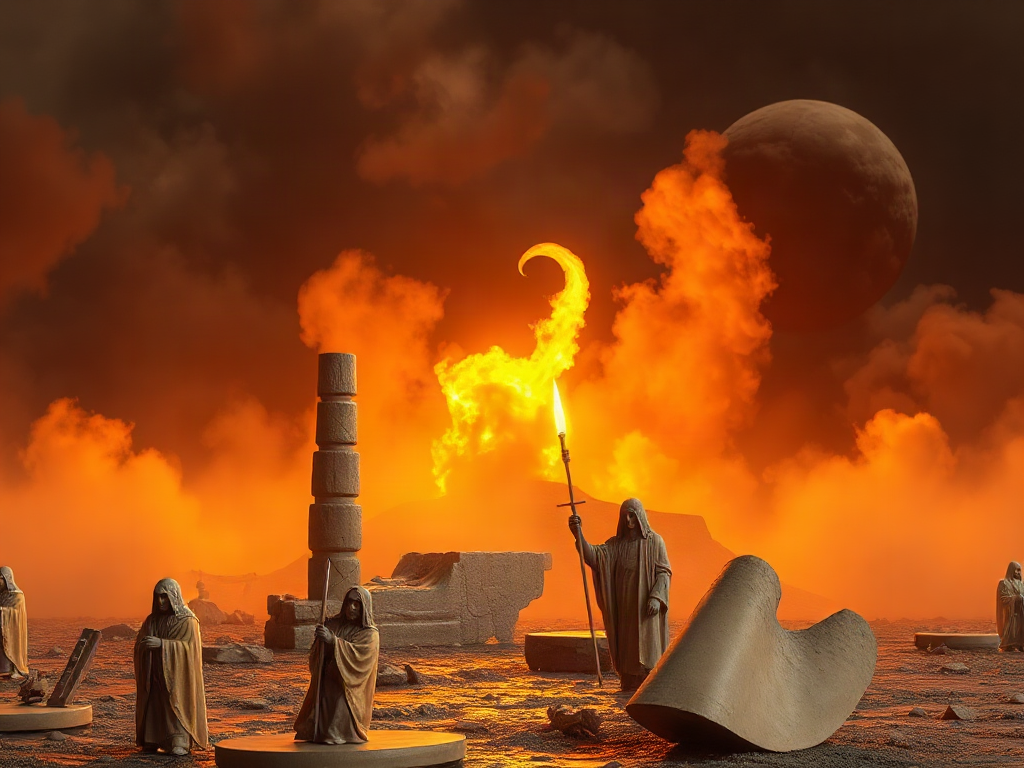
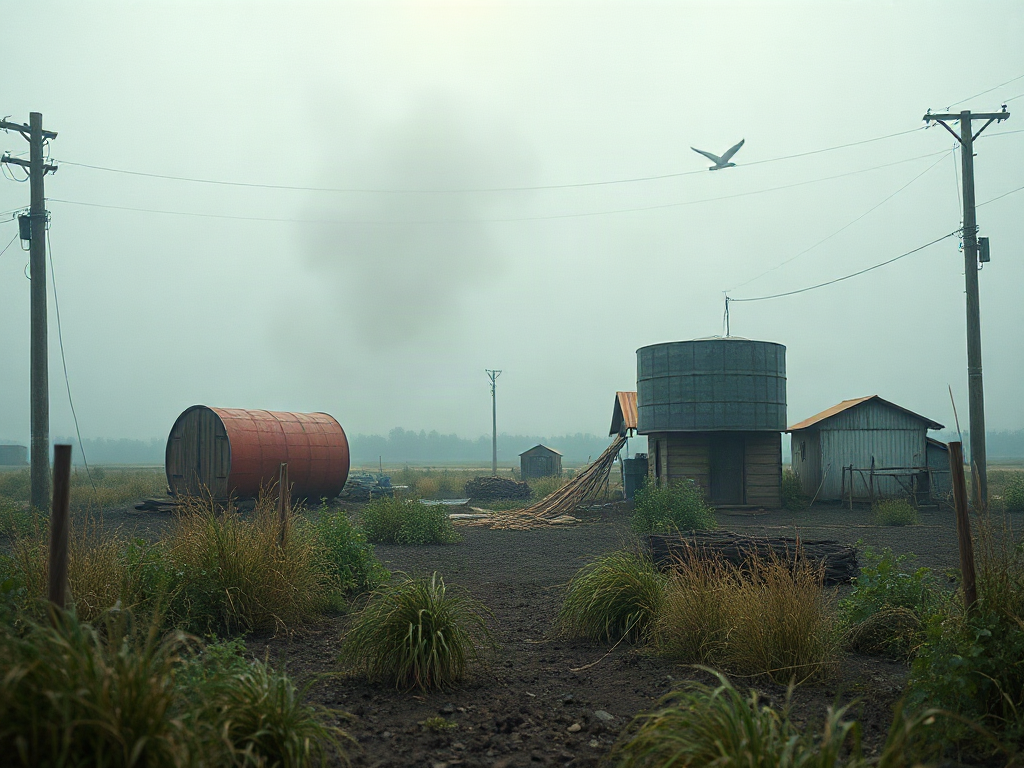
Famines and pestilences in end-times prophecy function as signs of a distressed age, divine judgments in some passages, and conditions that precede Christ’s return without supplying a date for it. Matthew 24 and Luke 21 place them among wars, earthquakes, persecution, and deception, while Revelation connects scarcity and death through the seals. Food shortages may arise through conflict, disrupted trade, crop failure, or economic imbalance; pestilence can intensify mortality where hunger and displacement weaken communities. Readers should compare each passage’s setting, sequence, and purpose rather than treating every outbreak or failed harvest as proof that one prophetic event has begun.
Where Scripture Places Famine and Pestilence
Jesus places famines and pestilences within a larger pattern of upheaval rather than presenting them as isolated signs. In Matthew 24:4–14, wars, famines, earthquakes, persecution, false prophets, lawlessness, and worldwide gospel proclamation appear in the same discourse. Jesus calls the early troubles “the beginning of sorrows,” language that warns against declaring the end complete whenever one calamity occurs. Luke 21:10–11 explicitly adds pestilences to the sequence and associates them with earthquakes, terrors, and signs from heaven.
The immediate setting matters. Jesus is responding to questions prompted by his prediction that the Jerusalem temple would be destroyed. His answer addresses coming distress, the disciples’ responsibilities, and the consummation of the age. Interpreters differ over how much of the discourse was fulfilled in events surrounding Jerusalem in AD 70 and how much awaits a future climax. That disagreement should encourage careful reading, not dismissal of the text. A sound interpretation identifies the audience, tracks shifts in time, and notices whether a verse describes a recurring condition or a unique event.
Revelation 6 gives scarcity a more concentrated judicial role. The third seal portrays a rider with scales and announces exceptionally costly staple foods, suggesting severe inflation or rationing. The command not to harm the oil and wine may indicate uneven scarcity rather than the total disappearance of food. The fourth seal then gives Death and Hades authority to kill through sword, famine, pestilence, and wild animals. These images echo Old Testament judgment formulas found in passages such as Ezekiel 14:21.
The prophetic use of famine is therefore broader than crop failure alone. It can involve inaccessible food, purchasing-power collapse, warfare, siege, or distribution breakdown. Pestilence likewise appears beside other causes of death because crises compound each other. The common mistake is to detach one symbol from its literary setting and match it immediately to a headline. Readers examining Famines and pestilences in end-times prophecy should first establish who is speaking, what sequence surrounds the reference, and whether the text describes warning, judgment, or both.
How Scarcity, Disease, War, and Displacement Interact
Biblical passages often group famine, disease, and violence because these dangers reinforce one another. War can remove farmers from fields, damage irrigation, block roads, interrupt markets, and make ordinary food unaffordable. Displaced populations may then live in crowded conditions with limited sanitation and medical access. Malnutrition can increase vulnerability, while illness reduces the labor available to plant, harvest, transport, and prepare food. The result is not a neat chain with one cause but a tightening cycle of insecurity.
The third seal’s scales provide a vivid economic picture. Scales were used in trade, and the announced prices imply that a worker’s daily earnings could be consumed by a small amount of grain. That is different from saying no food exists anywhere. Grain may remain available while becoming unreachable for households with little income. The preservation of oil and wine adds another layer: shortages can be selective, and the burden can fall unevenly. Some readers understand these goods as luxuries protected while staples become costly; others point to differences in crop resilience. The text does not settle every economic detail, but it clearly portrays distorted access and painful constraint.
A comparable real-world scenario is a region that produces food yet experiences hunger after roads close and prices rise during conflict. Supply exists at one level, but households cannot safely reach markets or afford what is offered. If disease spreads through temporary shelters at the same time, mortality may rise without a single universal plague. This illustrates the mechanism behind the biblical clustering of sword, famine, and pestilence without claiming that any modern crisis is necessarily the direct fulfillment of Revelation.
Readers should distinguish four related conditions:
- Food shortage: insufficient supply within a location or market.
- Loss of access: food exists, but insecurity, distance, or price prevents households from obtaining it.
- Famine: an extreme population-level crisis involving severe hunger and elevated mortality, not merely expensive groceries.
- Pestilence: destructive epidemic disease or widespread mortality associated with disease.
Using these terms precisely prevents ordinary price fluctuations from being mislabeled as prophetic famine. It also corrects the opposite error: assuming that modern logistics make large-scale hunger impossible. Complex supply systems can move enormous quantities efficiently, yet conflict, export restrictions, damaged infrastructure, or simultaneous crop losses may expose weak points. Prophetic language directs attention to human vulnerability and judgment; responsible analysis still requires evidence about actual severity, geography, duration, and causes.
Timing Across the Major Prophetic Passages
No single verse supplies a complete timetable for every famine and epidemic. Matthew 24, Mark 13, and Luke 21 share substantial material, but each Gospel shapes the discourse for its readers. Matthew calls early disturbances the beginning of birth pains. Luke says such things must happen first, but the end will not come immediately. Those statements directly challenge date-setting based on one disaster, even when that disaster is severe.
Three broad interpretive approaches commonly influence how readers understand the timing. A largely preterist reading emphasizes fulfillment connected with first-century conflict and Jerusalem’s destruction while allowing the discourse to point beyond that judgment. A futurist reading expects the signs to intensify or assume a distinct role during a final period preceding Christ’s return. An idealist or recurring-pattern reading sees war, hunger, disease, and persecution as characteristic of the entire age, with Revelation showing their spiritual significance and ultimate resolution. Many interpreters combine elements rather than fitting entirely within one category.
Each approach notices something present in the text. The first-century setting cannot be ignored, future-oriented language remains significant, and recurring calamities have marked centuries of human history. Problems arise when an interpretation erases one of those dimensions. Treating every reference as already exhausted can weaken the forward-looking expectation of final judgment and renewal. Treating every phrase as exclusively future can disconnect Jesus’ words from his disciples and Jerusalem. Treating the imagery only as a timeless symbol can flatten passages that portray decisive acts of God.
Revelation also demands attention to genre. Its seals, riders, measured commodities, and personified Death communicate through apocalyptic imagery rooted in earlier Scripture. Imagery does not mean unreality; it means the reader must interpret symbols through their biblical context before forcing them into a modern news chronology. The four horsemen, for example, recall Zechariah’s horse visions, while the combination of sword, famine, pestilence, and beasts reflects covenant-judgment language in Ezekiel.
A practical sequence for evaluating timing is to read the entire unit, list the events actually named, identify any explicit time markers, and compare parallel passages. Next, separate what the text states from what a proposed timeline infers. A claim is failing when it depends on changing definitions, repeatedly resets dates, or treats silence as proof. A stronger reading remains accountable to the passage even when it leaves some chronological questions unresolved. The study of Famines and pestilences in end-times prophecy becomes clearer when confidence is proportionate to textual evidence.
How to Evaluate Modern Claims Responsibly
Modern disasters may resemble biblical patterns without automatically fulfilling a specific prediction. Scripture records famines long before the New Testament’s end-times discourses, including those associated with Abraham, Joseph, Ruth, David, Elijah, and the early church. Pestilence likewise appears in historical narratives and prophetic warnings. Their repeated occurrence means resemblance alone cannot identify a unique place in a prophetic sequence.
Start by checking the claim against the wording of the passage. If a report concerns localized crop damage, it should not be elevated into a worldwide famine unless the text and the evidence support that scale. If an outbreak is described as “the pestilence” predicted by Jesus, ask why that disease rather than earlier epidemics qualifies. The burden rests on the person making the identification. Similarity may justify watchfulness, but it does not establish certainty.
Then examine the event through reliable humanitarian and public-health categories. Confirm geographic extent, duration, mortality, food access, conflict conditions, and whether the reported figures distinguish projections from observed outcomes. Sensational commentary often combines unrelated events, removes their dates, or presents worst-case scenarios as established facts. Responsible attention to prophecy does not require careless attention to evidence.
A compact evaluation checklist can keep interpretation disciplined:
- Read the whole passage: include the verses before and after the claimed sign.
- Define the event accurately: distinguish famine from inflation and epidemic disease from isolated cases.
- Test the proposed scale: local, regional, and global claims are not interchangeable.
- Compare biblical parallels: especially Matthew 24, Mark 13, Luke 21, Revelation 6, and Ezekiel 14.
- Reject date manipulation: Scripture’s calls to vigilance do not authorize manufactured certainty.
This method does not reduce prophecy to data analysis. It protects readers from using the Bible to amplify rumors or treating suffering people as evidence in a speculative timetable. A claim is more credible when it respects context, acknowledges interpretive limits, and survives correction as facts develop. It is less credible when every new emergency is declared unprecedented, objections are treated as faithlessness, or failed predictions produce only a revised date.
Current events can still prompt serious reflection. War-driven hunger, fragile supply routes, and infectious disease demonstrate how quickly stable conditions can deteriorate. Their theological relevance lies partly in exposing dependence, injustice, mortality, and the need for endurance. Their exact prophetic status should not be asserted beyond what Scripture and verifiable facts permit.
A Faithful Response to Prophetic Warnings
Jesus directs his followers toward endurance, discernment, witness, and mercy rather than panic. In the Olivet Discourse, warnings about upheaval stand beside commands not to be alarmed or deceived. The appropriate response is neither indifference nor obsession. Christians can take the passages seriously while refusing speculative dates, viral rumors, and claims that turn each emergency into a guaranteed countdown marker.
Practical readiness begins with ordinary responsibilities. Households may reasonably maintain a modest supply of food, water, necessary medicines, and essential information for disruptions that are plausible in their location. Such preparation differs from hoarding. Hoarding concentrates scarce goods and can harm neighbors; prudent reserves reduce immediate pressure and may leave a household better able to assist others. Local risks, storage space, medical needs, expiration dates, and budget should shape any plan.
Churches have an additional role. Acts 11 records disciples arranging relief when a famine was predicted, with each contributing according to ability. The text emphasizes organized aid rather than prophetic spectacle. A congregation applying that pattern might identify vulnerable members, establish trustworthy relief partners, maintain communication plans, and verify needs before distributing supplies. Signs that the approach is working include accurate information, fair assistance, and sustained care after public attention fades. Signs of failure include rumor-driven purchasing, favoritism, and resources that cannot be safely stored or delivered.
Spiritual preparation is equally concrete. Readers should know the passages well enough to recognize misquotation, refuse teachers who claim secret certainty, and preserve hope when circumstances worsen. Biblical hope does not deny the reality of hunger or disease; it places them within a story that ends with judgment, resurrection, and restoration. That hope should increase compassion for people facing present suffering rather than making their hardship useful only as a prophetic clue.
The most balanced priority is text, truth, and service in that order: interpret Scripture in context, verify reports before repeating them, and respond to genuine need. A careful study of Famines and pestilences in end-times prophecy should produce steadiness and responsible action. If an interpretation generates repeated false alarms, neglects suffering, or depends on unverifiable claims, its practical fruit is warning that the method needs correction.
Frequently Asked Questions
Where did Jesus mention famines and pestilences?
Jesus mentioned famines in Matthew 24:7 and Mark 13:8, while Luke 21:11 explicitly names both famines and pestilences. Each reference belongs to a wider discourse that also addresses war, deception, persecution, and future judgment.
Does every famine fulfill end-times prophecy?
No. Scripture records famines throughout biblical history, so a famine’s occurrence alone does not prove a unique prophetic fulfillment. Its context, scale, timing, and relationship to the surrounding passage must be examined.
What does the third seal in Revelation represent?
Revelation 6:5–6 portrays measured food and extremely high staple prices, commonly understood as severe scarcity, rationing, or economic distress. The unharmed oil and wine suggest that the shortage or its burden may be uneven.
Can prophecy identify the date of Christ’s return?
Famines and disease do not provide a reliable date-setting formula. Jesus warned about deception and stated that early disturbances did not mean the end had arrived immediately.
How should Christians prepare for food or disease emergencies?
Use a proportionate household plan, follow credible emergency and public-health information, avoid hoarding, and coordinate help for vulnerable neighbors. Preparation should support responsible service rather than fear-driven speculation.
Conclusion
Famine and pestilence belong to a biblical pattern that includes warfare, economic distress, persecution, judgment, and the call to endure. Sound interpretation begins with complete passages rather than isolated phrases, accounts for both historical setting and future expectation, and distinguishes textual statements from proposed timelines. Modern crises can reveal the mechanisms Scripture portrays—disrupted food access, inflated prices, displacement, disease, and compounding mortality—without becoming automatic proof of a particular prophetic stage. Readers should verify claims, resist date-setting, and judge interpretations by their fidelity to Scripture and facts. The next useful step is to compare Matthew 24, Mark 13, Luke 21, Revelation 6, and Ezekiel 14 side by side, then turn watchfulness into measured preparation, truthful communication, and practical care for people already facing hunger or illness.