
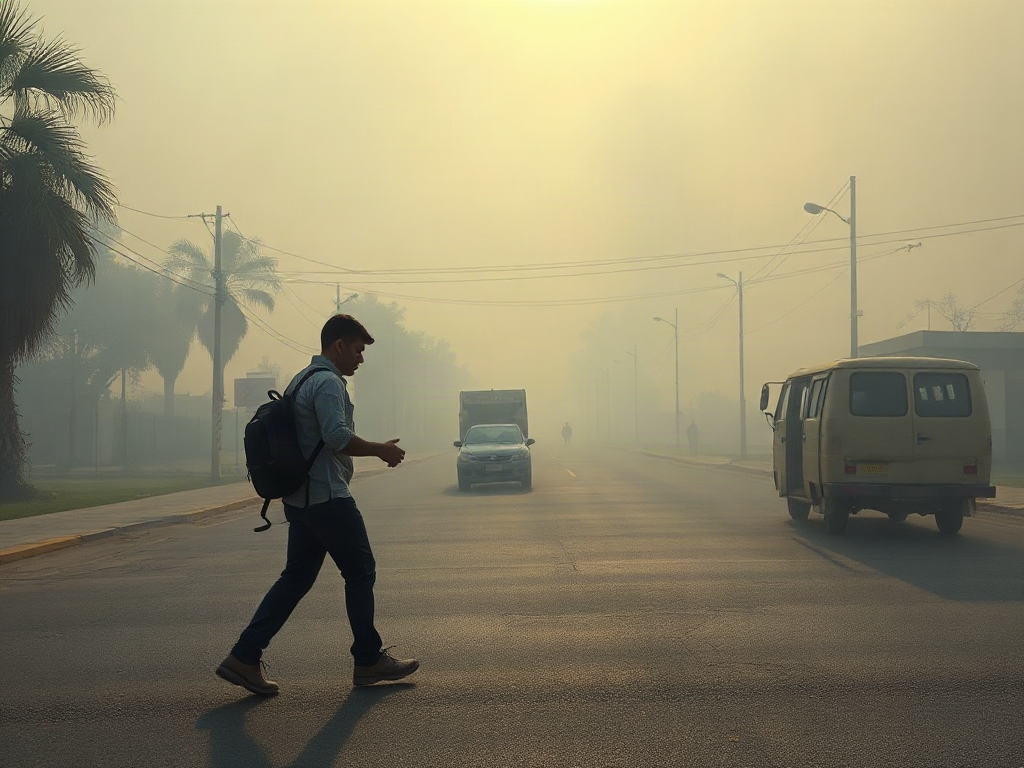
Reports published October 30–31 say a study linked September wildfire smoke to an estimated 3,560 deaths, though the methods and official confirmation remain unavailable.
The Watch
A reported study estimate is drawing attention to the human cost of wildfire smoke in Indonesia. Multiple reports published October 30–31 identify 3,560 deaths associated with fire pollution during September.
That number is serious, but it is not the same as a confirmed official death count. The available reporting does not provide the study’s authors, methods, uncertainty range, review status, or geographic breakdown. It also does not show whether Indonesian authorities have accepted or challenged the estimate.
The immediate question is therefore not whether the figure proves a current crisis. It is whether the underlying research withstands scrutiny and whether smoke exposure continued after September. Until those points are clearer, this remains a significant reported estimate with important public-health implications, not a complete picture of present conditions.
What Changed
The newest supplied same-event report, published by The Independent on October 31, continues to identify the 3,560-death estimate for Indonesia during September. No available evidence shows that the estimate has been revised or that smoke conditions have improved, persisted, or worsened afterward.
The material change is the wider circulation of a specific study-based figure across multiple reports. That makes the estimate harder to dismiss as an isolated mention, but it does not independently validate the study. The key missing step is publication of the underlying research, including its exposure calculations, cause-of-death criteria, uncertainty range, and review status.
Why It Matters
If the study is methodologically sound, the estimate would point to a substantial health burden from wildfire smoke. It would also show how quickly fire pollution can affect communities that depend on clean air and functioning public-health monitoring.
For people in affected Indonesian areas, the practical concern is exposure during smoke events and access to reliable updates and support. The available evidence does not establish a comparable threat to U.S. households, nor does it show wider spillover. The broader preparedness lesson is more limited: when air quality deteriorates, households with limited mobility, caregiving duties, or constrained resources may have fewer options unless communication and support plans are already clear.
If This Continues
Scenario — not prediction.
If comparable smoke exposure continues or returns, affected communities could face additional health stress and greater demand for public-health monitoring. That is a scenario, not a forecast.
If conditions improve, the immediate exposure burden could decline. The available evidence does not establish the current trajectory or indicate how local systems are responding. The significance of the estimate will depend partly on whether later assessments confirm, revise, or dispute it.
What to Watch Next
- The underlying study, including its methods, uncertainty range, and review status
- Indonesian health or environmental assessments addressing the 3,560 estimate
- Reports showing whether wildfire smoke remained present after September
- Signs of renewed exposure or improving conditions in affected areas
- Changes in public-health monitoring linked to fire pollution
Preparedness Perspective
This is a local and regional concern for Indonesia, not an immediate danger to U.S. households. Readers elsewhere should avoid treating the reported estimate as evidence that a similar event is occurring nearby.
The useful planning lesson is to know which official air-quality and public-health channels provide updates during smoke events. Households can also decide in advance how people with limited mobility, caregiving responsibilities, or limited resources would receive warnings and maintain access to needed support. A modest first step is to identify one authoritative local update source and discuss who would check it and relay important information.
Those actions preserve choices during a disruption without assuming that current conditions are worsening or that the reported estimate is fully verified.
Bottom Line
Treat 3,560 as a serious study estimate, not a confirmed official count. The next meaningful evidence is the underlying research and Indonesian assessments of current smoke conditions. For readers, the practical takeaway is simple: know where authoritative air-quality information comes from and make sure people who may need help can receive it.
Sources
- The Independent — Wildfire smoke killed an estimated 3,560 people in Indonesia in September, study finds – The Independent (October 31, 2026)
- Around Prague — Wildfire Smoke Killed 3,560 People in Indonesia in September, Study Finds – Around Prague (October 30, 2026)
- Malay Mail — Study finds fire pollution killed 3,560 people in Indonesia in September – Malay Mail (October 30, 2026)
- The Japan Times — Fire pollution killed 3,560 people in Indonesia in September, report says – The Japan Times (October 30, 2026)
- freemalaysiatoday.com — Wildfire smoke killed 3,560 in Indonesia in September, study finds – Free Malaysia Today (October 30, 2026)