
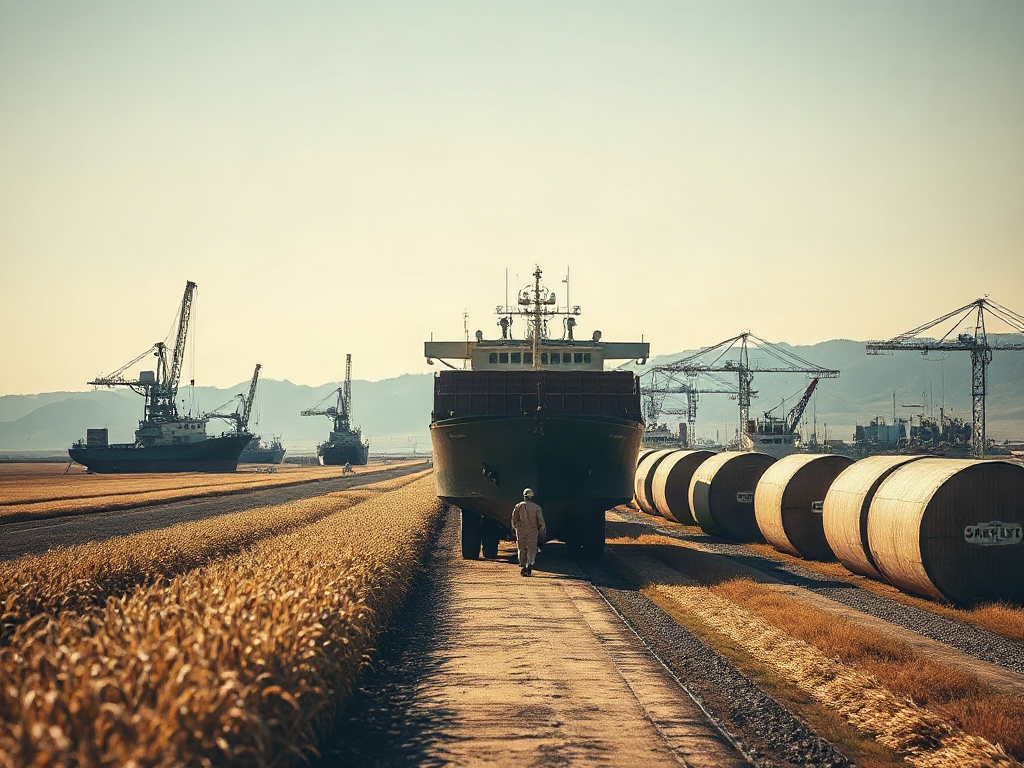
A regional emergency follows reported attacks on ports and shipping, leaving producers with unsold grain while Russia searches for alternate routes and possible safe passage.
The Watch
Krasnodar authorities have declared a state of emergency after reported Ukrainian strikes disrupted logistics infrastructure, port operations, and Black Sea shipping. The decree was reported as retroactive to August 12.
The immediate problem is not a confirmed global shortage. It is a regional export bottleneck in a major grain-producing area. Farmers reportedly harvested 11.4 million metric tons of grain and pulses, nearly 2 million tons more than in 2025, but some producers now struggle to move or sell that supply.
One report cited industry analysts estimating that 90% of regional grain export capacity was offline in August. Newer reporting says Russia could restart 80% of Black Sea terminals if attacks stop. That is a conditional recovery possibility, not confirmation that those facilities are operating normally today.
What Changed
The material change is the formal emergency declaration combined with reported disruption to ports and shipping. The consequences are reaching beyond individual attacks: producers are reportedly facing domestic oversupply, lower prices, and difficulty selling grain.
Russia is seeking alternate agricultural export routes and pursuing discussions about safe Black Sea transit. Those efforts could reduce pressure if they become operational. However, the available evidence does not independently confirm the current status of individual terminals, the full extent of physical damage, or how long the emergency will last.
Why It Matters
This case links conflict damage to a practical supply-chain problem. When export channels close after a large harvest, grain can remain in storage, local prices can weaken, and producers can face mounting financial pressure.
Reports of higher global prices and increased attacks involving grain vessels suggest that markets are sensitive to the disruption. They do not prove a worldwide shortage or an immediate food emergency for U.S. households.
For the United States, the relevance is indirect. The key concern is whether this remains a contained regional breakdown or begins affecting wider Black Sea trade, shipping costs, and international grain prices.
If This Continues
Scenario — not prediction.
If port and shipping disruptions continue, unsold inventories could stay elevated and local grain prices could face further pressure. Producers may experience greater financial losses if alternate routes fail to move the surplus.
If ports reopen or a safe-transit arrangement becomes functional, some export capacity could return and inventory pressure could ease. If attacks reach additional vessels or logistics nodes, disruption could become more persistent and affect broader Black Sea agricultural trade.
What to Watch Next
- Official updates on the Krasnodar emergency decree and port operating status
- Reported attacks on grain terminals, vessels, or related logistics sites
- Evidence of vessel departures, terminal reopenings, or cargo diversions
- Local grain inventories, producer support measures, and price changes
- Confirmation that alternate export routes or safe-transit talks are functioning
- Independent estimates of regional export capacity and global grain-price movement
Preparedness Perspective
This is an indirect supply-chain concern, not an immediate threat to U.S. households. The evidence supports calm monitoring rather than extraordinary action.
Readers can keep ordinary food-budget planning current, follow reliable official and market updates, and avoid panic buying. Communities that depend on imported food or agricultural inputs should watch for sustained international grain-price movement and broader shipping disruption.
The most useful question is whether the problem stays concentrated in Krasnodar or spreads across multiple exporting regions. A single regional export emergency does not establish a global food-system crisis. Preparedness remains practical when it focuses on continuity, verified information, and proportionate household planning.
Bottom Line
Krasnodar’s emergency declaration shows how attacks on ports can quickly become an agricultural and financial problem. Watch for terminal reopenings, functioning alternate routes, and persistent inventory or price stress. Until broader effects are confirmed, this is a serious regional disruption with indirect U.S. relevance—not an immediate American food emergency.
Sources
- wtvbam.com — Russia’s Krasnodar region declares state of emergency as … (September 24, 2026)
- themoscowtimes.com — Krasnodar Region Declares State of Emergency as Ukrainian Strikes Cripple Grain Exports (September 24, 2026)
- globalbankingandfinance.com — Krasnodar Declares Emergency as Drone Attacks Hit Grain Exports (September 24, 2026)
- ua.news — Krasnodar Krai declared a state of emergency due to disruptions in grain exports – Reuters (September 24, 2026)
- facebook.com — Russia’s Krasnodar region declares state of emergency …