
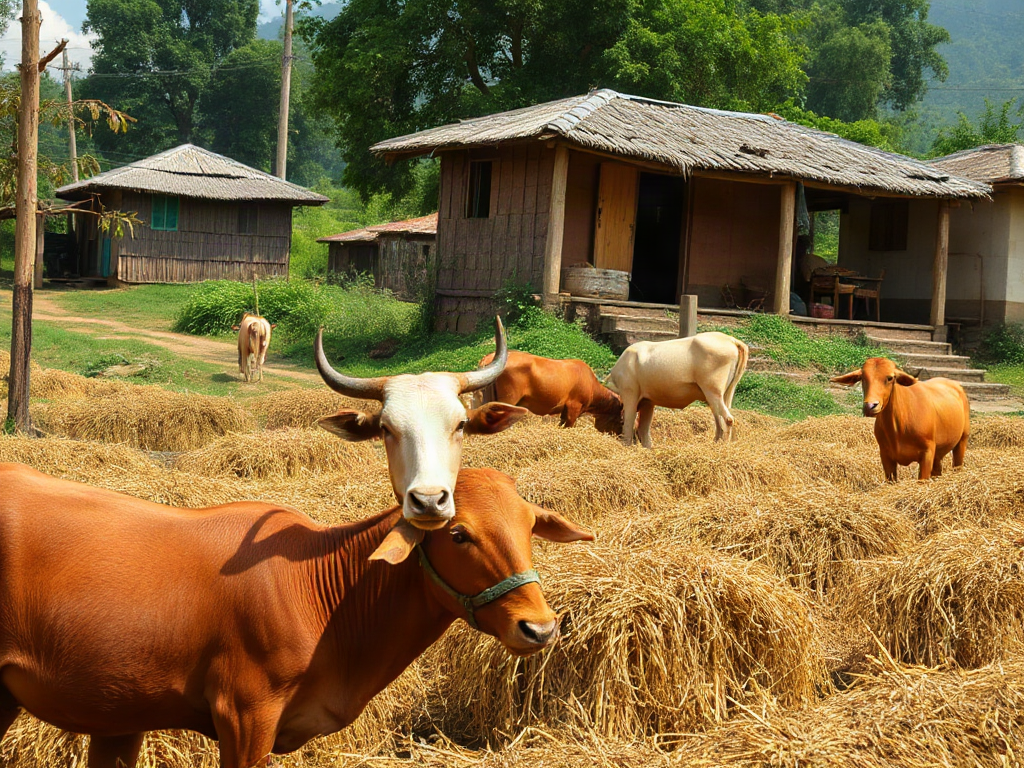
A preliminary FAO assessment finds about 1,800 hectares of crops damaged and thousands of livestock killed after deadly flash floods, raising serious local food-security and recovery concerns.
The Watch
Flash floods swept through Nepal’s Bhote Koshi–Trishuli river corridor on August 26, damaging farms and rural livelihoods. FAO’s preliminary assessment counts approximately 1,800 hectares of damaged crops, mostly paddy, and thousands of livestock killed.
The human toll is also severe. The supplied assessment reports more than 1,000 deaths, while thousands of people remained unaccounted for in the cited interview. Many residents were displaced.
This case stands out because the losses extend beyond fields. Fisheries, food stocks, farmland, and agricultural infrastructure were also affected. FAO is supporting Nepal’s response with emergency veterinary assistance and assessments of agricultural and rural-livelihood damage.
The full scale remains uncertain. There is no complete district-by-district accounting, exact livestock total, or confirmed valuation of the damage.
What Changed
The newest preliminary assessment establishes a substantial agricultural loss: about 1,800 hectares of crops were damaged, mostly paddy, and thousands of livestock died. It also identifies wider damage to fisheries, food stocks, farmland, and agricultural infrastructure.
There is no supplied earlier same-event baseline, so the evidence does not show whether losses are expanding, stabilizing, or beginning to recover. It also does not establish the full number of affected households or the condition of roads, bridges, irrigation systems, and other rural links.
FAO’s emergency veterinary support and ongoing agricultural assessments are now important indicators of how the recovery effort is progressing.
Why It Matters
For farming families, losing crops and livestock can remove both immediate food supplies and the means to earn income. Damage to fisheries, stored food, and agricultural infrastructure may make recovery harder even after floodwaters recede.
The timing of restoration matters. If farmland, livestock systems, and rural infrastructure are not rehabilitated before the next planting season, affected households could face a longer interruption in production. That could increase local pressure on food access and household finances.
The U.S. relevance is local and regional only, not an immediate household emergency. The available evidence does not establish a broad international food shortage or a wider supply disruption. The practical concern is whether Nepal can restore production and support affected communities.
If This Continues
Scenario — not prediction.
If damaged farmland, livestock systems, fisheries, and agricultural infrastructure remain impaired, affected households could face prolonged income and production losses. Additional assessments could also reveal a larger recovery need than currently documented.
If rural access remains limited, delivery of veterinary assistance, replacement livestock, agricultural inputs, and food supplies may become more difficult. Conversely, timely support and rehabilitation could help reduce longer-term effects.
These are scenarios, not forecasts. Current evidence does not establish whether conditions are worsening or improving.
What to Watch Next
- Updated official counts for damaged crop acreage, livestock losses, food stocks, fisheries, and infrastructure
- Reports on access to affected rural communities and delivery of emergency veterinary assistance
- Confirmation that households can obtain replacement livestock, agricultural inputs, and food supplies
- Restoration of farmland, irrigation or other agricultural infrastructure, fisheries, and rural transport links
- Local changes in food availability, farming income, and households unable to resume production
Preparedness Perspective
This is a local and regional preparedness issue centered on Nepal’s agricultural recovery. It does not establish an immediate danger to U.S. households or evidence of a global food crisis.
Readers can follow official assessments rather than early estimates, watch for verified updates on food production and humanitarian access, and keep basic continuity plans current. Organizations with family, travel, or business ties to affected areas should verify local service guidance and transportation conditions before making plans.
The most useful signals will be crop and livestock replacement, food-stock conditions, access to rural communities, and restoration before the next planting season. Awareness should remain proportionate to the evidence: serious local damage is confirmed, while the wider economic and regional effects remain uncertain.
Bottom Line
Nepal’s floods have already damaged a large area of crops and killed thousands of livestock, adding agricultural recovery to an already severe humanitarian emergency. Watch for verified updates on food stocks, rural access, replacement livestock, and restoration before planting season. The evidence supports attention and practical awareness, not panic about a wider global food crisis.