Resurrection of the dead in end-times Bible teaching refers to God raising the deceased bodily, with believers raised to life with Christ and the wicked raised for judgment. Daniel 12, John 5, 1 Corinthians 15, 1 Thessalonians 4, and Revelation 20 supply the main details, but interpreters differ over whether they describe one general resurrection or distinct stages. Sound interpretation compares each passage’s audience, sequence, and stated outcome rather than building a chronology from one symbolic text. Readers should distinguish resurrection from the intermediate state, Christ’s return, and final judgment while allowing clear passages to govern disputed details.
What Resurrection Means in End-Times Passages
Resurrection in Scripture is the raising of the dead, not merely the survival of the soul after physical death. Paul makes bodily continuity central in 1 Corinthians 15: the body is sown perishable and raised imperishable, transformed for a mode of life no longer subject to death. The risen Jesus is the pattern and guarantee of this hope, described as the “firstfruits” of those who have died. Firstfruits language indicates both precedence and a harvest still to come.
That distinction prevents a common interpretive error. The intermediate state concerns the condition of a person between death and resurrection; resurrection concerns the restoration and transformation of embodied life. A passage about believers being with Christ after death does not, by itself, establish that the resurrection has already occurred. Likewise, spiritual renewal in the present may anticipate resurrection life without replacing the promised raising of the dead.
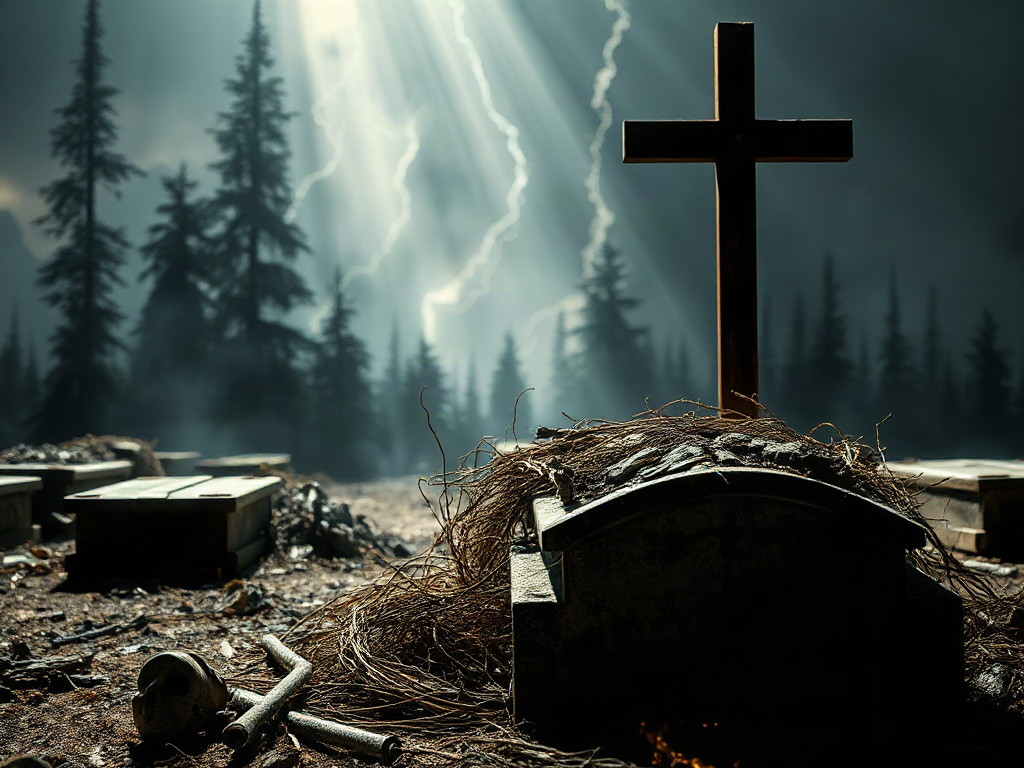
Scripture also connects resurrection with different outcomes. Daniel 12:2 speaks of some awakening to everlasting life and others to shame. John 5:28–29 similarly identifies a resurrection of life and a resurrection of judgment. These texts establish a universal horizon while leaving readers to compare other passages when asking whether both groups rise at the same moment. Revelation 20 introduces a “first resurrection” and later depicts the dead standing before the great white throne, creating the primary debate about sequence.
A concrete reading test is to ask what changes in each scene. In 1 Thessalonians 4, dead believers rise and living believers are gathered with them to meet the Lord. In Revelation 20:11–15, the emphasis falls on judgment before the throne, opened books, and the second death. Treating both passages as interchangeable erases their different subjects and purposes. Treating them as wholly unrelated is equally weak because both contribute to the Bible’s account of the last things.
Readers studying Resurrection of the dead in end-times Bible teaching should therefore keep four categories separate: physical death, the intermediate state, bodily resurrection, and final destiny. An interpretation is working when it preserves those distinctions while explaining how they connect. It is failing when “resurrection” becomes a loose label for conversion, heaven, Christ’s return, or judgment without attention to the wording of the passage.
The Passages That Establish the Core Teaching
The strongest account begins with passages that directly describe the dead being raised. Daniel 12:1–3 places awakening after an unparalleled period of distress and associates it with everlasting destinies. Jesus develops that expectation in John 5:25–29, where all who are in the tombs hear his voice and come out. The Son’s authority is decisive: resurrection occurs because Christ summons the dead, and judgment rests under his authority.
First Corinthians 15 supplies the fullest explanation of resurrection’s nature and order. Paul argues from Christ’s historical resurrection to the future resurrection of those who belong to him. He identifies an order—Christ the firstfruits, then those who belong to Christ at his coming—and explains transformation through contrasts such as perishable and imperishable, dishonor and glory, weakness and power. The chapter is not merely a timetable. It answers the practical objection, “With what kind of body do they come?” and insists that Christian hope requires more than disembodied existence.
First Thessalonians 4:13–18 addresses a pastoral concern: deceased believers will not be disadvantaged when the Lord comes. The dead in Christ rise first, living believers are caught up together with them, and both groups meet the Lord. “First” here establishes priority relative to living believers’ gathering; it does not automatically settle the relationship between this event and every resurrection scene elsewhere. That narrower observation is more dependable than using one word to prove an entire end-times system.
Revelation 20:4–15 provides the most disputed sequence. Those who share in the first resurrection reign with Christ, while “the rest of the dead” do not live until the thousand years are ended. After the millennium and Satan’s defeat, the great white throne judgment follows. A straightforward chronological reading sees two bodily resurrections separated by the millennium. Other interpreters understand the first resurrection spiritually or view Revelation’s visions as recapitulating events rather than presenting an uninterrupted timeline.
The practical priority is to rank claims by textual clarity. The future raising of the dead, Christ’s authority, bodily transformation, and differing final destinies are stated across several genres and should be treated as central. The exact relationship among tribulation, gathering, millennium, and judgment requires more interpretive caution. A sound study marks that difference instead of presenting every chronological inference as equally explicit.
How Major Interpretations Arrange the Resurrections
Christian interpretations agree more readily on the reality of resurrection than on its placement within the last events. Premillennial readings generally understand Revelation 20 as describing Christ’s reign before the final resurrection and judgment. Within that broad position, some distinguish several stages among Christ’s resurrection, the raising of believers at his coming, the resurrection of martyrs, and the later raising of the wicked. The stages are treated as parts of a resurrection program rather than unrelated events.
Amillennial readings commonly interpret the millennium as the present reign of Christ or as a symbolic description of the church age. On this view, Revelation 20 may retell the conflict and victory already portrayed from other angles in Revelation rather than continue a strict sequence from chapter 19. The first resurrection may be understood as believers’ spiritual life with Christ, their entrance into his presence after death, or another participation in his victory. The bodily resurrection of the righteous and wicked then occurs at Christ’s return in connection with final judgment.
Postmillennial approaches also usually expect a general bodily resurrection associated with Christ’s return, though they differ from amillennialism in their expectation for the gospel’s historical influence before that return. The decisive issue for resurrection is not optimism or pessimism about history. It is whether Revelation 20’s first resurrection describes a bodily event distinct from the later judgment scene.
Consider two readers examining the same phrase, “the rest of the dead did not come to life.” One emphasizes the ordinary force of “come to life” in both parts of Revelation 20 and concludes that both references concern bodily resurrection. The other gives greater weight to Revelation’s symbolism and cyclical visions, concluding that the first resurrection need not be the same kind of event as the later raising. Both must still account for John 5, Daniel 12, and Paul’s letters; Revelation cannot be interpreted in isolation.
A useful comparison should therefore ask which view explains all the relevant details with the fewest forced shifts. Check whether an interpretation uses “resurrection” consistently, whether its sequence fits the surrounding vision, and whether clearer teaching passages support its conclusions. Avoid dismissing another position merely because it differs on the millennium. The better question is where that interpretation locates bodily resurrection, how it relates the righteous and wicked, and what textual evidence supports any separation between them.
The doctrine’s practical force remains substantial across these differences. Death does not erase personal identity, injustice does not escape judgment, and embodied creation is not discarded as worthless. The disagreement concerns the arrangement of promised events, not whether God will raise the dead. Maintaining that distinction permits serious debate without making a disputed chart the measure of Christian hope.
A Reliable Method for Testing an End-Times Sequence
A credible sequence must be built through comparison rather than assembled from isolated phrases. Begin by reading each passage as a complete unit. Identify who is raised, what event prompts the resurrection, what happens immediately afterward, and whether the author is teaching directly, answering a pastoral question, or presenting an apocalyptic vision. Genre affects how details should be handled, but it does not give permission to make inconvenient statements disappear.
Use a compact textual checklist:
- Subjects: Does the passage name believers, martyrs, the righteous, the wicked, or all the dead?
- Trigger: Is resurrection connected to Christ’s voice, his coming, a trumpet, the close of the millennium, or the throne judgment?
- Outcome: Do those raised receive transformation, reign with Christ, face judgment, or enter the second death?
- Sequence markers: Do words such as “then,” “first,” “until,” or “after” establish order within the passage, and how far does that order extend?
- Parallel texts: Does the proposed reading fit Daniel 12, John 5, 1 Corinthians 15, 1 Thessalonians 4, and Revelation 20 without suppressing major details?
This method exposes two opposite mistakes. The first is collapsing every text into one event before examining its participants and outcomes. The second is multiplying separate resurrections whenever passages contain different details, even when those details could describe different aspects of the same event. Similarity alone does not prove identity, and difference alone does not prove separation.
Suppose a study group is evaluating whether 1 Thessalonians 4 and Revelation 20 describe the same moment. It should first note that Paul focuses on deceased and living believers meeting Christ, while John focuses on martyrs, reign, the millennium, and judgment. The group can then test whether the differences reflect distinct events, selective emphasis, or symbolic recapitulation. That procedure produces a defensible conclusion even when participants remain divided on the final chronology.
Signs of a strong interpretation include explicit acknowledgment of difficult verses, consistent use of terms, and a distinction between direct statements and deductions. Warning signs include depending on an English word without checking its context, treating a diagram as if it were a biblical passage, or assigning dates to events Scripture does not date. Another failure occurs when the resurrection is reduced to chronology and its ethical purpose is ignored. Paul connects it to steadfast service in 1 Corinthians 15:58, while John connects final judgment to accountable deeds.
For further study, create a comparison page with one column for each principal passage and rows for subjects, trigger, transformation, judgment, and sequence markers. That process is more useful than beginning with a denominational label. It lets the text reveal where conclusions are firm and where humility is warranted. A broader review of Resurrection of the dead in end-times Bible teaching should preserve both: confidence in the promised raising of the dead and care about disputed event order.
Frequently Asked Questions
Does the Bible teach a bodily resurrection?
Yes. First Corinthians 15 describes the dead as raised imperishable and presents Christ’s risen body as the pattern for believers. Resurrection is more than the soul continuing after death.
Are the righteous and wicked raised at the same time?
Daniel 12 and John 5 mention both groups, but interpreters disagree about whether they rise simultaneously. Revelation 20 is central to the case for resurrections separated by the millennium.
What does “the dead in Christ will rise first” mean?
In 1 Thessalonians 4, deceased believers rise before living believers are gathered with them. The phrase does not by itself define the placement of every other resurrection scene.
What is the first resurrection in Revelation 20?
Premillennial interpreters generally read it as bodily resurrection before Christ’s millennial reign. Other traditions read it spiritually or as participation in Christ’s heavenly life and victory.
How should readers evaluate competing resurrection timelines?
Compare the subjects, trigger, outcome, genre, and sequence markers in each passage. Give greater weight to repeated, direct teaching than to conclusions drawn from one disputed symbol.
Conclusion
The clearest priority is to establish what the major passages affirm before deciding how every event fits on a timeline. Scripture presents resurrection as God’s act of raising the dead, grounds believers’ hope in Christ’s resurrection, promises bodily transformation, and connects the last judgment with permanent destinies. Daniel 12, John 5, 1 Corinthians 15, 1 Thessalonians 4, and Revelation 20 should be read together rather than filtered through a single diagram.
Next, compare the people, sequence markers, and outcomes in each text. Keep firm claims separate from disputed inferences, especially when interpreting the first resurrection and millennium. That approach allows readers to evaluate premillennial, amillennial, and postmillennial arrangements fairly while retaining the doctrine’s central force: death will be answered, human deeds will face judgment, and those who belong to Christ will share in his resurrection life.