From a claimed tanker strike in Hormuz to disputed civilian-casualty findings and a closed foodborne outbreak, the week shows how response decisions depend on evidence that may arrive late or remain incomplete.
Reporting window: September 14–20, 2026
This Week at a Glance
Highest alert: ORANGE · 0 RED · 1 ORANGE · 4 reports reviewed · 3 primary developments · 3 regions represented
Strategic Pattern of the Week
Strategic pressure is rising in places where the facts are still catching up with the consequences. Iran’s claimed tanker strike places a commercial vessel and the Strait of Hormuz at the center of a potentially serious energy and maritime-security question, but the incident remains only partly verified. A reported UN war-crime finding carries even greater legal and diplomatic weight while its full inquiry and casualty accounting remain unavailable. Meanwhile, the Cyclospora outbreak has officially ended, yet its contamination pathway is unresolved. These are distinct developments, not one crisis. Their shared lesson is narrower and more useful: preparedness depends on distinguishing a confirmed change from a consequential claim, and on knowing which evidence would justify a stronger response.
The Interconnection Lens
Maritime security connects the Hormuz tanker claim to shipping routes, insurance decisions, and energy deliveries; a confirmed disruption could affect commodity flow beyond the immediate waterway. The reported civilian-site findings connect conflict reporting to alliances, legal accountability, and diplomatic pressure, especially if the inquiry becomes publicly reviewable. The Cyclospora outbreak demonstrates a different pathway: food distributed across many states can create uneven illness patterns that challenge traceback and public-health communication. These are strategic connections, not proof of one shared escalation. The direct effects documented here are localized or bounded; the wider relevance lies in systems that can transmit disruption through trade, humanitarian capacity, and public-health surveillance.
The Developments That Matter
A Named Tanker Raises the Stakes in Hormuz
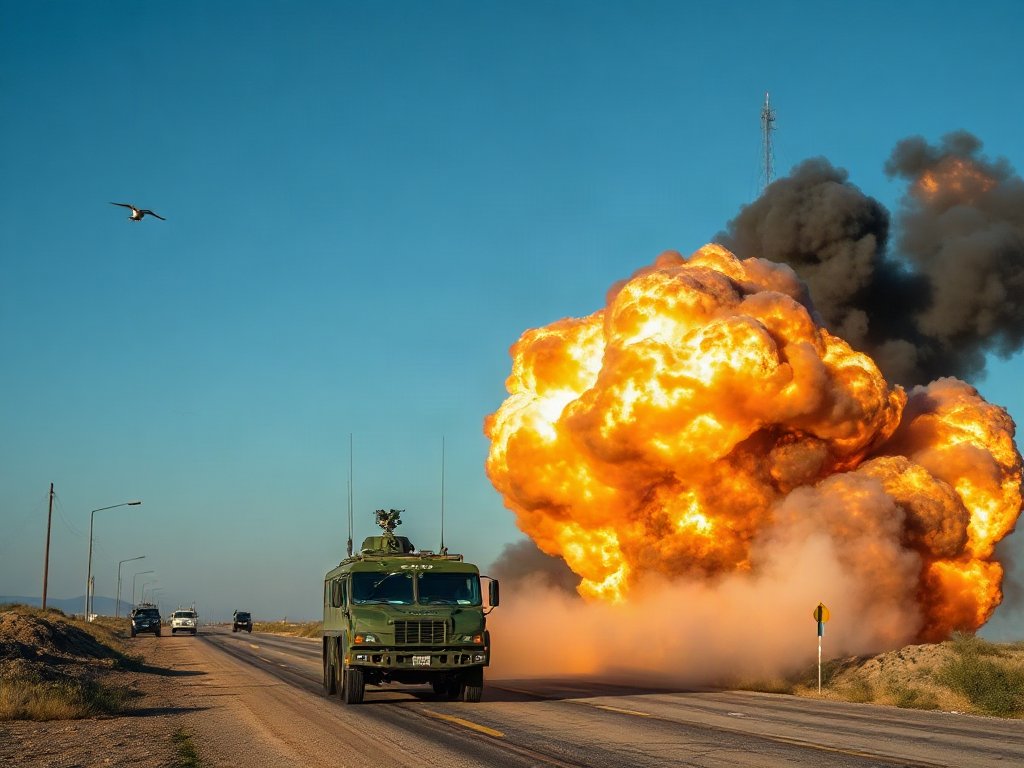
Iran has claimed responsibility for attacking the Togo-flagged oil tanker Trend in the Strait of Hormuz, adding a vessel name to an earlier, less specific tanker-strike report. Separate reporting offers limited support for the existence of an Iranian claim, but it does not confirm that both accounts concern the same ship. The vessel’s condition, crew status, location, and any injuries remain unverified. The available material also shows no confirmed shipping or oil-flow disruption. Specificity has increased, but proof of a wider escalation has not.
Why it matters: A confirmed attack on a commercial oil tanker could prompt added routing, security, or insurance precautions. Further attacks, restrictions, or damage could create delays and supply-chain pressure. For now, the evidence supports strategic monitoring rather than treating this as an immediate household energy emergency.
The wider connection: Energy and shipping systems are the key pathway: disruption in Hormuz could affect vessel decisions, insurance conditions, and deliveries beyond the reported incident. That connection would strengthen if traffic or energy flows showed sustained, verified interruption; the current evidence does not show that outcome.
ORANGE · Worsening · Global · Source confidence: High · Published September 20, 2026
A Reported War-Crime Finding Widens Accountability Pressure
A September 17 report says a UN inquiry found that U.S. forces struck identifiable civilian sites in Minab and Lamerd, Iran, and characterized the attacks as war crimes. The supplied material does not include the inquiry’s full text, methodology, evidence, or legal reasoning. Casualty accounts also conflict: reports cite different numbers, including more than 100 children and an earlier account of 156 deaths at the Minab school. The reported development therefore raises the stakes for accountability while remaining incompletely documented.
Why it matters: If independently verified, the finding could intensify diplomatic and legal scrutiny of civilian protection and military targeting practices. Its immediate relevance is strategic rather than domestic: public review of the evidence and official responses will shape confidence in accountability processes and could influence wider regional tensions.
The wider connection: Alliances and international legal accountability provide the main pathway beyond the reported sites. A publicly available inquiry could affect diplomatic pressure, military scrutiny, and humanitarian debate. Until the underlying findings and casualty figures can be reviewed, the legal and political consequences remain unsettled.
YELLOW · Worsening · Global · Source confidence: High · Published September 18, 2026
The Outbreak Is Over, but Food Traceback Still Falls Short
CDC has declared the multistate Cyclospora outbreak over after 12,883 laboratory-confirmed illnesses, 570 hospitalizations, and two deaths across 21 states. The supplied reporting associated the outbreak with iceberg lettuce from Taylor Farms de Mexico, distributed to 31 states, but the association rested on traceback and patient interviews rather than a laboratory finding in the food. FDA inspections and sampling were completed, while sample analysis remained pending in the latest account. The immediate trajectory is improving, but the contamination pathway is not fully explained.
Why it matters: The outbreak shows how widely distributed food can produce a large and uneven public-health burden. Closure reduces concern about an active nationwide event, but unresolved traceback questions matter for future prevention, recall communication, and the ability of agencies to identify contamination before illness spreads widely.
The wider connection: Food distribution and public-health surveillance are the central pathways. A product moving across many states can produce geographically uneven illness and complicate traceback. The event is officially over, but FDA findings or new product guidance could clarify whether broader prevention measures are needed.
WATCH · Improving · Global, with the documented outbreak concentrated in the United States · Source confidence: High · Published September 18, 2026
Signals We’re Watching
- Pakistan Mosque Bombing Toll Reaches 31 as the Picture Remains Unsettled: Pakistan’s reported mosque-bombing toll has reached at least 31, but the final count, location, attack method, attribution, and official response remain unsettled. Watch for verified casualty updates and security measures around religious sites.
Preparedness Bottom Line
This week’s practical priorities are evidence discipline and continuity across connected systems. For maritime and fuel-dependent businesses, monitor authoritative notices for confirmed routing, insurance, vessel, or energy-flow changes rather than reacting to an unverified claim. For households, ordinary continuity planning remains appropriate; the supplied reports do not support panic buying or an immediate domestic energy emergency. Follow official FDA, CDC, and state updates for revised food-safety findings, recalls, or handling guidance. In communities affected by the Pakistan bombing, reliable local instructions, communication with trusted contacts, and avoidance of active incident areas matter. Across all four developments, distinguish verified changes from developing claims before acting.
Joseph’s Perspective
EDITORIAL DRAFT — REVIEW/EDIT BEFORE PUBLISHING.
The most important issue this week is not simply how severe an event sounds. It is how much confidence we have in the facts that should guide a response. A claimed tanker strike in Hormuz could matter greatly for shipping and energy, but the vessel’s condition and any wider disruption are still unverified. A reported UN war-crime finding carries enormous moral and legal weight, yet the underlying inquiry and casualty accounting are not fully available. At the same time, a major foodborne outbreak has officially ended while investigators still work to explain the contamination pathway. I do not read these as one connected crisis. I read them as three reminders that modern systems can spread consequences faster than verification can catch up. Distance does not make an event irrelevant, but relevance is not the same as immediate danger. I would keep watching for confirmed shipping disruption, a reviewable inquiry, and final food-safety findings. Prudent readiness begins with reliable information and proportionate action.