After this, Benhadad king of Syria gathered all his army, and went up and besieged Samaria.
There was a great famine in Samaria. Behold, they besieged it, until a donkey’s head was sold for eighty pieces of silver, and the fourth part of a kab of dove’s dung for five pieces of silver.
As the king of Israel was passing by on the wall, a woman cried to him, saying, “Help, my lord, O king!”
He said, “If Yahweh doesn’t help you, where could I get help for you? From of the threshing floor, or from the wine press?”
The king said to her, “What is your problem?” She answered, “This woman said to me, ‘Give your son, that we may eat him today, and we will eat my son tomorrow.’
So we boiled my son, and ate him: and I said to her on the next day, ‘Give your son, that we may eat him;’ and she has hidden her son.”
When the king heard the words of the woman, he tore his clothes. Now he was passing by on the wall, and the people looked, and behold, he had sackcloth underneath on his body.
Then he said, “God do so to me, and more also, if the head of Elisha the son of Shaphat stays on him today.”
But Elisha was sitting in his house, and the elders were sitting with him. Then the king sent a man from before him; but before the messenger came to him, he said to the elders, “Do you see how this son of a murderer has sent to take away my head? Behold, when the messenger comes, shut the door, and hold the door shut against him. Isn’t the sound of his master’s feet behind him?”
While he was still talking with them, behold, the messenger came down to him. Then he said, “Behold, this evil is from Yahweh. Why should I wait for Yahweh any longer?”
Elisha said, “Hear Yahweh’s word. Yahweh says, ‘Tomorrow about this time a seah of fine flour will be sold for a shekel, and two seahs of barley for a shekel, in the gate of Samaria.’”
Then the captain on whose hand the king leaned answered the man of God, and said, “Behold, if Yahweh made windows in heaven, could this thing be?” He said, “Behold, you will see it with your eyes, but will not eat of it.”
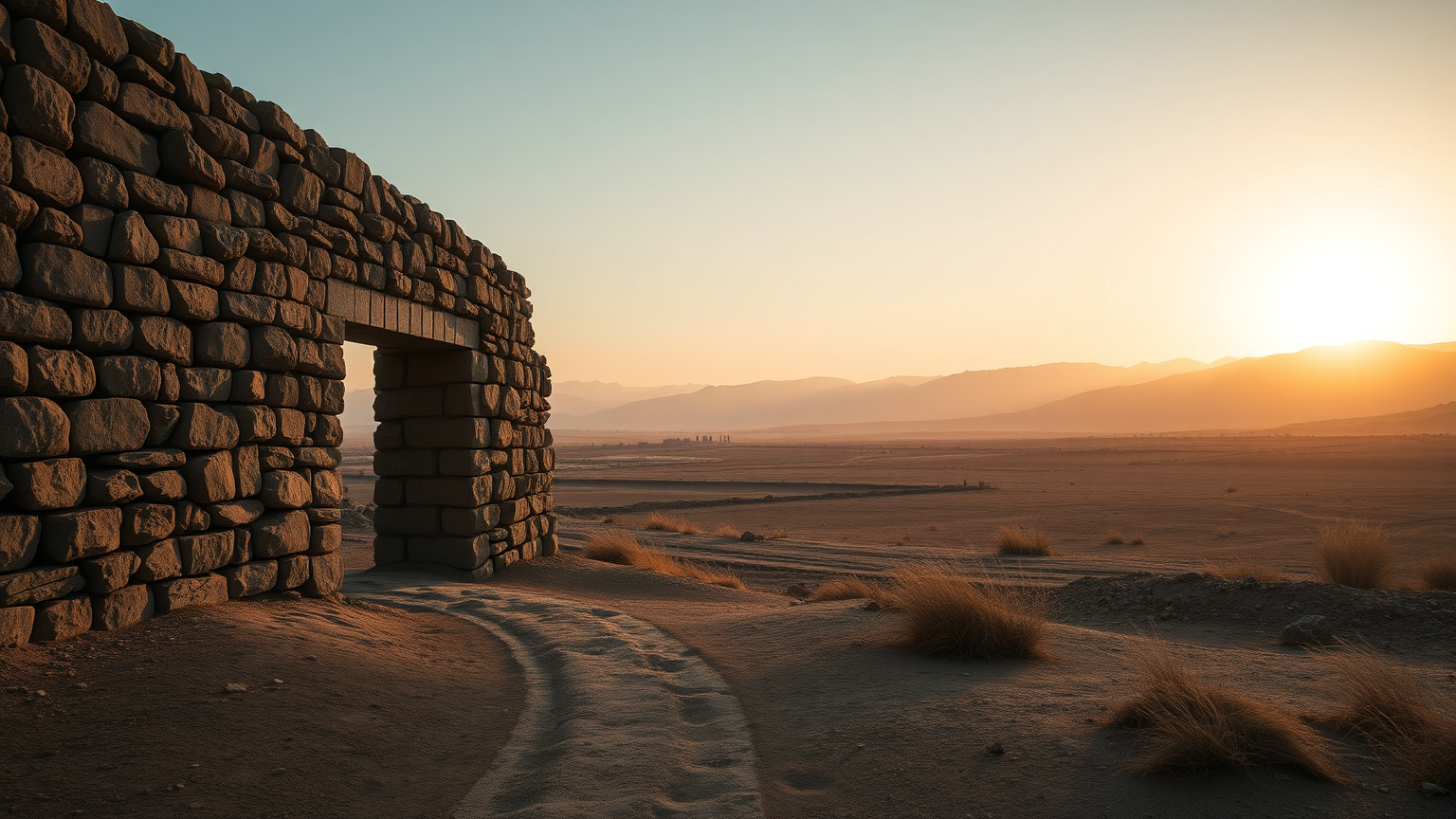
Now there were four leprous men at the entrance of the gate. They said to one another, “Why do we sit here until we die?
If we say, ‘We will enter into the city,’ then the famine is in the city, and we will die there. If we sit still here, we also die. Now therefore come, and let us surrender to the army of the Syrians. If they save us alive, we will live; and if they kill us, we will only die.”
They rose up in the twilight, to go to the camp of the Syrians. When they had come to the outermost part of the camp of the Syrians, behold, no man was there.
For the Lord had made the army of the Syrians to hear the sound of chariots, and the sound of horses, even the noise of a great army; and they said to one another, “Behold, the king of Israel has hired against us the kings of the Hittites and the kings of the Egyptians to attack us.”
Therefore they arose and fled in the twilight, and left their tents, and their horses, and their donkeys, even the camp as it was, and fled for their life.
When these lepers came to the outermost part of the camp, they went into one tent, and ate and drink, and carried away silver, gold, and clothing, and went and hid it. Then they came back, and entered into another tent, and carried things from there also, and went and hid them.
Then they said to one another, “We aren’t doing right. Today is a day of good news, and we keep silent. If we wait until the morning light, punishment will overtake us. Now therefore come, let’s go and tell the king’s household.”
So they came and called to the city gatekeepers; and they told them, “We came to the camp of the Syrians, and, behold, there was no man there, not even a man’s voice, but the horses tied, and the donkeys tied, and the tents as they were.”
He called the gatekeepers; and they told it to the king’s household within.
The unopened utility bill lies beneath a grocery receipt, while the refrigerator offers little help. You postpone opening the mail, postpone the repair, postpone asking anyone for help. By evening, the problem has not changed—but fear has taken another decision for you.
Scarcity can build an invisible gate. Behind it, every option appears foolish, every conversation humiliating, and every new expense proof that the future is already decided.
Hopelessness does more than describe our circumstances; it can station us inside them.
That is the hard pressure in 2 Kings 6–7. Samaria is under siege. Food is scarce. The city is trapped by famine and fear. Then the story turns—not when the starving city discovers a clever strategy, but when four lepers sitting outside the gate face an unavoidable question: why remain where death is certain?
Their movement does not create God’s provision. According to the passage, the Lord has already caused the enemy army to flee, leaving behind what the besieged city cannot yet see. The lepers investigate, and their steps become the means by which the news reaches Samaria.
That detail confronts our usual calculation. We often assume that what we cannot see cannot be changing. So a family keeps avoiding the bank statement because the numbers look unbearable. An overdue repair remains untouched until a small failure becomes an expensive one. A person repeats, “Nothing can be done,” without making the call, checking the terms, or telling the truth to someone trustworthy.
Fear calls this realism.
Sometimes it is simply paralysis wearing practical clothing.
The lepers did not receive a promise that every danger had vanished forever. They did not pretend the siege had been imaginary. They made a limited, responsible decision based on the truth available to them: remaining at the gate would not save them, and the enemy camp could be examined.
Faith is not optimistic denial, and trust in God is not permission to abandon wisdom. This passage does not authorize reckless borrowing, unsafe choices, or the manufacture of a divine guarantee for the outcome we want. God may provide through an unexpected opportunity, a changed circumstance, or another person’s help; we are still responsible to tell the truth, count the cost, seek counsel, and act with care.
But careful action is different from waiting for perfect certainty. Perfect certainty can become the final excuse for never moving.
When fear keeps us at the gate, needless loss spreads. Bills accumulate unopened. Skills remain unused. A needed apology is delayed. Help goes unrequested because embarrassment feels more controllable than vulnerability. Meanwhile, the burden crosses from the account into the household, from the household into the body, and from the body into prayer.
The mercy in this scene is not that the lepers were strong enough to rescue themselves. Deliverance had begun beyond their sight. God was acting before the city could recognize it, and He used people who had been pushed to the margins to carry the first report of abundance.
Before the next pressure arrives, write down one truthful next step. Tell one person who can help you think clearly. Review one expense, obligation, or barrier instead of letting it remain a shadow. Establish one habit—opening mail on a set day, making the difficult call, praying before deciding—that keeps dread from controlling the calendar.
None of this guarantees an easy tomorrow. It does, however, refuse to let fear declare the ending before obedience has taken its next step.
The gate may still stand, but it is not proof that God has stopped working beyond it.
Do not wait for certainty to become your permission; investigate where faithfulness can move today.
Faith Actions
Where am I treating my current fear as the final word instead of investigating what God may already be changing?
Today, write down one concrete next step you can take, tell one trusted person what is actually happening, and review one bill, repair, or barrier instead of avoiding it.
Lord, when I feel trapped and tempted to call fear wisdom, show me what is true and give me courage to act on it. Keep me from reckless presumption and from helpless delay, and help me take the next faithful step with honesty, patience, and trust.
Continue Preparing Your Heart