
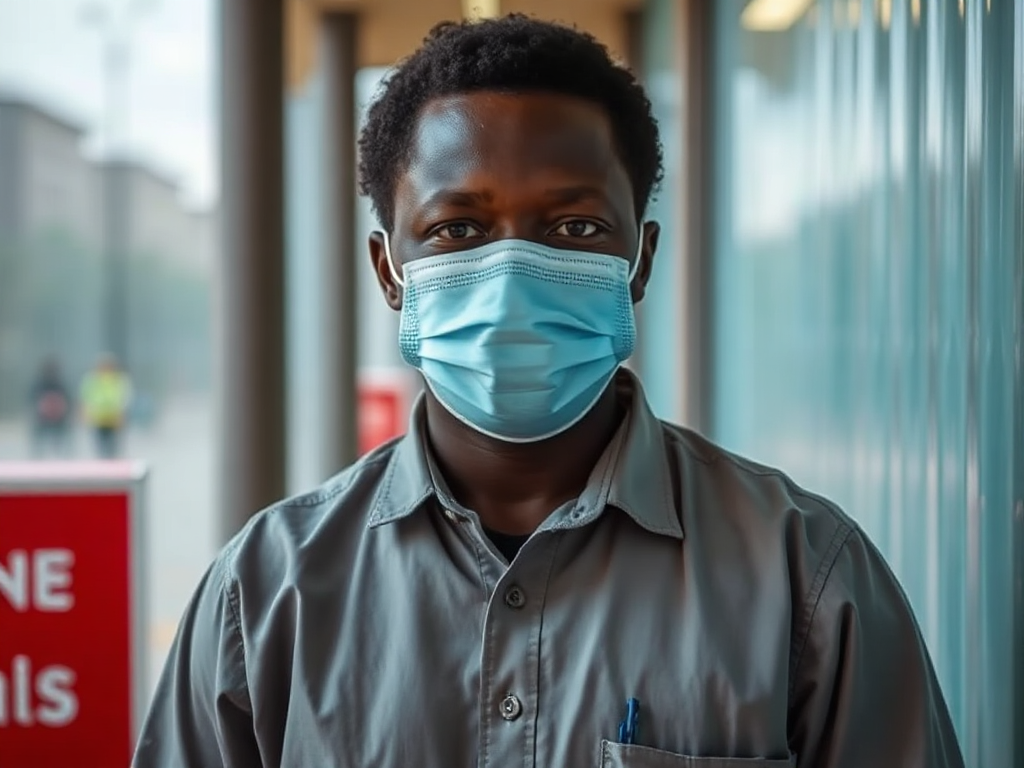
Reported deaths have passed 2,000 in the Democratic Republic of the Congo. This is a serious emergency to monitor, but it does not show an imminent local threat elsewhere.
The Watch
Health authorities in the Democratic Republic of the Congo report that Ebola deaths have passed 2,000. Newer reports describe transmission as accelerating. They say the outbreak may be on track to become the deadliest ever.
The outbreak remains centered in the affected country. Officials and the World Health Organization are working to contain it. WHO reportedly aims to turn the outbreak around within three months.
The available reports do not give a precise current death count, case total, geographic spread, or confirmed case-fatality rate. They also do not show whether the figures are cumulative, revised, or fully confirmed. These gaps matter because claims about record speed or severity require comparison data that is not available here.
What Changed
Earlier reports placed deaths above 1,900 and confirmed infections above 4,200 on August 9. Reports from August 11 and 12 then said deaths had passed 2,000.
The newest reports, published August 13, describe the outbreak as accelerating and potentially the deadliest on record. They also highlight a three-month WHO effort to reverse the trend. This language signals an active containment challenge. It does not provide enough detail to measure the outbreak’s exact pace or reach.
Why It Matters
A reported death toll above 2,000 is significant on its own. Combined with reports of continued acceleration, it points to a major public-health emergency that requires sustained response capacity.
If the reported trend is accurate, affected areas could face more pressure on clinical care, isolation, contact tracing, laboratory work, and protective equipment. Humanitarian responders and health workers may need to maintain operations while officials search for cases and monitor contacts.
For readers outside the Democratic Republic of the Congo, this is a development to watch. It is not evidence of an imminent local danger. The wider concern is whether transmission slows, reaches new areas, or strains the systems that control it.
If This Continues
Scenario — not prediction.
If transmission continues to accelerate, health authorities could face rising demand for treatment, isolation, laboratory capacity, contact tracing, and protective equipment. New areas reporting transmission could make coordination more difficult.
If containment becomes more effective, reported growth could slow. The response could then shift toward finding cases, following contacts, and supporting recovery. These are scenarios, not predictions. The available evidence does not establish which path the outbreak will take.
What to Watch Next
- Updated official death, confirmed-case, and suspected-case counts
- New geographic areas reporting transmission
- Trends in contacts under follow-up and missed contacts
- Reports on hospitals, isolation, laboratories, and treatment capacity
- Evidence of healthcare-worker infections or protective-equipment shortages
- WHO or national-health assessments showing whether transmission is slowing
Preparedness Perspective
Most readers should focus on reliable information, not rumors or dramatic claims. Follow current guidance from public-health authorities. Keep a reliable channel open for official alerts.
Organizations with travel, healthcare, humanitarian, or cross-border responsibilities should monitor official advisories. They should review plans that match their level of exposure. These reviews can include infection-control practices, staff safety, internal communications, and continuity arrangements.
It is also reasonable to check local service guidance and avoid sharing unconfirmed figures. Basic preparedness remains useful. Maintain clear communication, know which authorities provide trusted updates, and be ready to adjust plans if official reports show wider spread or greater strain on response systems.
Bottom Line
Reported Ebola deaths above 2,000, along with signs of acceleration, make this a serious situation to watch closely. The evidence does not show an imminent threat to readers elsewhere or establish the outbreak’s precise scale. Watch official counts, geographic spread, response capacity, and signs that transmission is slowing. Calm, verified information is the most useful form of readiness.
Sources
- TVC News — Congo Ebola Outbreak On Track To Be Deadliest Ever – WHO – TVC News (August 13, 2026)
- سانا — WHO aims to turn tide of Ebola outbreak in DR Congo within three months – سانا (August 13, 2026)
- Latest news from Azerbaijan — Ebola outbreak in DR Congo spreading faster than any previous outbreak – Latest news from Azerbaijan (August 12, 2026)
- Open Magazine — Ebola Death Toll Crosses 2,000 in DR Congo as Outbreak Accelerates – Open Magazine (August 12, 2026)
- facebook.com — DW News. . Health authorities in the Democratic Republic of Congo say Ebola has killed more than 2,000 people. Officials are racing to contain the outbreak, which is the fastest-spreading on record. #dwnews – facebook.com (August 12, 2026)
- TelegraphHerald.com — Congo says 2,000 people have died in history’s fastest-growing Ebola outbreak – TelegraphHerald.com (August 12, 2026)