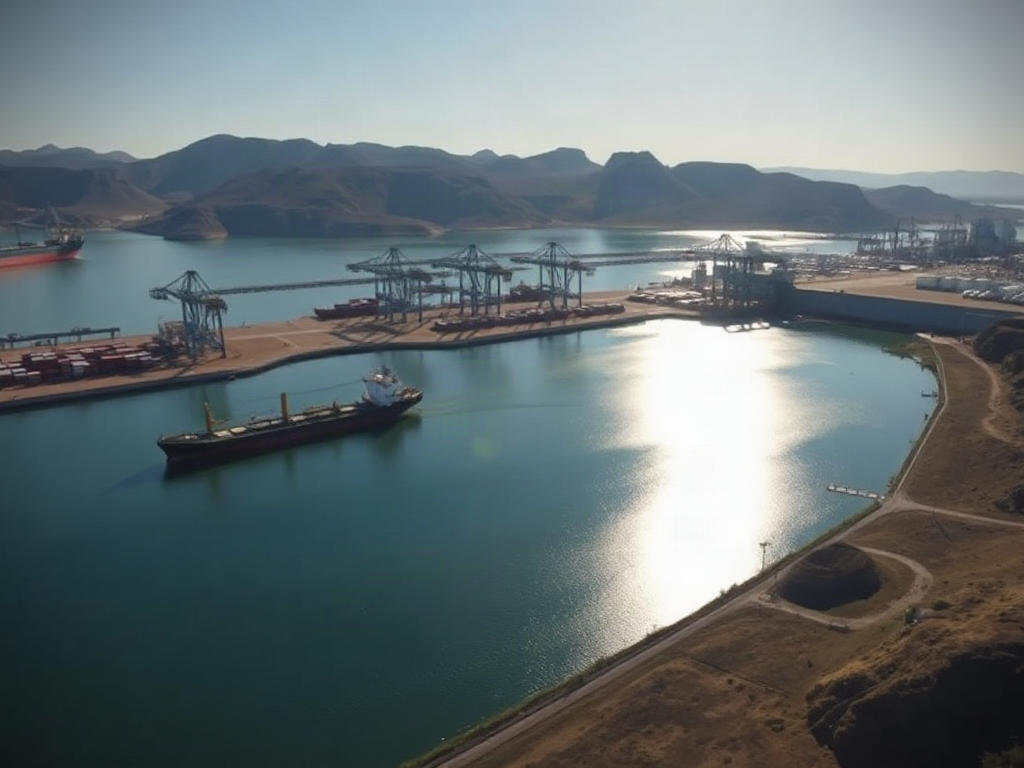

Earthquakes, expanding outbreaks, water stress, cyber risks, and exposed trade routes show how quickly uncertainty can move through essential systems without proving an immediate crisis.
Reporting window: August 10–16, 2026
This Week at a Glance
11 reports reviewed · 4 key developments · 1 elevated concerns · 7 signals we’re watching · 8 regions represented
Strategic Pattern of the Week
The week’s strongest signal is not one isolated emergency but the narrowing margin inside systems people assume will keep working: water utilities, reservoirs, health networks, rivers, ports, and coastal infrastructure. A shallow magnitude 7.7 earthquake in Indonesia and expanding disease transmission in the DRC and Uganda put verification and response capacity under pressure. Elsewhere, reported cyberattacks on water systems, record-low Lake Mead levels, and drought-stressed European rivers exposed vulnerabilities in services that depend on continuity. The same lesson appeared in the Black Sea and Red Sea: damage or violence near critical routes can matter before a broad disruption is confirmed. The prudent response is disciplined attention—knowing which facts are established, which claims need confirmation, and which changes would require action.
The Interconnection Lens
Water conditions connect energy generation, river transport, industrial activity, and supply chains: Europe’s low rivers are being watched for possible pressure on nuclear plants and the Rhine’s cargo movement, while Lake Mead’s condition bears on regional water management. Health risks also cross borders through travel, surveillance, clinical capacity, and information-sharing, as shown by confirmed outbreak activity in Uganda and the DRC’s wider geographic spread. The Novorossiysk reports connect port damage to grain-export continuity, while the Bab el-Mandeb attack links crew safety to maritime operations. These are strategic connections, not proof of identical effects everywhere. Direct consequences remain localized or unverified; the connection to watch is whether duration, geographic spread, or confirmed operational disruption turns a local shock into wider pressure.
The Developments That Matter
Indonesia’s Shallow Quake Leaves Coastal Risk Unresolved
A magnitude 7.7 earthquake struck 68 kilometers north-northwest of Ende, Indonesia, at a recorded depth of 10 kilometers. USGS confirmed the event, while GDACS classified it as a red earthquake and estimated 1.7 million people experienced shaking rated MMI VII or greater. Later coverage reported a tsunami warning, but its issuing authority, status, and any resulting impacts remain unclear. Casualties, damage, displacement, aftershocks, and service disruption have not been confirmed in the available record.
Why it matters: The combination of magnitude, shallow depth, and broad estimated exposure makes official verification important for coastal communities and emergency managers. If damage or tsunami hazards are confirmed, search, medical, shelter, transport, and communications needs could grow quickly. Readers elsewhere should monitor authoritative updates without treating early casualty claims as settled.
The wider connection: The pathway is public-safety continuity: coastal warnings, evacuation access, communications, medical response, and transport can become interdependent after a major earthquake. The event’s wider significance depends on verified tsunami effects, infrastructure damage, and service interruption rather than headlines alone.
ORANGE · Indonesia · Published August 15, 2026
Water Utilities Move From Cyber Incidents to Policy Pressure
Reports describe cyberattacks targeting U.S. water and wastewater systems, with activity reported across multiple states and links to Iranian operators assessed with varying confidence. One account cited 30 Minnesota systems and activity across seven states, while earlier reporting gave a different state count. The latest shift is political: senators are pressing for stronger protections after the attacks and FBI warnings. The evidence does not establish one coordinated campaign, uniform damage, unsafe water, or a nationwide disruption.
Why it matters: Water systems are essential, so even limited digital incidents can challenge operations, continuity, safety, and public communication. Utilities and local authorities have reason to verify systems, maintain escalation contacts, and test continuity procedures. For households, the practical step is knowing where confirmed utility instructions would appear, not assuming every reported incident has the same impact.
The wider connection: The pathway is communications and essential-infrastructure continuity: digital disruption can affect water operations, public notices, and confidence in local services. The strategic relevance is multi-state reporting and policy response; the operational scale and attribution remain unsettled.
YELLOW · Global · Published August 12, 2026
Lake Mead’s Record Low Tightens Southwest Water Choices
Several outlets reported that Lake Mead reached its lowest recorded or record-low level between August 7 and 11. The reservoir is part of the broader Southwest system, and coverage connected its condition to stress on the Colorado River, possible water concerns, and boating access. The reports do not provide a confirmed elevation, storage percentage, decline rate, cause, or detailed official response. The scale and timing of effects on allocations, households, agriculture, power, and ecosystems remain unclear.
Why it matters: A continuing decline could increase pressure on water allocations, conservation planning, and reservoir access decisions. Because the system is connected, worsening conditions elsewhere could add to that pressure. The immediate preparedness need is awareness of verified measurements, provider notices, and official conservation guidance rather than assuming a widespread emergency.
The wider connection: The pathway is food and energy inputs through water management: reservoir conditions can influence allocation decisions, regional planning, and access arrangements. Wider effects are strategically relevant but not yet established; official measurements and decisions will show whether pressure is stabilizing or spreading.
WATCH · United States · Published August 11, 2026
A Regional Outbreak Now Tests Cross-Border Health Capacity
WHO data through July 30 recorded 3,626 confirmed cases and 1,589 deaths in the Bundibugyo virus disease outbreak, with at least 654 recoveries. The DRC accounted for 3,605 cases, while Uganda reported 20 and France one. Within the DRC, transmission expanded from one health zone to 49 across five provinces. The reported footprint is substantially larger than the late-May update, which recorded 134 cases across 13 health zones in the DRC and Uganda. Later totals above 4,000 remain insufficiently documented.
Why it matters: Expansion across 49 health zones and into Uganda increases demands for case finding, diagnosis, contact follow-up, clinical care, referrals, and worker protection. Cross-border coordination becomes central because response needs and information move with people. For readers elsewhere, this is a serious regional health-system concern, not evidence of imminent wider spread.
The wider connection: The pathway is public-health surveillance and travel-linked medical readiness: cross-border cases require timely information-sharing, laboratory capacity, clinical response, and coordinated monitoring. The connection deserves closer watch if geographic spread or pressure on response systems increases.
WATCH · Democratic Republic of the Congo and Uganda · Published August 11, 2026
Signals We’re Watching
- Could Europe’s Low Rivers Strain Power and Transport Systems?: Watch official utility and grid statements, river conditions, and verified reactor or generation data. The key signal is whether low-water pressure produces confirmed operating changes or remains a reported vulnerability without measurable regional power disruption.
- Could Colombia’s M7.4 Earthquake Strain Rescue and Recovery Efforts?: Watch verified Colombian casualty counts, structural assessments, road and utility conditions, and rescue activity. A clearer damage zone or sustained service interruption would determine whether the event’s recovery needs are broader than currently established.
- With rapid increase in deaths, Congo’s Ebola outbreak continues to fuel concern: Watch official Ebola counts, geographic spread, and evidence that clinical, laboratory, contact-tracing, or protective capacity is under greater strain. Confirmation that transmission is slowing would point in the opposite direction.
- Food Peril? Reported Damage at Novorossiysk Disrupt Black Sea Grain Exports: Watch confirmed Novorossiysk terminal status, loading activity, vessel schedules, repair progress, and any sustained export delays. Those operational indicators matter more than early claims in determining food-system reach.
- Record-Low Rhine Levels Show Water Drought Concerns and Pressure European Transport and Supply Chains: Watch measured Rhine levels, navigation notices, and verified effects on shipping or industry. Evidence of simultaneous stress across several European waterways would strengthen the supply-chain concern; stabilization would narrow it.
- Could a Deadly Ship Attack Disrupt Red Sea Shipping?: Watch for a final Pakistani casualty count, vessel identification, official crew information, and signs of further attacks or route changes. Confirmed operational effects would show whether the incident extends beyond the immediate maritime area.
- Does the Tenerife cruise report show a renewed health threat?: Watch for an updated case count and an official explanation of the Tenerife-related response. New infections or renewed transmission would change the assessment; operational planning alone does not establish escalation.
Preparedness Bottom Line
This week’s most useful preparation is continuity awareness tied to the systems under pressure. Know where local water, utility, grid, public-health, and emergency notices are published. Households should keep ordinary communication, medication, water, and power needs in mind, particularly where a local provider reports disruption. Organizations connected to travel, health care, humanitarian work, maritime trade, river transport, or grain logistics should review escalation contacts, backup communications, referral or notification procedures, and alternate arrangements appropriate to their exposure. Coastal and earthquake-prone communities should know official evacuation routes and avoid damaged structures. Do not substitute rumor for measurement: verified warnings, service notices, case updates, port status, and infrastructure reports should determine the response.
Joseph’s Perspective
The margin for error gets smaller when essential systems are already under pressure. That is the thread I see across this week—not that every event is becoming a crisis, but that water, health, infrastructure, and transport can become vulnerable at the same time in different places. The Indonesia earthquake shows why official warnings and verified damage reports matter. The outbreak in the DRC and Uganda shows how quickly health response becomes a cross-border task. And the reports on water systems, Lake Mead, European rivers, and Black Sea shipping remind us that continuity depends on networks most people rarely see.
I don’t read this as a reason for alarm. I read it as a reason to improve our information habits and our basic plans. Know which authorities you trust. Know what local instructions would look like. Watch for confirmed changes in service, spread, or operations—not dramatic wording. Calm readiness is still the strongest response while these situations develop.