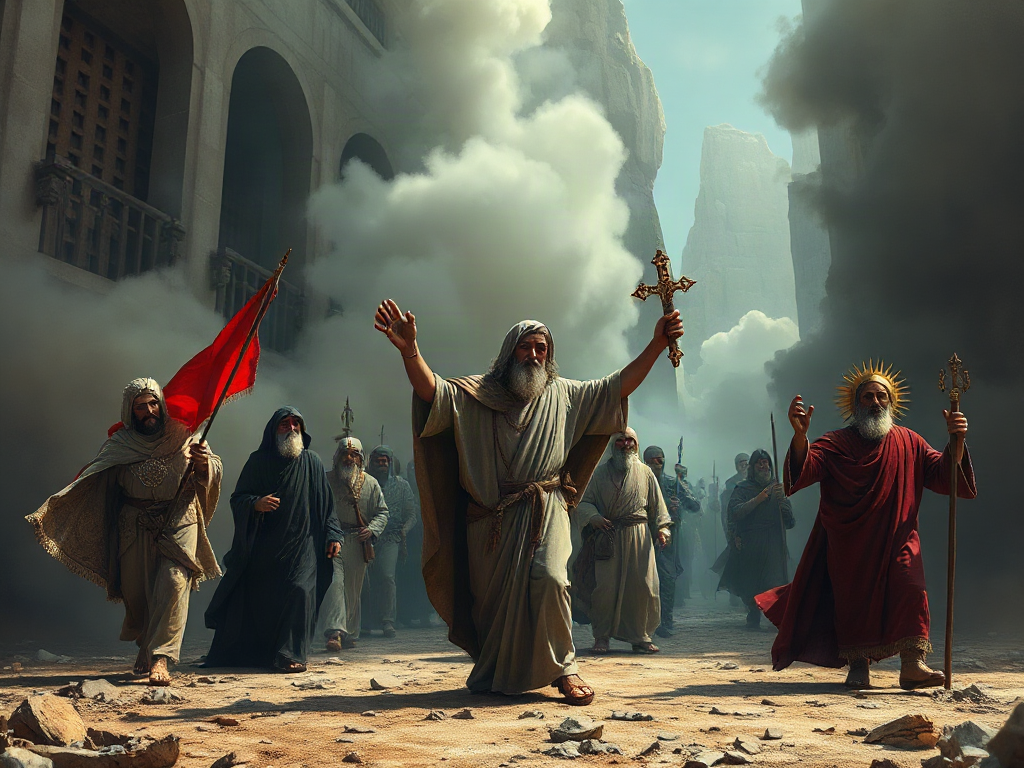

God’s wrath and end-times deliverance in Scripture fit together as divine judgment against persistent rebellion and God’s rescue of those who belong to him. The principal passages connect deliverance with several realities: preservation through trial, protection from appointed wrath, Christ’s return, resurrection, and final entrance into God’s renewed creation. Readers should distinguish tribulation caused by human or satanic hostility from wrath executed by God, because the Bible does not promise believers exemption from every form of suffering. Sound interpretation compares each passage with its immediate audience, sequence, imagery, and covenant setting rather than building an end-times timetable from a single verse.
What Scripture Means by God’s Wrath
Scriptural wrath is God’s morally justified response to evil, not an uncontrolled outburst or divine irritability. The biblical writers place it within God’s holiness, justice, patience, and authority as judge. Romans 1 describes wrath already being revealed as people are handed over to the consequences of rebellion, while Romans 2 looks toward a future day of judgment. Revelation portrays intensified and final expressions of judgment. These passages show that wrath can be present, historical, climactic, and final without making every hardship an act of divine punishment.
That distinction prevents a common interpretive failure: treating persecution, natural distress, divine discipline, and final condemnation as interchangeable. Jesus told his disciples to expect hatred and affliction from the world. Revelation depicts the dragon and the beast making war against the saints. Such suffering is real tribulation, but its immediate agents oppose God. By contrast, bowls described as God’s wrath proceed under divine authority against an unrepentant world. Identifying the actor, object, and stated purpose of an event is more reliable than assuming that any severe event must have the same theological meaning.
The exodus supplies a concrete pattern. Egypt experienced plagues as judgments against Pharaoh’s resistance and Egypt’s gods, while Israel was distinguished and ultimately brought out. Yet Israel still lived through fear, disruption, and danger before crossing the sea. The pattern combines judgment and rescue without suggesting that God’s people never witness upheaval. Noah’s preservation through the flood offers another pattern, although interpreters disagree about how directly either account maps onto a future sequence. Typology can illuminate later texts, but it should not override what those texts expressly say.
Readers should therefore ask three questions whenever wrath appears: Who sends it, whom does it target, and what result does the passage name? Judgment may expose rebellion, vindicate God’s justice, end oppression, or culminate in final exclusion from his kingdom. Discipline directed toward God’s children has a corrective purpose and should not automatically be equated with condemning wrath. This careful vocabulary gives God’s wrath and end-times deliverance in Scripture a firmer foundation than systems built primarily from assumed chronology.
The Forms of Deliverance Promised to God’s People
Biblical deliverance is broader than physical escape before danger begins. Scripture presents rescue through preservation, faithful endurance, removal from a threatened place, resurrection after death, vindication before enemies, and final freedom from sin and death. A passage must be allowed to define which form is in view. Otherwise, readers may turn a genuine promise of ultimate salvation into an unsupported guarantee of short-term safety.
Daniel illustrates the range. Daniel 3 records deliverance inside the furnace, whereas Daniel 6 describes protection inside the lions’ den. Daniel 12 anticipates an unparalleled time of distress, the deliverance of those written in the book, and the awakening of the dead. The chapter does not reduce rescue to avoiding the crisis; it places resurrection within the answer to oppression and mortality. Similarly, Hebrews 11 remembers people who escaped violence alongside faithful witnesses who suffered and died without receiving temporal release. Both groups are commended for faith.
Jesus’ teaching follows the same sober pattern. In the Olivet Discourse, he warns of deception, persecution, flight, and intense distress, while promising the gathering of his elect and the ultimate vindication of persevering disciples. In John 16:33, he prepares followers for trouble rather than telling them that faith removes all exposure to it. Paul adds that believers are not appointed to wrath but to obtain salvation through Jesus Christ in 1 Thessalonians 5:9. The interpretive question is not whether that promise matters, but precisely how its context relates watchfulness, the day of the Lord, salvation, death, and life with Christ.
A useful priority is to rank the promises by how explicitly Scripture states them:
- Certain: Christ will save his people from final condemnation and raise those who belong to him.
- Repeatedly emphasized: believers may face persecution, deception, loss, and pressure requiring endurance.
- Passage-dependent: God may protect, relocate, seal, or preserve particular people during particular judgments.
- Debated: the exact timing of the church’s gathering relative to every event in prophetic visions.
This ordering does not dismiss timing questions. It keeps disputed reconstructions from eclipsing explicit promises. An interpretation is failing when it makes physical survival the only meaningful form of rescue, minimizes resurrection, or implies that suffering proves abandonment by God. It is working when it preserves both warnings about costly faithfulness and assurances that divine judgment will not have the final word over Christ’s people.
How Major End-Times Passages Fit Together
The principal end-times passages contribute different parts of the judgment-and-deliverance picture, and none should be forced to answer every chronological question. Daniel emphasizes oppressive kingdoms, a final crisis, divine intervention, and resurrection. The Synoptic Gospels emphasize vigilance, deception, persecution, the coming of the Son of Man, and the gathering of the elect. Paul addresses resurrection, transformation, the day of the Lord, and salvation from wrath. Revelation uses visions of seals, trumpets, bowls, beasts, witnesses, Babylon, final judgment, and new creation.
First Thessalonians 4:13–18 centers on hope for believers who have died. Christ descends, the dead in Christ rise, and living believers are gathered with them to meet the Lord. The pastoral issue is grief, and the mechanism of deliverance is resurrection and gathering. The next chapter describes the day of the Lord, contrasts darkness with watchfulness, and assures believers that God has not appointed them to wrath. Reading the chapters together is appropriate; claiming that they settle every disputed interval requires arguments drawn from beyond their explicit wording.
Revelation 6–19 presents a more complex visionary sequence. Martyrs seek justice, inhabitants of the earth encounter escalating judgments, God’s servants are sealed, a multitude emerges from great tribulation, and the bowls are called the wrath of God. Interpreters differ over whether portions of the visions are strictly consecutive, overlapping, or recapitulated from different perspectives. Symbolic imagery does not mean the judgments are unreal, but it does require attention to Old Testament echoes, especially Exodus, Isaiah, Ezekiel, Daniel, and Zechariah.
Two contrasting mistakes commonly distort the comparison. One approach flattens every reference into a single linear chart, even when authors address different audiences and purposes. The opposite approach treats the texts as so symbolic that sequence, judgment, bodily resurrection, and Christ’s return lose concrete meaning. A better synthesis preserves clear shared claims while marking genuine uncertainty. Christ returns openly and victoriously; evil is judged; the dead are raised; God’s people are gathered and vindicated; and creation moves toward the removal of death, mourning, and curse.
When comparing God’s wrath and end-times deliverance in Scripture, create two columns in your notes: explicit statements and inferred sequence. Place resurrection, judgment, perseverance, and Christ’s victory in the first column where the text clearly states them. Put proposed intervals, identities of disputed figures, and correlations among visions in the second. This simple separation makes disagreements easier to evaluate without treating every inference as a test of faith.
A Reliable Method for Reading Judgment and Rescue Texts
A responsible reading begins with the passage’s own language and literary setting before consulting an end-times system. Prophecy, apocalyptic vision, pastoral instruction, Gospel discourse, and narrative communicate through different conventions. Revelation’s beasts and cosmic signs should be read with their scriptural echoes in view, while Paul’s letters require attention to the congregation’s question or crisis. Genre changes how imagery functions, but it does not authorize readers to assign symbols whatever meaning suits a preferred schedule.
Start by marking the actors and actions. Note what God does, what hostile rulers or spiritual powers do, what believers are commanded to do, and what outcome follows. Then identify time indicators such as “after,” “until,” “when,” and “at the coming,” while recognizing that visions may shift scenes or retell events. Check whether “deliver,” “save,” “keep,” “escape,” or “gather” refers to bodily protection, spiritual fidelity, resurrection, or final salvation. Word meaning is controlled by context rather than by the English term alone.
Next, compare clear passages before using difficult symbols to interpret everything else. The bodily resurrection in 1 Corinthians 15 and the return of Christ in 1 Thessalonians 4 provide firmer anchors than speculative identifications based on a contemporary headline. Old Testament backgrounds also deserve priority. For example, Revelation’s plagues evoke Exodus, Babylon imagery draws heavily on prophetic judgments, and the Son of Man language reaches back to Daniel 7. Ignoring those links often produces readings that feel current but are detached from the author’s scriptural world.
A compact interpretive check can expose weak assumptions:
- Does the conclusion distinguish divine wrath from persecution by evil powers?
- Does it account for resurrection and final vindication, not merely crisis avoidance?
- Does it respect the passage’s audience, genre, and stated pastoral purpose?
- Does it label disputed timing as interpretation rather than explicit wording?
- Does it produce watchfulness, faithfulness, and hope instead of date-setting or panic?
Consider a reader who sees war, disease, or political turmoil and immediately identifies it with a particular seal or bowl. The better next step is not to deny that events may have prophetic relevance, but to test whether the proposed identification matches the passage’s scale, agents, sequence, and theological function. Jesus expressly warns against alarm and deception, so confidence should rise only with textual evidence, not with the intensity of a news cycle.
Application is sound when it leads believers to resist deception, remain faithful under pressure, comfort the grieving with resurrection, and entrust justice to God. It is failing when predictions require continual revision, when every crisis becomes proof of an exact timetable, or when disagreement about sequence overshadows the gospel. Careful study of God’s wrath and end-times deliverance in Scripture should deepen moral seriousness and durable hope rather than reward speculation.
Frequently Asked Questions
What is the difference between tribulation and God’s wrath?
Tribulation can include persecution, social pressure, catastrophe, or satanic hostility experienced by believers. God’s wrath specifically refers to divine judgment against evil. A passage’s agent, target, and purpose determine which idea is present.
Does Scripture promise that Christians will escape all end-times suffering?
No passage promises believers freedom from every form of suffering. Scripture repeatedly anticipates persecution and endurance while guaranteeing final salvation, resurrection, and vindication. Some texts may describe particular protection, but their scope and timing remain debated.
What does it mean that believers are not appointed to wrath?
First Thessalonians 5:9 contrasts wrath with obtaining salvation through Christ. Christians interpret its precise end-times timing differently, but the verse clearly assures believers that God’s condemning judgment is not their appointed destiny.
Is resurrection a form of end-times deliverance?
Yes. Daniel 12, 1 Corinthians 15, and 1 Thessalonians 4 place resurrection near the center of final hope. Deliverance therefore includes victory over death, not only survival or removal before a period of crisis.
How should current events be compared with end-times passages?
Compare any proposed connection with the passage’s context, agents, scale, sequence, and Old Testament background. Avoid declaring fulfillment from surface similarities alone, especially when the interpretation depends on changing dates or selective details.
Further Reading
Authoritative Sources
- BibleGateway
biblegateway.comProvides searchable access to multiple Bible translations for comparing judgment, resurrection, and deliverance passages in context
- STEP Bible
stepbible.orgOffers biblical-language tools, cross-references, and translation comparisons useful for examining terms connected with wrath and salvation
- Bible Odyssey
bibleodyssey.orgPublishes academically informed background articles that help readers assess apocalyptic literature in its historical and literary settings
- Society of Biblical Literature
sbl-site.orgConnects readers with scholarly resources and research concerning biblical texts, languages, history, and interpretation
Conclusion
The strongest reading keeps divine judgment, human persecution, faithful endurance, resurrection, and final restoration distinct but connected. Begin with passages that state their claims plainly, then use those anchors when approaching visionary symbols and disputed sequences. Mark the difference between what a text explicitly says and what an interpretive system infers from it. That discipline allows serious discussion of timing without making a proposed chronology more certain than Scripture itself.
The next practical step is to compare Daniel 7 and 12, Matthew 24, 1 Corinthians 15, 1 Thessalonians 4–5, and Revelation 6–22. Record each passage’s audience, agents, promised form of rescue, and final outcome. A reading that accounts for suffering while preserving resurrection hope, divine justice, and Christ’s victory is more textually durable than one built around fear, headlines, or guaranteed physical escape.