by Joseph | Apr 23, 2026 | Preparation, Sharing
To keep me on track with my own preparations, I keep an updated list of my own activities and needs. It certainly helps me stay focused.
These are in no particular priority order, and this is not a complete list:
- Have started a vintage and heirloom seed (and seed potatoes) bank. Vegetables and flowers.
- Stocking URI products (dehydrated whole-food powder) for nutritional needs (has a 2 year shelf life)
- Currently ordering food items (ie. grains, canned goods, beans, etc) for long-term storage.
- Ordering food storage containers (food grade) for grains and dried food.
- Looking to install alternative energy source – (ie. solar power)
- I will continue working hard on my job, and trim expenses as much as possible to strengthen my financial position.
- IMPORTANT… Establishing an online income training system to help others transition to having the ability to earn income, without traveling. Helps tap into other economies all over the world.
- Stocking and upgrading hunting supplies (ammo, backpack, etc.)
- Stocking wood for heating/cooking. I am not concerned we will lose electricity, but am sensitive that we will need to conserve economic resources during a difficult economy.
- Establishing a supply of batteries (including rechargeable) and flashlights
- Searching for dehydrator and water purifier
- Installing wood heater in office and looking at installing a hand pump for well
- Preparing climate controlled storage for food/seeds
- looking at livestock options
- Working on developing barter system
- Looking to establish home meeting group to locally connect with people who are preparing.
- Maintain my blogsite to share my views on what is going on and where I believe things are headed. The site will be primarily information and content based – and will help with connecting and networking with others. By networking with like-minded people, I believe it will help in finding additional resources for supplies/information. It will also be an opportunity to encourage others and share Christ.
by Joseph | Apr 23, 2026 | Preparation, Sharing
I’ve heard it said many times by many people that only the strong shall survive. From experience over the last 19 years of Pastoring, I have never seen this statement lived out in reality. There is always some set of circumstances and situations that ultimately destroy the strength of the human spirit. Fear seems to be the ultimate culprit of our demise.
In the beginning when Adam and Eve were in the garden yielded to sin, the first response after their disobedience was fear. They hid themselves. In other words their strength was gone. Our struggle with fear is well documented throughout scripture. It must be pointed out that thtis is the goal of enemy that we hide from God. Therefore, we can say that fear is one of the fundamental tools that Satan uses against us.
(more…)
by Joseph | Apr 23, 2026 | Preparation, Sharing
People are now talking freely about “preparation”. Many do not know what they are preparing for, but many now feel a “leading” to prepare. It really doesn’t take much to see that “something” is about to happen, and those who are called – need to be ready and especially prepared to share and assist others.
I speak with people daily who are beginning to prepare. They are storing up food, water, and other provisions, and are establishing plans to help them cope during times of difficulties.
Now, I’m extremely pleased to see people beginning to prepare. There is a preparation urgency, so I believe it is important – on many levels.
But, also…
I believe it is essential that we prepare in our relationships. We must pray that Yah will bring our families to a place of preparation. Those who are emotionally fragile, will have a very difficult time during a crisis period. Those who have an “intellectual faith” will struggle in understanding why Yah is allowing such pain and suffering to happen. We need to be continually seeking the Father, and resting in the knowledge that He alone is in control.
I believe our preparations and storage are tasks that we all should undertake, however, we should not look on our provisions as our security. Our security is in He Who has called us to this moment, that we might share with those who will be afraid and hurting.
Our preparation in learning how to store food is just a task. If we are gripped by that which causes fear, and tremble with the chaos around us – we serve little purpose in sharing the hope of He who as given us His grace. If we are to share peace, we must have peace. The drama of chaos must be insignificant – as there will be many who will shudder during the storm. Those who are called to prepare will have the great blessing of offering comfort to those who are afraid – because we know the One who calms the storm.
I believe there is a time of great chaos coming to this land. Whatever the events that will create uncertainty, are only temporal. I also believe we face a constitutional crisis that will cause great troubles and struggle. It will be time like no other.
There is an urgency to prepare now. Pray without ceasing. Prepare your hearts and minds. Prepare your relationships. Be ready for that which you cannot plan or control.
by Joseph | Apr 23, 2026 | Preparation, Sharing
Emergency preparedness is an important part of taking care of your family. In addition to preparing for a possible natural or man-made disaster, by taking care of water and food storage, and having a first aid kit, you should also take steps to ensure that your finances will not be overtly affected by a wide scale situation, and that you will have enough funds on hand that will allow you to be mobile if needed. There are many different things that can be done to make you sleep easier at night, but the following are a few basic steps that should not be overlooked.
A big part of emergency preparedness is having cash available. This doesn’t mean funds in a savings account, money that in a normal situation would be easy to withdraw; it means actual cash that is hidden somewhere in your home that you can access if there is an emergency situation. If the power goes out throughout a large urban area, and for a long period of time, then credit card transactions and direct debit from your account may not be possible. If that is the case, then your foresight to have emergency cash on hand will serve you well, as it will probably be the only form of payment accepted.
After the situation has been resolved, then the next step is fixing the problems and confusion that occurred. Your emergency preparation should have involved making backup copies of all relevant data related to your finances. On an external drive, you should regularly backup any recent transactions made online, and your credit card information. The idea here is that even if there is a massive power surge that fries your computer, followed by a power failure, once things have been restored to normal you should be able to hook your external drive to an unaffected computer and recover all your data.
Another important step to being prepared for an emergency is having financial records and important contact numbers and names of people in a safe place. In fact, this information should ideally be stored in more than one place, in the event that the first location is compromised. Safe locations could involve an external hard drive, a safety deposit box, a home safe, or some other hidden location. Once the situation has been resolved, these records can be accessed and used to make a quick transition back to normal, and they can often suffice as evidence in case the original data has been lost or damaged.
It is hard to anticipate every eventuality, but one major part of emergency preparedness will always involve money. Make sure you have cash available for buying things even when there is no power, and make sure that you have a backup of financial records stored somewhere safe. It is not just the crisis that you need to prepare for. You need to make sure that when it is over that you and your family will be able to successfully survive the aftermath.
by Joseph | Apr 23, 2026 | Preparation, Sharing
Doomsday Survival has become quite a popular topic with today’s media and politicians. It is a telling sign that more and more people are concerned with events that are happening all across the globe.
Unfortunately, the concerns that people face are often fueled by the media in the form of fear. News outlets and others often sensationalize events that are happening, in order to boost their following. Regrettably, fear has proven to be a powerful agent in driving revenues. The internet has made information immediately available so it has become very easy to follow events all over the world. I suspect if the internet was available during the great World Wars or during the global depression, there likely would have been an even greater movement of people preparing for the ultimate destruction of society.
Certainly, (more than ever, in fact) I believe we all need to prepare, but I really do not believe that preparation should be a reaction to fear. I personally am not interested in perpetuating fear or pushing a message simply to help drive revenues.
Today, “Preppers” is a popular name that is used to identify those who are somewhat involved in some type of preparation act. I am not a big fan of the term Preppers, but I do understand the attempt to identify people who are a part of the preparation journey. I have just never particularly appreciated how we have grown so accustomed to classifying people into categories, or sub-categories. Our history is littered by too many terrible acts against people who were visibly identified, labeled, and branded as they were placed as a member of a certain group.
To me, preparation is not about fitting within a certain society niche or group. Preparation is a journey, and a movement. It is a community of people taking action and often coming together to prepare themselves for living – regardless of the circumstances they may face. In my Faith, preparation is not particularly about special survival skills in a doomsday scenario, but far more about being ready and prepared for the soon return of the King of Kings. It is about having oil in the lamps awaiting the Bridegroom.
It is ultimately pointless for me to rant about a simple term used for identification. I am fine with anyone who wants to call themselves a Prepper, survivalist, hoarder, or whatever. Over 18 years ago I heard a Preparation Call that has impacted my life in a profound way. My desire is to remain faithful on the journey of that call, and to prepare my family and others for the difficulties and joys that lie ahead.
Doomsday Preppers
Doomsday Preppers is a new show on the National Geographic Channel. The show follows the lives of Americans who are preparing for the end of the world as we know it. Unique in their beliefs, motivations, and strategies, preppers will go to whatever lengths they can to make sure they are prepared for any of life’s uncertainties. And with our expert’s assessment, they will find out their chances of survival if their worst fears become a reality.
by Joseph | Apr 23, 2026 | Preparation, Sharing
The recent FDA report on the widespread presence of highly pathogenic avian influenza (HPAI) in U.S. dairy cattle should be a wake-up call for every American. While the government and public health authorities work to contain this emerging threat, it is crucial that individuals and families also take proactive steps to prepare for the possibility of a severe pandemic. The H5N1 strain of avian flu, which has now been detected in our food supply, has a staggering human mortality rate of over 50% in past outbreaks. If this virus were to adapt to spread efficiently from person-to-person, we could face a global catastrophe that dwarfs the impact of COVID-19.
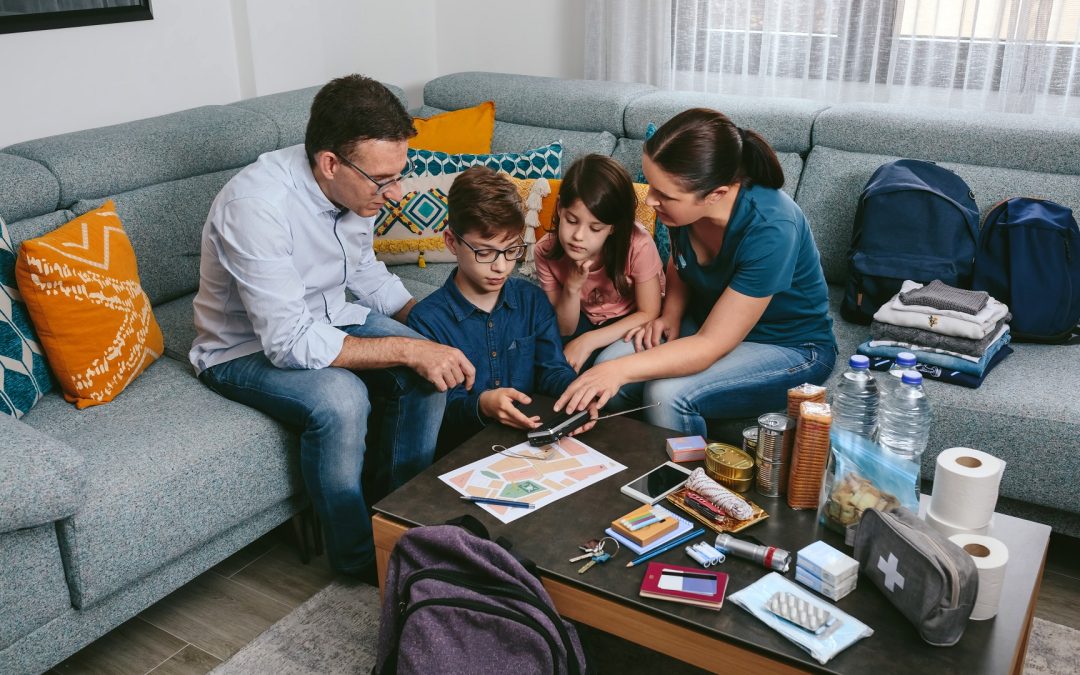
In light of this terrifying prospect, it is essential that every household develop a comprehensive pandemic preparedness plan. This plan should cover the basics of survival during an extended crisis: food, water, shelter, security, and medical supplies. Aim to stockpile at least a three-month supply of non-perishable food and a minimum of one gallon of water per person per day. Ensure you have a well-stocked first-aid kit, a supply of any prescription medications your family needs, and over-the-counter remedies for flu-like symptoms.
Beyond the basics, your pandemic preparedness plan should also consider the unique needs and circumstances of your household. If you have young children, elderly family members, or individuals with chronic health conditions, make sure you have the specialized supplies and knowledge to care for them during a prolonged crisis. Think through how you would handle extended school and business closures, job losses, and supply chain disruptions. Have a communication plan to stay in touch with loved ones and stay informed about developments in your community.
It’s also crucial to prioritize hygiene and sanitation in your preparedness efforts. Stock up on soap, hand sanitizer, disinfectants, and personal protective equipment like gloves and face masks. Develop rigorous habits of handwashing, surface cleaning, and social distancing that can help slow the spread of infection. Consider setting up a designated isolation room in your home where sick family members could be cared for while minimizing the risk of household transmission.
Mental and emotional resilience will also be key to weathering a severe pandemic. Take steps now to build coping skills, strengthen social support networks, and attend to your family’s mental health needs. Resources like books, games, crafts, and exercise equipment can provide essential distraction and stress relief during extended lockdowns.
Beyond preparing your own household, it’s also important to get involved in community-level pandemic preparedness efforts. Reach out to your local emergency management agency, health department, or community organizations to learn about existing plans and volunteer opportunities. Advocate for greater investment in public health infrastructure, medical readiness, and support for vulnerable populations. The more we can build resilience and strengthen social cohesion before a crisis hits, the better we’ll be able to weather the storm.
Preparing for a severe pandemic is not about fear-mongering or paranoia. It’s about taking a clear-eyed look at the very real risks we face and taking proactive steps to protect ourselves and our loved ones. The H5N1 avian flu threat is just the latest reminder that we live in an interconnected world where new pathogens can emerge and spread with frightening speed. By investing in individual and family preparedness now, we can build the resilience and self-sufficiency needed to face whatever challenges may come.
Of course, no amount of personal preparation can fully shield us from the devastating impacts of a severe pandemic. Ultimately, we will need a robust and coordinated global response to contain the spread of deadly pathogens and mitigate their worst effects. But by taking responsibility for our own pandemic readiness, we can reduce the strain on overburdened public systems, increase our odds of weathering the crisis, and contribute to a more resilient society overall.
The time to start preparing is now, before the next pandemic strikes. Don’t wait until store shelves are empty, supply chains are disrupted, and hospitals are overflowing to start thinking about your family’s survival needs. By taking action today, you can gain peace of mind and a sense of empowerment in the face of an uncertain future.
Remember, preparedness is not just about hoarding supplies or hunkering down in isolation. It’s about cultivating the knowledge, skills, and social connections that will see us through even the darkest of times. It’s about recognizing our shared vulnerability and our shared responsibility to look out for one another. By working together to build resilience at every level – from the individual to the global community – we can face the existential threat of pandemics with courage, compassion, and hope for a brighter tomorrow.