by Joseph | Jul 17, 2026 | Sharing
Most people recognize that we are facing unusual difficulties in our world. Famine, wars, political divisions, diseases, are just some of the issues that have created uncertainties and hurts all over the planet. It’s a unsettling time that has prompted many people to begin preparing for potential turmoil ahead.
The story of Joseph in the Bible offers one of the most profound lessons in the importance of preparedness, obedience to God’s guidance, and the discernment of the times. Through his faithfulness and foresight, Joseph not only saved Egypt from devastating famine but also revealed how God calls His people to wisdom and action long before calamity strikes. In our world today, this message resonates as a reminder of the spiritual and practical significance of preparedness.
Called to Prepare in Times of Abundance
In Genesis 41:29-30, Joseph interprets Pharaoh’s dream, warning, “Seven years of great abundance are coming throughout the land of Egypt, but seven years of famine will follow them.” Here, Joseph’s obedience and humility before God led him to act on divine wisdom. Though the years of plenty tempted many to revel in prosperity, Joseph understood that abundance itself was a gift from God, meant to sustain them through the lean years.
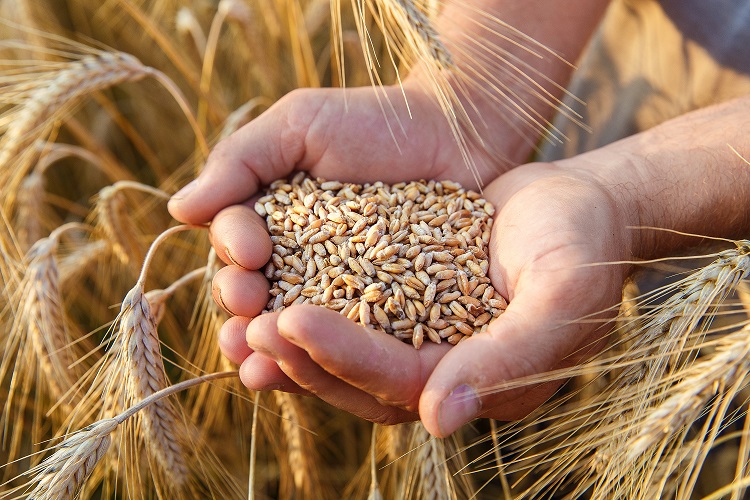
Preparedness, as Joseph’s example shows, is not a lack of faith but an act of obedience. God sometimes calls us to take deliberate steps to prepare for the future, not out of fear but from a place of trust in His provision and foresight. Joseph was not just saving grain; he was stewarding God’s blessing, ensuring that it would meet the needs of people beyond the good times.
Discerning the Times Around Us
Jesus also taught the importance of discernment, urging His followers to be aware of the times. In Matthew 16:3, He rebukes those who can interpret the appearance of the sky but fail to discern the “signs of the times.” Joseph was sensitive to God’s timing, recognizing the call to prepare while others saw no reason to worry. He understood that times of peace and prosperity are not always permanent; they can be a season of preparation for what lies ahead.
As believers, we are called to seek God’s guidance in understanding the signs around us. Just as Joseph recognized the impending famine, we too can pray for wisdom to prepare ourselves, our families, and our communities in ways that honor God. Proverbs 22:3 reminds us, “The prudent see danger and take refuge, but the simple keep going and pay the penalty.” In discerning the times, God equips us to act wisely, turning insight into preparation.
Obedience in Faith, Not in Fear
Preparedness is a testament to faith, not a reaction to fear. Joseph’s actions show us that responding to God’s call to prepare is a form of worship, aligning our hearts with His purposes. Hebrews 11:7 speaks to Noah’s obedience in preparing the ark, saying, “By faith Noah, when warned about things not yet seen, in holy fear built an ark to save his family.” Like Joseph and Noah, we are sometimes called to obey God’s prompting before any visible sign of crisis appears.
Our actions today—whether setting aside resources, learning new skills, or nurturing our spiritual lives—can become the very means God uses to bless and sustain us and those around us during difficult times. Joseph’s obedience not only saved Egypt but also offered sustenance to neighboring lands, a ripple effect of God’s provision through one man’s faithfulness.
Preparedness as a Form of Stewardship
In storing grain during times of abundance, Joseph exemplified biblical stewardship. Rather than indulging in the blessings of the moment, he recognized the resources as God’s provision for a future need. Jesus said in Luke 14:28, “Suppose one of you wants to build a tower. Won’t you first sit down and estimate the cost to see if you have enough money to complete it?” Planning and setting aside resources is an act of wisdom, acknowledging that everything we have is from God and meant to be used for His purposes.
When we embrace preparedness with a heart of stewardship, we affirm that we are caretakers of what God has entrusted to us. Preparedness enables us to offer help, meet needs, and reflect God’s faithfulness in times of difficulty. In times of crisis, the church and God’s people are often called upon to be a source of hope and help, demonstrating God’s provision in practical ways.
A Legacy of Hope and Provision
Joseph’s story leaves us with a powerful legacy. Because he discerned the times, obeyed God’s call, and prepared wisely, he not only protected Egypt but restored his own family and lineage. Genesis 50:20 reflects Joseph’s understanding of God’s purpose, “You intended to harm me, but God intended it for good to accomplish what is now being done, the saving of many lives.”
Preparedness, when rooted in obedience and trust, does more than sustain us; it can serve as a beacon of hope to others, showing God’s hand even in the darkest times. Let us pray for the wisdom to discern the times, for hearts that obey God’s promptings, and for faith to prepare wisely, so that we, like Joseph, may be vessels of God’s provision and love.
May we remember that when God calls us to prepare, it is not just for ourselves, but for the saving and blessing of many lives.

by Joseph | Jul 17, 2026 | Sharing
In the prophetic words of Isaiah, we find an extraordinary image of unshakeable determination: “I have set my face like flint, and I know that I will not be ashamed” (Isaiah 50:7). This powerful metaphor—face like flint—speaks of a hardness that refuses to be scratched, a resolution that cannot be worn down. It’s not about stoic indifference or cold hardheartedness, but rather about maintaining an unwavering focus on God’s purposes despite the storms that rage around us.
Consider Joseph in Egypt, whose face must have been like flint indeed. Sold into slavery, falsely accused, imprisoned unjustly—yet through it all, his countenance remained fixed on the divine purpose that would eventually unfold. “But the Lord was with Joseph and extended kindness to him, and gave him favor in the sight of the chief jailer” (Genesis 39:21). This wasn’t mere positive thinking or stubborn determination; it was a spiritual resilience forged in the furnace of adversity.
In our current age of uncertainty, where the foundations seem to shake daily, this quality of flint-faced resilience has never been more crucial. We live in times where faith is tested not just by dramatic persecutions, but by the subtle erosion of constant pressure—much like Joseph’s experience in Potiphar’s house, where day after day, he faced temptation and maintained his integrity: “How then could I do this great evil and sin against God?” (Genesis 39:9).
The concept of setting one’s face like flint implies a conscious decision, a deliberate positioning of oneself. It’s not a passive state but an active stance. When Jesus “resolutely set His face to go to Jerusalem” (Luke 9:51), He wasn’t merely traveling—He was aligning Himself with the Father’s purpose, knowing the cross lay ahead. This kind of determination doesn’t deny the reality of pain or struggle; rather, it transcends them through unwavering trust in God’s sovereign plan.
Joseph’s journey provides a masterclass in this kind of resilience. In the depths of an Egyptian prison, he didn’t just survive—he thrived. “The chief jailer committed to Joseph’s charge all the prisoners who were in the jail; so that whatever was done there, he was responsible for it” (Genesis 39:22). Even in the darkness of confinement, his face remained set like flint toward the light of God’s faithfulness.
But here’s where many devotionals miss the mark: this flint-faced resilience isn’t about personal strength or willpower. It’s about becoming a living testimony to God’s sustaining grace. When Joseph finally stood before his brothers years later, he didn’t speak of his own resilience but of God’s sovereignty: “As for you, you meant evil against me, but God meant it for good in order to bring about this present result, to preserve many people alive” (Genesis 50:20).
Consider the metallurgical properties of flint: it’s not just hard; it’s capable of producing sparks when struck. Similarly, our resilience in trials shouldn’t just be about enduring—it should ignite hope in others. Joseph’s steadfastness didn’t just preserve his own faith; it became the means through which entire nations were saved from famine.
The contemporary application is profound. We face:
- Economic uncertainties that threaten our security
- Social upheavals that challenge our values
- Global tensions that shake our peace
- Personal trials that test our faith
Yet like flint, we’re called to maintain our facing, our orientation toward God’s purposes. “Therefore, my beloved brethren, be steadfast, immovable, always abounding in the work of the Lord, knowing that your toil is not in vain in the Lord” (1 Corinthians 15:58).
This steadfastness manifests in several key ways:
- Unmoved by Circumstantial Pressure: Just as Joseph remained faithful in Potiphar’s house despite daily temptation, we’re called to maintain our integrity even when compromise seems expedient.
- Sustained Through Extended Trials: Joseph’s imprisonment wasn’t a brief setback but a prolonged season of testing. Yet his face remained set like flint, trusting God’s timing and purpose.
- Focused on Divine Purpose: “Let us run with endurance the race that is set before us, fixing our eyes on Jesus” (Hebrews 12:1-2). Our resilience isn’t about stubborn self-will but about maintaining focus on God’s greater purpose.
What makes this particularly relevant today is the nature of our trials. We’re not just facing isolated challenges but interconnected crises that test our resilience on multiple fronts simultaneously. Like Joseph, we need a resilience that can withstand both acute crises and chronic pressures.
The beauty of the flint metaphor lies in its practical application. Flint doesn’t become harder through use—it’s inherently hard. Similarly, our resilience doesn’t come from building up our own strength but from being grounded in God’s unchanging nature. “Jesus Christ is the same yesterday and today and forever” (Hebrews 13:8).
This brings us to a crucial insight: resilience isn’t about becoming impervious to pain or difficulty. Joseph wept when he saw his brothers; Jesus wept at Lazarus’s tomb. Having a face like flint doesn’t mean becoming emotionless—it means maintaining our orientation toward God’s purposes despite our emotions.
Consider how Joseph’s resilience was tested not just in adversity but in prosperity. When he rose to power in Egypt, he maintained his spiritual focus. This is crucial for us today, as trials can come in the form of success as much as failure. “For I have learned to be content in whatever circumstances I am” (Philippians 4:11).
The call to set our faces like flint is ultimately a call to profound trust in God’s character. It’s about maintaining an unwavering focus on His faithfulness when everything around us suggests otherwise. Like Joseph in the pit, in Potiphar’s house, in prison, and in the palace, we’re called to maintain our spiritual orientation regardless of circumstances.
As we navigate our own turbulent times, let us remember that flint-faced resilience isn’t about never falling—it’s about maintaining our facing toward God even when we do. It’s about getting up again, realigning our focus, and continuing to trust in His sovereign purpose. “Though a righteous man falls seven times, he will get up” (Proverbs 24:16).
May we, like Joseph, maintain faces like flint, not in rigid inflexibility, but in unwavering trust in the God who works all things together for good. Let our resilience be a testimony not to our own strength, but to the unfailing faithfulness of the God we serve.
by Joseph | Jul 17, 2026 | Preparation, Sharing
It happens all the time – especially now that there are obvious difficulties taking place.
Almost daily I receive a call from people who want to talk with me about preparation. They know that I’ve been talking (for 20+ years) about the need to prepare, so I guess it’s natural that they call me. Problem is, I have a much different view of what Preparation really is, and most of the time my view is NOT the way others view it.
You see, during a time of crisis people come out of the woodwork talking about the need for preparation. Because of our recent economical problems in the US, preparation discussion is now a mainstream conversation. It’s almost comical to hear of people emerging every day who claim that they “knew a difficult day was coming” and knew that we were all supposed to be preparing. They read all the gloom articles and conspiracy theories they can, and then spread their fear language to anyone who will join in their fear.
If you were around during the Y2K crisis, the same people were “preparing” then. After the crisis, well, they went back to operating as if nothing was wrong.
I’m of the opinion, that many people who claim they have known we are supposed to be preparing for “something” – are in fact, nothing more than news readers and fear mongers. They read new releases on world events, and suddenly they spring into action getting ready. If you have ever lived through a hurricane in Florida – that’s what I picture with the people who are now “self-professed preparation experts”. (more…)

by Joseph | Jul 17, 2026 | Preparation, Sharing
Very Interesting Quote in light of the present financial crisis…

“If the American people ever allow private banks to control the issuance of their currency, first by inflation and then by deflation, the banks and corporations that will grow up around them will deprive the people of all their property until their children will wake up homeless on the continent their fathers conquered.”
by Joseph | Jul 17, 2026 | Preparation, Sharing
In the news today, there are mounting numbers of people who are beginning to prepare. Some people do not even know what they are preparing for, but they are following the actions of others and are moving forward with their own preparations. It seems obvious that increasing numbers of people believe there is a coming “event” that impresses upon them the need to prepare.
The media is obviously picking up on the trend and are beginning to feature news and shows to highlight this growing phenomenon. Preparation centers and storage facilities are beginning to form in local communities, doomsday shelters are being sold in record numbers, and survivalist events are being held all over the Country. It is now moving into the mainstream.
That concerns me a bit. I feel impressed that we really must be very diligent in our preparations, but as we take action it is vital that we remain very prayerful and discerning.
Recently, I have heard the Father calling to prepare – but especially prepare by seeking a closer Faith in Him. He has reminded me that many people are preparing by building a boat – by storing provisions, growing a garden, or learning how to can corn.
Certainly, those are important tasks and will be helpful accomplishments during a tough period. But… having a boat is not enough to properly prepare for a storm. We must have Faith beyond the Boat. Consider this…
37 A furious squall came up, and the waves broke over the boat, so that it was nearly swamped. 38 Jesus was in the stern, sleeping on a cushion. The disciples woke him and said to him, “Teacher, don’t you care if we drown?”
39 He got up, rebuked the wind and said to the waves, “Quiet! Be still!” Then the wind died down and it was completely calm.
40 He said to his disciples, “Why are you so afraid? Do you still have no faith?” Mark 4:37-40
The disciples were very experienced on the water, and very likely knew how to maneuver through rough seas. I feel pretty certain they had prepared for the journey and had the proper equipment and provisions on board. But… with all their task actions completed, they were still afraid with the storm hit.
Prepare for the journey, but build a Faith beyond the boat. Strengthen your relationship in He who is able to calm the storm.
by Joseph | Jul 17, 2026 | Preparation, Sharing
In my lifetime, I have never seen such despair and ambivalence. People are afraid and many are losing hope. The times have impressed people to begin living more simple lives, and to prepare.
In fact, many people have felt a call to prepare and to be ready for the difficulties that are approaching. Those difficulties could be in the form of political or economic crisis, or they could be a catastrophic natural event like an earthquake or drought. Whatever the difficulty, countless families are now seeing the importance of preparing.
My family has been in active preparation for years now, although I’ve shared often that it is not what I assumed it to be. When I originally started on the journey of preparation, I assumed it was all about storing provisions and learning how to plant a garden. Certainly, those were/are important in the process of preparedness, but the real need of preparation is much greater.
God is calling us to a deeper Faith in Him. We can, and should, be better prepared for events that will impact us in a major way – but more than that, we need to be steadfast in our Faith. We need to be prepared to meet our God.
As we simplify our lives and look for ways to sustain our families in emergencies, we should also be preparing and softening our hearts to hear from God. Store the Word of God in our hearts, so when the times of troubled waters come – we are prepared.
“Save me, O God; for the waters are come in unto my soul. I sink in deep mire, where there is no standing: I am come into deep waters, where the floods overflow me. I am weary of my crying: my throat is dried: mine eyes fail while I wait for my God.” Psalms 69:1-3